The Getty Museum in Los Angeles has acquired a rare marble bust by Thorvaldsen, depicting the actress and poet Rosa Taddei and dating back to 1826.
Key points
- The Getty Museum in Los Angeles has acquired a marble bust of Rosa Taddei, made in 1826 by Bertel Thorvaldsen.
- It is the only known marble version of the portrait: the preparatory plaster model is housed at the Thorvaldsen Museum in Copenhagen.
- The work came from the Roman gallery Carlo Virgilio & C., which had exhibited it at the TEFAF fair in Maastricht.
- Rosa Taddei (1799–1869) was an Italian actress and poet known for her performances of poetic improvisation.
- The acquisition strengthens Thorvaldsen’s presence in U.S. collections, where his original works remain rare.
The Getty Museum acquires a unique bust by Thorvaldsen
The Los Angeles museum has gotten its hands on a work like no other: the only known marble version of the portrait of Rosa Taddei signed by Thorvaldsen. The sculpture enriches a collection that already engages in dialogue with European Neoclassical art.
Details about the bust of Rosa Taddei
Created in 1826, the portrait presents a composed and serene image of the young woman, then twenty-seven years old. The upright posture, the forward gaze, the well-defined eyes, and a slight smile construct a controlled expression, in contrast with the liveliness of her public performances.
The finely sculpted hair frames a face with strong features, with an aquiline nose and rounded chin. The square base, the drapery of the tunic, and the medallion reflect Thorvaldsen’s interest in classical art.
Provenance and exhibition history
Before arriving at the Getty, the bust had been exhibited by the Roman gallery Carlo Virgilio & C., in Rome, at an edition of the TEFAF fair in Maastricht.
It is the only known marble version of the portrait: a preparatory plaster model is preserved at the Thorvaldsen Museum in Copenhagen.
Artistic and historical context of the bust
Behind the work lies the story of two figures who knew each other personally: the poet portrayed and the sculptor who immortalized her in marble.
Biography of Rosa Taddei and her relationship with Thorvaldsen
Rosa Taddei was born in Trento in 1799 and died in Rome in 1869. The Italian actress and poet was known for her improvisational skills: during performances she would ask the audience to suggest themes, then compose verses on the spot.
Neoclassical style and Thorvaldsen’s legacy
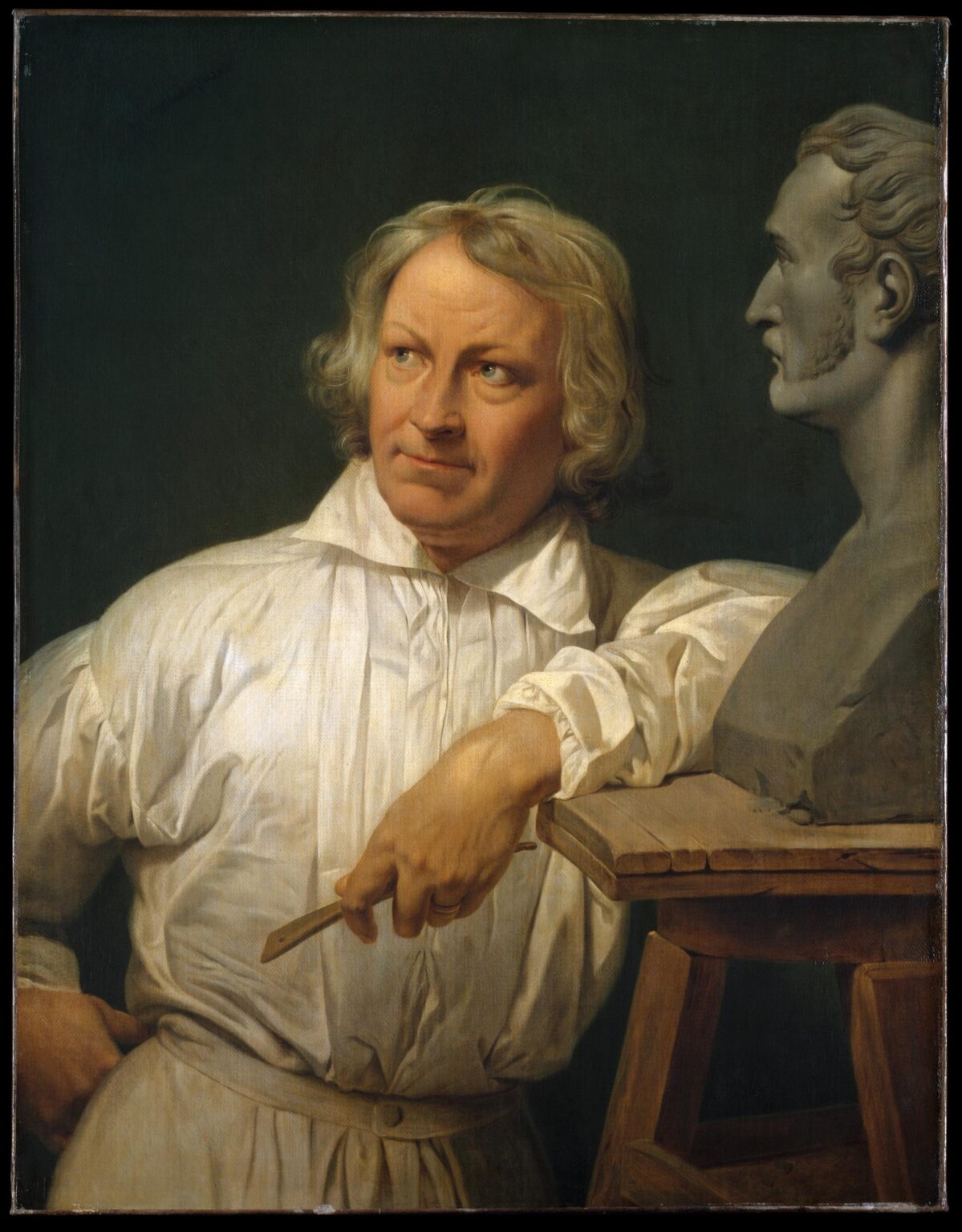
In European sculpture of the early decades of the nineteenth century, Thorvaldsen was, together with Antonio Canova, one of the leading exponents of the Neoclassical style.
The critical fortune of the two artists declined over the course of the following century, when some modernist critics dismissed Neoclassicism as a sentimental imitation of ancient art. Subsequent historiographical reassessment helped to reposition the Neoclassicists within the development of modern art.
A significant milestone in this process was the exhibition dedicated to Canova and Thorvaldsen, held in Milan in 2019.
Impact on U.S. collections and the Getty Museum’s holdings
In the United States, original works by Thorvaldsen remain rare, even though some have enjoyed surprisingly wide circulation outside museums.
The limited presence of Thorvaldsen in the United States
In the 1930s the publishing magnate William Randolph Hearst purchased two statues of Venus, one by Thorvaldsen and one by Canova, displaying them together in his residence at San Simeon, California.
Even more widespread was the fortune of Thorvaldsen’s Christ: in 1939 a monumental replica was commissioned for Forest Lawn Cemetery in Glendale, installed in 1947. In the 1950s the Mormon Church in turn commissioned copies for Salt Lake City and other temples.
The added value to the Getty’s collection
The arrival of Thorvaldsen’s bust at the Getty Museum enhances the sculptor’s presence in U.S. collections, where his original works remain relatively scarce.
The bust of Rosa Taddei will enter into dialogue with the Getty’s international selection of Neoclassical sculpture and with the Danish paintings already in the collection.
Among the represented artists are Christen Købke and Vilhelm Hammershøi, two nineteenth-century Danish painters.
Read also: Art market trends: those who cite investment as the main motivation collapse to 36% · Restitution could remove from museums the works of art looted by the Nazis
Content produced with the assistance of artificial intelligence and with human editorial review.