A 16th-century illuminated manuscript full of comets, floods and apocalyptic visions will be auctioned at Christie’s in London on 10 December 2026. The estimate is between £700,000 and £1 million.
Key points
- The Book of Miracles, or Augsburger Wunderzeichenbuch, is a 16th-century illuminated manuscript produced in Augsburg, Germany, around 1552.
- It contains 167 miniatures that depict historical events, natural phenomena and apocalyptic visions.
- It is mainly attributed to Hans Burgkmair the Younger and Heinrich Vogtherr the Younger.
- It will be sold at Christie’s in London on 10 December 2026, with an estimate between £700,000 and £1 million, about €838,000–1.2 million.
- Before the auction it will be on public display in London from 4 to 10 December 2026.
The Book of Miracles: a 16th-century illuminated manuscript
The full name of the codex is Augsburger Wunderzeichenbuch, meaning “the book of wondrous signs of Augsburg.” It recounts the history of humanity in chronological order: it starts from the Creation, moves through biblical episodes and ancient history, reaches events contemporary with the author and ends with the Apocalypse.
The central section is the most surprising, because it records dated and localized events: a comet and an earthquake in 1300, a solar eclipse in 1009, a monstrous creature found dead on the banks of the Tiber after the flood of January 1496. The most recent event is the hailstorm that struck Dordrecht, in the Netherlands, in 1552: according to one source it marks the moment after which the manuscript was completed, while another source places its completion around 1552.
The attribution points to Hans Burgkmair the Younger and Heinrich Vogtherr the Younger, with their respective workshops. No miniature bears a signature, but folio 117 offers a decisive clue: it depicts two deformed calves and the caption contains a first-person confession by the painter, signed “Hans Burgkmair.” According to Christie’s this refers to Burgkmair the Younger, who inherited the workshop of his father Hans Burgkmair the Elder, a painter and engraver from Augsburg.
The comparison with a signed manuscript datable to 1553, preserved in the Hofbibliothek in Sigmaringen, allowed the art historian Till-Holger Borchert to recognize the same mastery of gouache and the same use of gold and silver. Alongside Burgkmair, Heinrich Vogtherr the Younger is believed to have worked, according to Borchert and the scholar Giulia Bartram: a 1542 drawing signed “HVE” shows figures similar to those on folio 126 of the codex.
Apocalyptic visions and natural phenomena in the miniatures
Rains of fire and blood, monsters emerging from the sea, cities destroyed by volcanoes: the pages devoted to the end of the world are among the most unsettling in the codex. Comets appear on at least 26 pages, and according to Borchert this is perhaps the largest early collection of images of comets to have survived to this day.
There are also parhelia, multiple suns produced by the refraction of light in the atmosphere, observed over Vienna and over Augsburg. Ten pages are devoted to the rain of blood, a rare phenomenon in which sand and mineral dust colour the rain red. The common thread is a precise idea: extraordinary natural phenomena were not random accidents, but signs to be interpreted, with the same symbolic weight as a battle fought in the skies.
The cultural context of the 16th century and artistic influences
The iconography of the manuscript draws on the works of some of the leading figures of the German Renaissance: Albrecht Dürer, Hans Holbein the Younger and Hans Sebald Beham. The codex can therefore also be read as a point of convergence, where different figurative models are reworked into a unified narrative about the history of the world.
The Book of Miracles arose from a growing fascination with omens and cosmological phenomena, what the scholar Jennifer Spinks has defined as a “culture of wonders”: it began under Emperor Maximilian I, continued with the Lutheran Reformation and intensified in the mid-16th century amid peasant revolts, the Schmalkaldic War, apocalyptic expectations and the effects of the Little Ice Age, which brought storms, droughts and famines. Hartmann Schedel’s Nuremberg Chronicle, printed in 1493, also depicted comets, rains of blood and monstrous births: about thirty of the marvels in the manuscript also appear in that text.
The provenance of the manuscript and the collector’s profile
The codex belonged to a private Bavarian collection, described by the bookseller and auctioneer Hugo Ruef as coming from the library of a small Baroque castle in southern Germany. On 3 July 2008 it was sold at auction by the house Hugo Ruef in Munich, as lot 393, together with another 56 lots from the same castle.
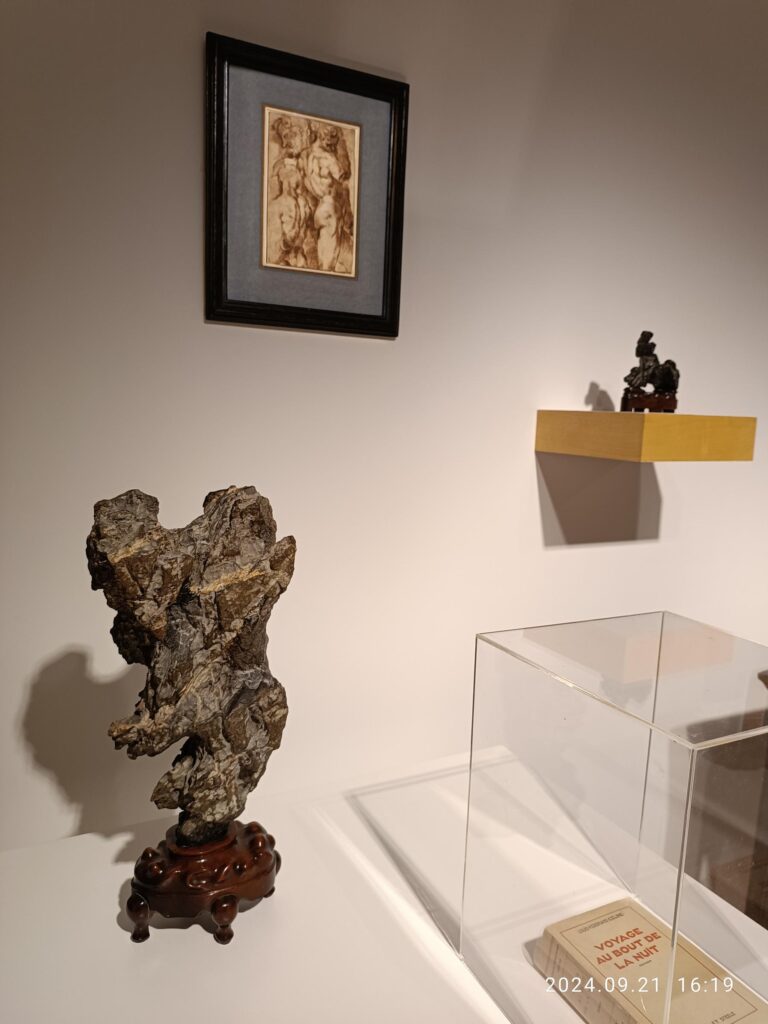
In 2010 it was purchased by James Faber, of London, and later entered the collection of Mickey Cartin, the current owner. Cartin, based in Connecticut, transformed the electrical supplies company founded by his grandfather into a national firm and began collecting in the 1980s, ranging across books and manuscripts, Old Master paintings, furniture and contemporary art. He was included in Artnews’s Top 200 Collectors list every year from 2007 to 2013.
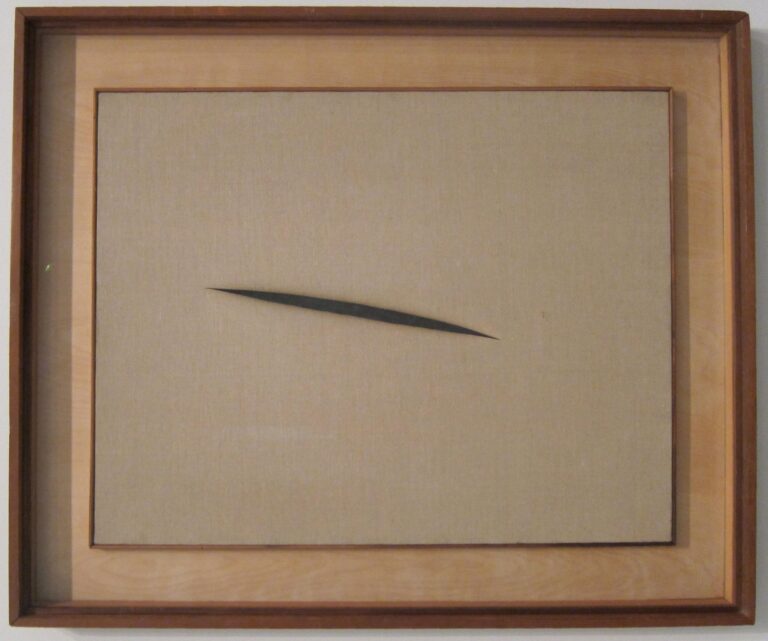
“Mickey Cartin is an eclectic collector whose interests span several categories,” explains Eugenio Donadoni, international director and specialist in medieval and Renaissance manuscripts at Christie’s. “He is perhaps best known for his extensive collection of contemporary art, with works by Josef Albers, Giorgio de Chirico and Roman Opałka: it is easy to see how he was drawn to the images in this book.” The manuscript achieved wider fame when the publisher Taschen released a facsimile edition in 2013.
The Christie’s auction in London and the public exhibition
The manuscript will be the highlight of the Valuable Books & Manuscripts sale, scheduled in London on 10 December 2026 as part of Christie’s Classic Week, within the series of sales “An Alchemy of Ideas: Works from the Mickey Cartin Collection”. The estimate ranges between £700,000 and £1 million, equivalent to about €838,000–1.2 million.
“The Book of Miracles is an extraordinary window onto the Renaissance imagination,” added Donadoni. “Its 167 miniatures capture a world fascinated by signs, marvels and inexplicable phenomena, bringing together comets, eclipses, floods, monstrous births and visions of the Apocalypse.” Before the sale, the 16th-century illuminated manuscript will be on public display at Christie’s King Street premises in London from 4 to 10 December 2026.
For a collector of rare books and manuscripts, the opportunity is not only cultural: a codex with this provenance, this pictorial quality and an attribution supported by solid stylistic comparisons represents one of the rare cases in which a complete illustrated cycle of 16th-century Germany returns to the market.
Content produced with the assistance of artificial intelligence and with human editorial review.