In January 2026 Sotheby’s bundled art-backed loans into financial securities worth 900 million dollars.
Key points
- In January 2026 Sotheby’s securitized 900 million dollars in loans backed by artworks.
- Fractional ownership makes it possible to invest in company shares linked to a work of art, without physically owning it.
- Between 1995 and 2023 contemporary art is said to have yielded an average annual return of 11.5%, compared with 9.6% for the S&P 500, but this figure should be treated with caution because it comes from sellers.
- Two paintings by Tomie Ohtake sold in 2016 and 2023 show how risky it is to directly compare auction prices.
- In Tokyo, Hong Kong and Seoul, auctions follow very different price and liquidity dynamics.
Sotheby’s turns art into financial securities, while platforms fractionalize ownership
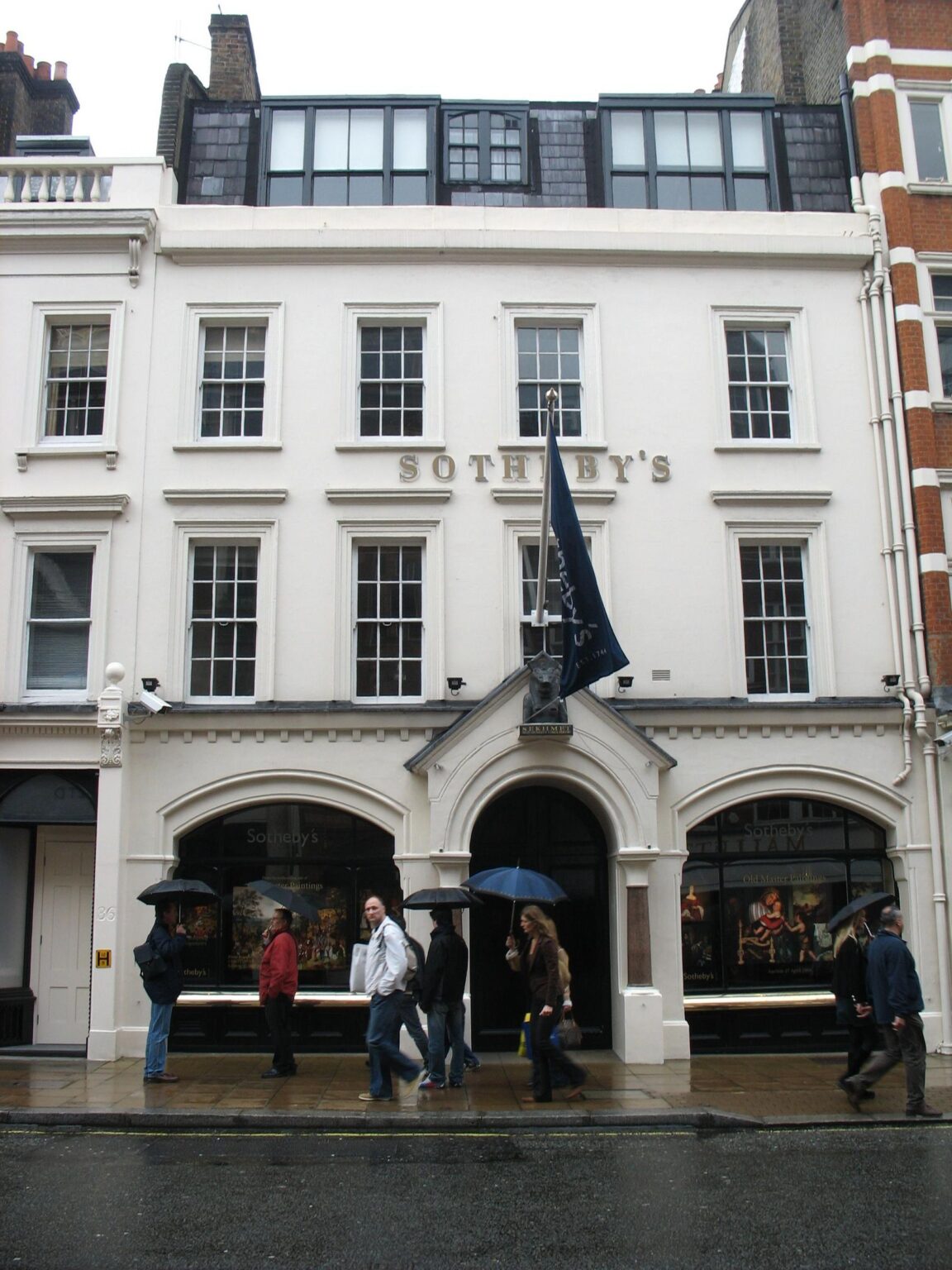
Sotheby’s has pooled loans backed by artworks into a package of securities worth 900 million dollars, to be placed on the financial market. This is not entirely new: auction houses have been lending money against art collateral at least since the 1980s, according to Brazilian researchers who have been studying the phenomenon for some time.
Alongside this there is a parallel with fractional ownership: some platforms allow you to buy shares in companies that own a single work, instead of the painting itself. If the work is sold, the proceeds are divided among investors according to the share they hold.
Two issues remain unresolved. The first concerns a possible conflict of interest: an institution that acts as an intermediary in price formation may also have a direct financial interest in the outcome of the sale. The second is liquidity in art auctions: buying a share does not guarantee that you will be able to resell it whenever you want.
How profitable is investing in art really: data and caveats
Between 1995 and 2023 contemporary art is said to have generated an average annual return of 11.5%, higher than the 9.6% recorded by the S&P 500. The comparison is striking, but the very source of the data warns that the figures come from sellers and that past returns do not guarantee future results.
There is also an obstacle that tables do not show: a work with a high estimate can remain unsold for months or years, even when the artist is already established. The auction market is concentrated in specific seasons, and this makes the return on paper different from the return that is actually accessible.
The case of Tomie Ohtake helps to clarify the problem. The painting Composição was sold in 2016 for R$350,000; another, Sem título, was auctioned in 2023 for R$800,000. Concluding that the artist’s value has more than doubled in seven years would be a mistake: they are different works, sold at different times, with figures not adjusted for inflation. Reports from September 2026 estimate price ranges that even overlap between the two works, a sign that a single hammer price does not tell the whole trajectory of an artist.
Differences between auction markets: from Asia to Brazil
Where a work is sold changes how much is sold and to whom. A study on Asian auctions identifies three markets with opposite dynamics. In Tokyo the sell-through rate is close to 91%, but most lots remain under 5,000 dollars. In Hong Kong about 14% of transactions exceed 100,000 dollars, a sign of a higher concentration of high-end sales. In Seoul most trades fall between 5,000 and 100,000 dollars, with a median price around 15,000 dollars.
A high sell-through rate does not mean high prices, and vice versa: each of these three cities reflects a different dimension of the market, and generalizing about differences between auction markets remains a risky exercise.
In Brazil the hierarchy follows a different logic. According to the column Leilão, Portinari, Di Cavalcanti and Volpi lead the ranking by total sales value, each around R$50 million. Guignard, on the other hand, has the highest average price per work, above R$500,000. Volpi is the only one among the top five to appear both by quantity and by value: more than half of his works put up for sale between 2022 and September 2026 have found a buyer.
Art fairs, symbolic value and new geographies of recognition
Auctions show what has already been sold; contemporary art fairs indicate what is attracting attention. Gallerists, collectors, curators and critics negotiate there and help build artists’ reputations. The fair Independent 20th Century, with 57 galleries and more than 130 artists, impressed visitors with a selection considered stimulating without being excessive: some even preferred it to TEFAF, one of the most established art fairs in the world.
That selection begins long before the opening: at major fairs, fewer than a third of applicant galleries are admitted. Entering this circuit means gaining access to an important platform, but also taking part in a system that distributes visibility unevenly.
In this context fits the column by Virginia Geo in the magazine Concept, devoted to a reinterpretation of art history that recognizes works rooted in African and Indigenous traditions, long kept off the market’s radar. Openness to these forms of expression can broaden the cultural horizon of collectors and institutions, but for recognition to last, research, documentation and conservation are needed: without that work, the risk is to turn a historical rediscovery into a mere commercial fad.
What really determines the value of a work of art
As early as the nineteenth century the economist David Ricardo treated rare and non-reproducible goods as an exception to conventional explanations of value: the price of a work does not depend solely on the hours of labor spent producing it. Almost a century later, the economist Thorstein Veblen added another key, describing the consumption of expensive goods as a way to publicly demonstrate one’s social position.
This explains why, for many collectors, financial return is not the only reason for buying, nor always the main one. The symbolic value of art can influence its financial value, and a major auction result can in turn strengthen an artist’s reputation, in a self-reinforcing loop between price, information and prestige.
Understanding how the art market is valued therefore means looking beyond the auction price. Knowing how much a work was sold for is not the same as knowing what it is really worth: the price records a transaction, the value depends on the stories, relationships and expectations that are built around that work.
Read also: Georgia O’Keeffe’s rediscovered painting goes to auction at Christie’s with an estimate of about 3 million dollars · Sotheby’s is putting up for sale for 1.15 million a studio that could be Toulouse-Lautrec’s in Montmartre
Content produced with the assistance of artificial intelligence and human editorial review.