Sotheby’s sold a painting by Yayoi Kusama for $15.1 million, setting the auction record for Yayoi Kusama on the evening of November 16, 2026, in New York.
The work, titled No. 3P.B., was sold during the evening sale “The Now and Contemporary” by Sotheby’s. The sale comes three months after the death of the Japanese artist, who passed away on August 14, 2026.
Key points
- Yayoi Kusama’s painting No. 3P.B. was sold for $15.1 million, including fees, almost €13.7 million.
- The sale took place on November 16, 2026, in Sotheby’s evening auction “The Now and Contemporary” in New York.
- The price represents the absolute record for a work by Kusama at auction, while still remaining within the estimate range.
- The work, a 1960 oil on canvas measuring 159.1 x 143.5 cm, belongs to the Infinity Nets series and was exhibited at the Whitney Museum of American Art in 1961.
- Sotheby’s evening totaled $378.7 million with fees, opening the week of major New York auctions.
The sale that set the auction record for Yayoi Kusama
The auction record for Yayoi Kusama came precisely on the opening night of New York’s major autumn sales. No. 3P.B. was knocked down with a hammer bid of $12.5 million, rising to $15.1 million with fees, against an estimate between $10 million and $15 million.
Auction details
The sale took place on Monday evening, November 16, 2026, within the “The Now and Contemporary Evening” auction at Sotheby’s, which alone brought in $224.78 million ($268.7 million with fees). The work by Kusama was the fifth most expensive lot of the evening. Taking into account the sale of the Baum collection that preceded the evening auction, the night’s total rose to $378.7 million with fees. During the same evening, records were also set for Sam Francis, Jonas Wood, Firelei Báez and Tomma Abts.
Sale price in line with market expectations
The result remained within the estimate range, a fact that is not surprising given the historical importance of the work and the stature of the artist in her recent career. Lucius Elliott, head of evening sales of contemporary art at Sotheby’s, commented that the evening confirmed a market “in a very good moment,” with strong demand and real competition among bidders.
The importance of No. 3P.B. in Kusama’s artistic legacy
No. 3P.B. is one of the largest canvases in the Infinity Nets series, created in 1960. The dense applications of bright red evoke the infinity of waves and, at the same time, the memory of a vermilion flower whose patterns filled the kitchen of the artist’s grandmother.
Positioning within the Infinity Nets series
The Infinity Nets are among the series that, in the 1960s, helped establish Kusama on the avant-garde scene: canvases made up of thousands of rings or nets that form hypnotic surfaces.
Exhibition history and artistic themes
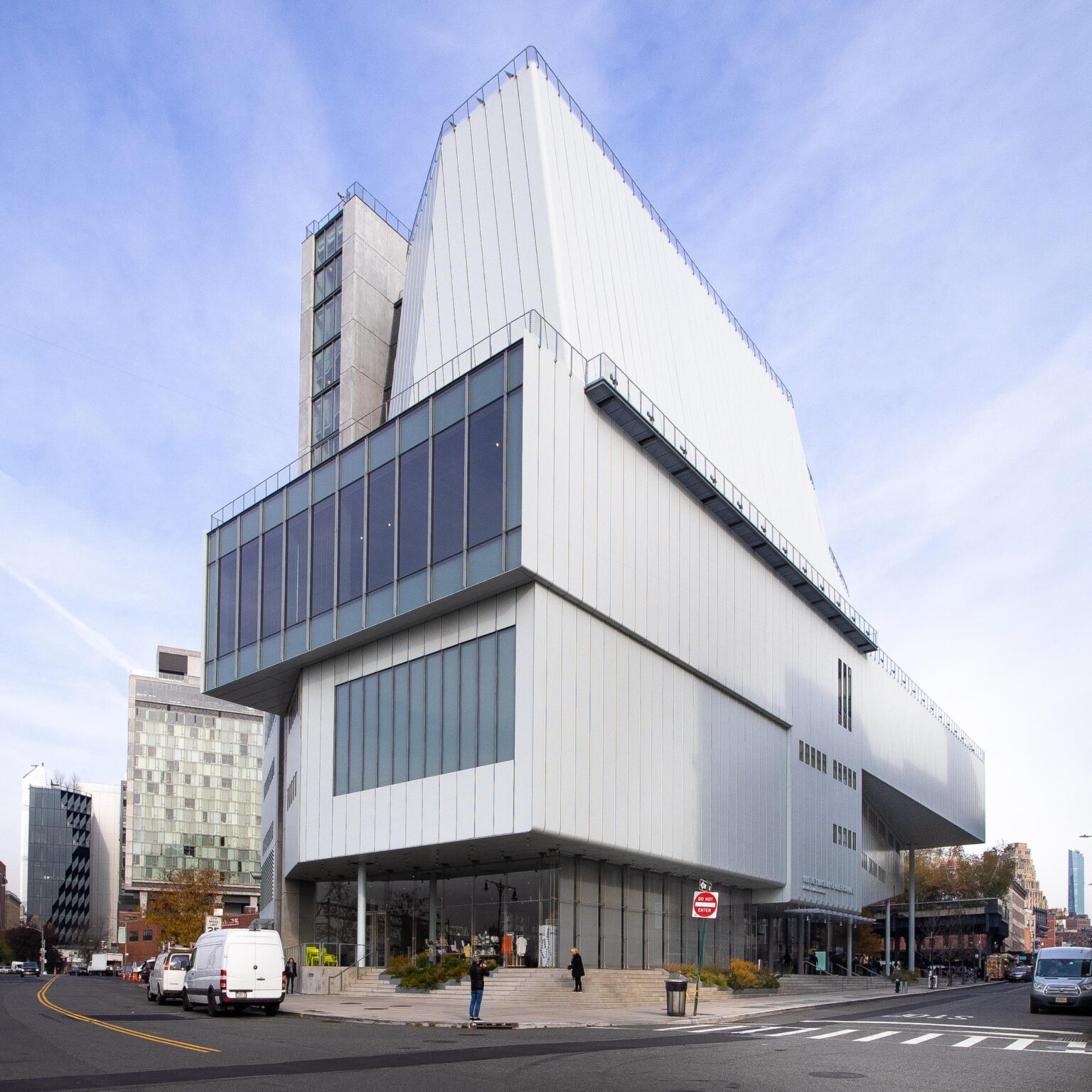
In 1961 Kusama took part in the annual exhibition of contemporary painting and sculpture at the Whitney Museum of American Art, presenting No. 3P.B. itself alongside works by Joan Mitchell, Helen Frankenthaler and Georgia O’Keeffe. It was one of the first inclusions of the Japanese artist in an American institutional exhibition. The theme of repetition, which returns in the monumental pumpkins and in the mirrored installations, arises from the visual hallucinations experienced by the artist and becomes the recognizable hallmark of all her production.
Life and artistic training of Yayoi Kusama
Kusama was born into a wealthy family of seed merchants in Matsumoto, Japan, in a traditional environment that she soon perceived as limiting.
Early years and training
Her training in nihonga gave her great technique, but bound her to rigid conventions. Driven by the desire for emancipation, Kusama found in repetition her own distinctive motif.
New York, the avant-garde and the return to Japan
Her move to New York in 1957 marked a turning point in her life. Supported by her friend Georgia O’Keeffe and in constant contact with the American avant-garde, Kusama allowed her art to invade spaces, creating increasingly bold installations, from MoMA to the Statue of Liberty. She never abandoned her Japanese roots, which remained central to her work, and in 1970 she returned to live in Japan, where she joined an institution in which she felt comfortable continuing her art. Kusama described her own existence as that of “a pea lost among millions of other peas.”
The auction record for Yayoi Kusama set on Monday evening confirms how that journey, from the conventions of nihonga to the infinite nets painted in New York, still today speaks to the contemporary art market, three months after the artist’s passing.
Content produced with the assistance of artificial intelligence and with human editorial review.