

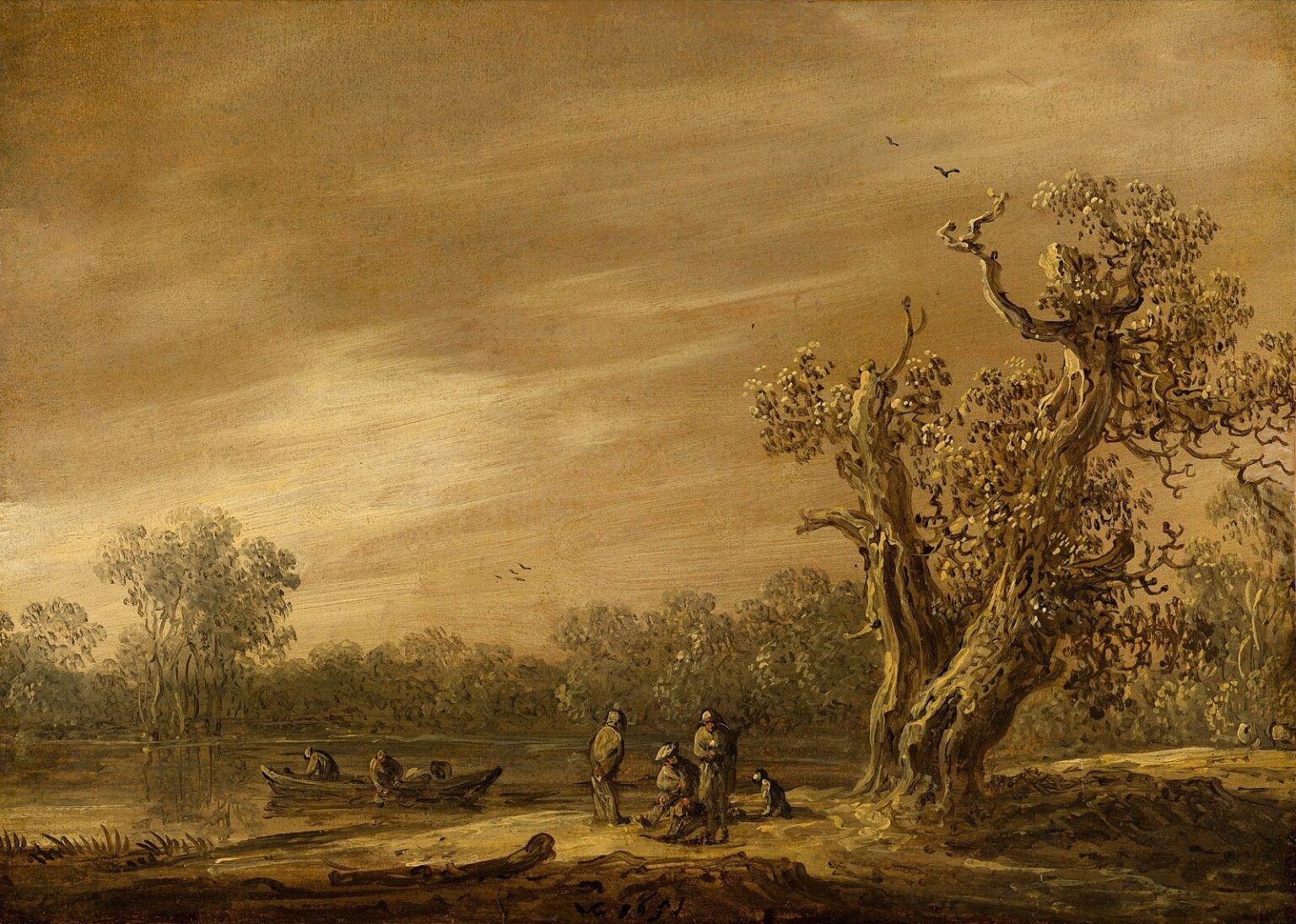
A 17th-century Dutch painting will return to its rightful heirs after almost sixty years in a public museum, in one of the most significant recent cases of restitution of artworks looted by the Nazis in the Netherlands. The Mauritshuis in The Hague has announced that Fishermen by the Lakeshore, a canvas painted in 1651 by Jan van Goyen, will be returned to the family of Jacques Goudstikker, the famous Jewish art dealer whose collection was looted during the Nazi occupation of the Netherlands.
Key points
- The Mauritshuis purchased Van Goyen’s painting in 1967 for 58,000 guilders, about 6,000 pounds at the time.
- New provenance research linked the work to the collection of Jacques Goudstikker, who died in 1940 while fleeing the Netherlands.
- Goudstikker’s gallery, with its 1,113 works, was taken over without the consent of the widow, and part of the works ended up in the collection of Nazi leader Hermann Göring.
- The Dutch Restitutions Committee recommended returning the work to Marei von Saher, widow of Goudstikker’s son, and Culture Minister Rianne Letschert followed the recommendation.
Discovery and provenance of the 17th-century painting
The case stems from internal research carried out by the museum. The Mauritshuis had purchased Fishermen by the Lakeshore in 1967 for 58,000 guilders, an amount equivalent to about 6,000 pounds at that time. For decades the work remained on display without anyone suspecting its controversial origin. It was a new provenance investigation that revealed the connection with a record belonging to the collection of Jacques Goudstikker, the Jewish dealer who died in 1940 while trying to flee to England by ship. This kind of archival work, often long and painstaking, is now the main tool European museums use to clarify the history of their collections.
The Nazi looting and the forced sale of the collection
Goudstikker’s gallery, which contained 1,113 works, was taken over after his death without the consent of his widow, who was the main shareholder in the business. According to the Dutch Restitutions Committee, the sales were made possible only thanks to the appointment of a managing director who was favorable to the German buyer, while several works had already been transported to Germany even before the formal purchase contracts were signed. Part of that heritage, including the painting now being returned, ended up in the personal collection of Nazi leader Hermann Göring. For the committee, this dynamic matches the typical pattern of the Nazi authorities: imposing forced sales and then giving them a retroactive appearance of legality.
The Dutch decision on restitution and the policy shift
Dutch Culture Minister Rianne Letschert decided to follow the formal opinion of the Restitutions Committee, ordering the return of the work to Marei von Saher, widow of Eduard, Goudstikker’s only son. The committee’s recommendation reflects a change of course in Dutch restitution policy, guided by a 2020 report aimed at ensuring greater “humanity, transparency and goodwill” in cases involving artworks looted by the Nazis.
The path is not straightforward, however. Twenty years ago, the restitution of 202 works from Dutch museums to the Goudstikker heirs sparked public criticism and fear among museum directors of losing further pieces from their collections. That episode produced a boomerang effect: according to Auke van Hoek, an art-specialized lawyer at the Amsterdam firm Bergh Stoop & Sanders, subsequent rulings became stricter, making it harder for other claimants to recover their property. This detail matters for the market: it shows how each restitution case creates a precedent that shapes future claims, indirectly influencing the perceived legal risk associated with buying and holding works with uncertain provenance.
Why it matters for museums and collectors
The Van Goyen case shows that provenance risk does not concern only “new” works on the market, but also pieces acquired in good faith decades ago and already integrated into established public collections. For a museum, this means having to factor in periodic reviews of its holdings, with possible consequences for insurance value and for the institutional reputation attached to each individual work on display.
The historical difficulty faced by Jewish heirs
Judith Niessen, head of collections and research at the Mauritshuis, told The Art Newspaper that the painting had not been identified in previous restitution claims, and that it was important for the museum to “do the right thing.” “We bought the painting in the 1960s in good faith and of course we are sad to part with it,” she said. “But it does not belong to us: it left the Goudstikker collection in an unjust way.” Niessen added that many Jewish families struggled to regain their lost works in the postwar period: “Everyone said: well, just be happy to be alive. I think today we feel that something needs to be put right, in a sensible way.”
The Mauritshuis response and the broader significance
The museum’s public acknowledgment carries as much weight as the ministerial decision. Admitting that a work “does not belong” to the institution, even though it was legitimately purchased decades ago, is a signal that other European museums will watch closely. For those operating in the art market, the case is a reminder that the value of a work is measured not only in guilders or pounds paid at the time of purchase, but also in the reputational and legal cost of a provenance that has never been fully verified.
FAQ
What is the significance of the painting Fishermen by the Lakeshore in this restitution case?
It is a 17th-century painting purchased by the Mauritshuis in 1967 and later linked to the collection of Jacques Goudstikker, which was looted by the Nazis.
Why was the painting returned to Marei von Saher?
The Dutch Restitutions Committee determined that the work was taken without the consent of Goudstikker’s widow and recommended its restitution, which was then approved by the culture minister.
How has Dutch policy on Nazi-looted art changed?
Since 2020, the policy has aimed for greater humanity, transparency and goodwill in cases involving artworks stolen by the Nazis.
Did the Mauritshuis know the provenance of the painting at the time of purchase?
No, the museum bought it in good faith in the 1960s and only later acknowledged that the work had left the Goudstikker collection in an unjust way.
{“@context”:”https://schema.org”,”@type”:”FAQPage”,”mainEntity”:[{“@type”:”Question”,”name”:”What is the significance of the painting Fishermen by the Lakeshore in this restitution case?”,”acceptedAnswer”:{“@type”:”Answer”,”text”:”It is a 17th-century painting purchased by the Mauritshuis in 1967 and later linked to the collection of Jacques Goudstikker, which was looted by the Nazis.”}},{“@type”:”Question”,”name”:”Why was the painting returned to Marei von Saher?”,”acceptedAnswer”:{“@type”:”Answer”,”text”:”The Dutch Restitutions Committee determined that the work was taken without the consent of Goudstikker’s widow and recommended its restitution, which was then approved by the culture minister.”}},{“@type”:”Question”,”name”:”How has Dutch policy on Nazi-looted art changed?”,”acceptedAnswer”:{“@type”:”Answer”,”text”:”Since 2020, the policy has aimed for greater humanity, transparency and goodwill in cases involving artworks stolen by the Nazis.”}},{“@type”:”Question”,”name”:”Did the Mauritshuis know the provenance of the painting at the time of purchase?”,”acceptedAnswer”:{“@type”:”Answer”,”text”:”No, the museum bought it in good faith in the 1960s and only later acknowledged that the work had left the Goudstikker collection in an unjust way.”}}]}
Read also: Stop at Sotheby’s: the return of Cézanne’s early works to Aix-en-Provence · The Jewish collectors of Van Gogh owned 100 of the 150 works in Germany
Content produced with the assistance of artificial intelligence and with human editorial review.


