

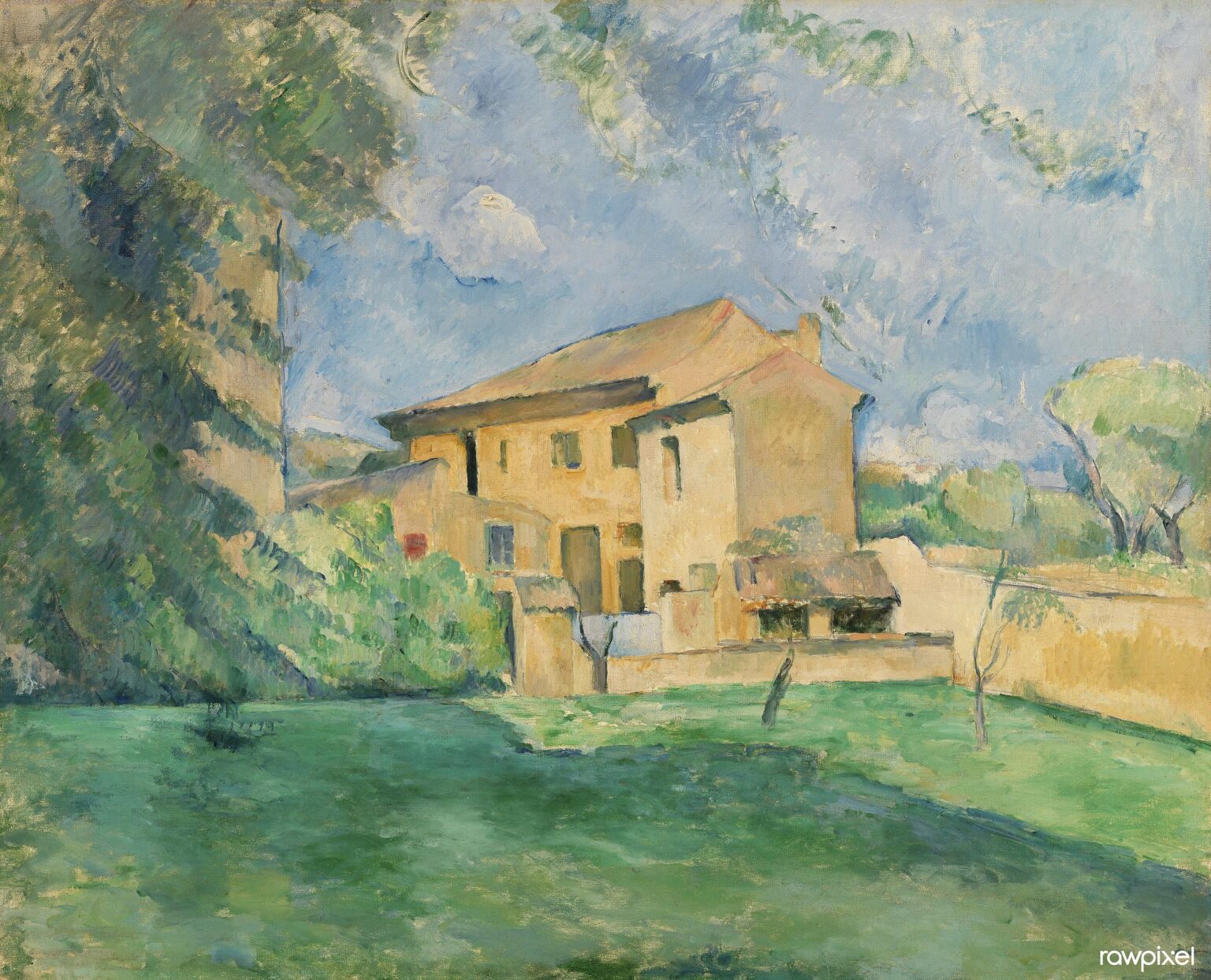
Three early paintings by Paul Cézanne have been withdrawn from the Sotheby’s auction in Paris, scheduled for Thursday, 22 October 2026. This marks the return of Cézanne’s first works to the artist’s hometown, Aix-en-Provence.
Key points
- The three withdrawn works are “La Ferme”, “Arbres au Bord de la Rivière” and “Ciel Entre les Arbres”, painted between 1862 and 1864.
- The total auction estimate was between 1.4 and 2 million euros.
- The City of Aix-en-Provence aims to purchase them with the support of the French Ministry of Culture, following an agreement with the Schlumberger family.
- The Ministry has designated the paintings as a “national treasure”: France now has 30 months to submit a purchase offer.
- The works will be exhibited at the Musée Granet together with other works by Cézanne.
The withdrawal of Cézanne’s works from the Sotheby’s auction
Sotheby’s removed the three paintings from the catalogue of the evening sale “Le Temps Retrouvé: The Schlumberger Collection”, scheduled for Thursday in Paris during Art Basel Paris week. The decision comes after negotiations between the auction house, the owning family and the French institutions.
Lot details and valuations
The three paintings had a combined estimate of between 1.4 and 2 million euros. “La Ferme” alone was valued between 600,000 and 800,000 euros.
The other two works, part of a larger ensemble called “Paysage romantique aux pêcheurs”, were each estimated between 400,000 and 600,000 euros.
The withdrawal concerns a highly significant sale for the Paris market. The Schlumberger collection includes 28 works, with a total estimate of more than 40 million euros.
Among the standout pieces is “Iris” by Claude Monet, valued at up to 30 million euros, along with works by Gustave Courbet and Camille Claudel.
The return of Cézanne’s early works to Aix-en-Provence
The three paintings will return to the city where Cézanne was born in 1839 and died in 1906. The works will be exhibited at the Musée Granet together with other works by the artist.
The City aims to purchase them with the support of the French Ministry of Culture. The agreement was reached after negotiations between Sotheby’s and the Schlumberger family, owners of the paintings.
The agreement between the City, the Ministry and the Schlumberger family
Thomas Bompard, co-head of modern and contemporary art at Sotheby’s France, spoke of a “highly appropriate” return for three works created at Jas de Bouffan, the family estate and Cézanne’s early studio.
According to Bompard, the paintings have “an extraordinary connection with Aix-en-Provence”: the agreement between the family, the City and the Ministry has allowed the works to return to the place where their history began.
National treasure: the regulatory framework for the return
The French Ministry of Culture has designated the three paintings as a “national treasure“. This status gives France 30 months to submit a purchase offer to the owners.
If no offer is made within that period, the works may return to the market. The acquisition by the City, although announced, is therefore not yet formally completed.
The origins of the works at Jas de Bouffan
The three paintings were created between 1862 and 1864 to decorate the main salon of Jas de Bouffan, the estate purchased in 1859 by the artist’s father, Louis-Auguste Cézanne.
The property, on the outskirts of Aix-en-Provence, was for the young Cézanne much more than a house: a refuge, a studio and a laboratory for engaging with the Provençal landscape and the great European pictorial tradition.
The decorative cycle included an allegory of the Four Seasons, inspired by Renaissance iconography and by the painter Jean-Auguste-Dominique Ingres, whose name Cézanne wrote on three frescoes. Completing the ensemble was a portrait of his father, the central figure of the family.
The frescoes were detached from the walls and transferred to canvas in 1899, after the sale and dispersal of the estate, and divided into eight fragments.
The value of the works and the exhibition at the Musée Granet
“Arbres au bord de la rivière” and “Ciel entre les arbres” were part of a larger ensemble, “Paysage romantique aux pêcheurs”, made up of eight panels and considered the most ambitious of the cycle.
The composition depicts a sunset reflected in a swollen river, with fishermen in boats and figures along the banks. The twilight palette recalls the classical tradition of French landscape painting, particularly Claude Lorrain.
“La Ferme”, hanging on the opposite wall, provides a counterpoint with its Baroque sensibility: a tribute to Gustave Courbet, a decisive influence on the young Cézanne, while the treatment of the trees recalls the Dutch painter Jacob van Ruisdael.
As early as 1894, the critic Gustave Geffroy had recognised the decisive role of the estate in the artist’s development, describing the skies, trees and Provençal landscapes of Jas de Bouffan as characteristic elements of his vision.
The return of Cézanne’s early works will make it possible to restore the paintings to their original historical context. The exhibition at the Musée Granet, linked to the finalisation of the acquisition by the City, will offer the public a lesser-known but fundamental phase in the artist’s career.
Read also: Return of works of art stolen by the Nazis in Holland: a Van Goyen comes back after 58 years · The Jewish collectors of Van Gogh owned 100 of the 150 works in Germany
Content produced with the assistance of artificial intelligence and with human editorial review.


