The auction of Design Lab di Cambi brings together historical furniture and objects, retracing the birth of Italian and international modernism through a targeted selection of lots.
What does the Design Lab auction by Cambi offer?
On February 24, 2026, in Genoa, Cambi Casa d’Aste inaugurates the Live Auction 1133 “Design Lab”, a unique session that includes 479 lots dedicated to historical Italian and international design. The sale spans a wide chronological range, from the early 20th century to the 1950s, with particular attention to the schools and masters who defined modern taste.
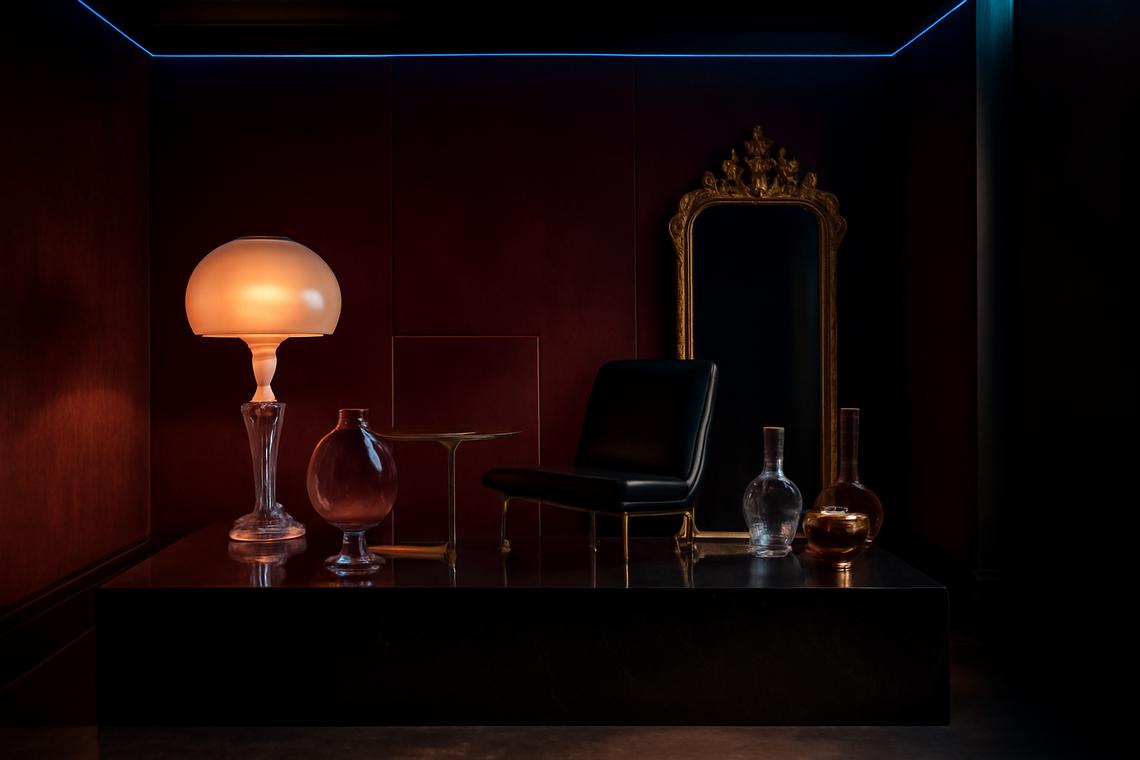
The catalog features furniture, lamps, mirrors, and designer objects, with a strong presence of Venetian manufacturers and protagonists of Lombard modernism. Additionally, the curatorial approach constructs a coherent narrative on the developments of interior design in Europe in the first half of the 20th century.
Which historical designers emerge in the selection?
Among the prominent names are Gio Ponti, Barovier & Toso, Max Ingrand, Paolo Buffa, and Osvaldo Borsani, along with the historic furnaces of Murano. The cross-presence of architects, interior designers, and master glassmakers provides a detailed panorama of European design of the period.
However, the sale is not limited to the most well-known names. The catalog indeed intertwines established names and productions of historical manufacturers, creating a context suitable for both expert collectors and those approaching the vintage design market for the first time.
Murano glass central in this Cambi design auction
A prominent role is reserved for artistic glass, emblematic of 20th-century Murano production. In this area, lot 39 attributed to Barovier & Toso stands out, a refined testimony of the Venetian glassmaking tradition.
The lot includes a blown glass lamp that highlights the formal research and the so-called “luminous elegance” typical of Murano furnaces. The piece is accompanied by an estimate of 1,500–2,000 euros, a range that makes it potentially accessible compared to the records of the segment.
What are the key lots of the Cambi auction signed by Max Ingrand and the Scarpa?
Of particular interest for post-war collecting is lot 61 by Max Ingrand, a key figure in the reconstruction and culture of light in the late 20th century. The lot includes four coat racks model 1997, recognizable for their essential lines and use of high-quality materials, with an estimate of 1,500–2,000 euros.
That said, the catalog also highlights Italian upholstered design. Lot 237, attributed to Afra and Tobia Scarpa, offers a Soriana sofa with a chromed tubular structure and fabric upholstery, an example of balance between comfort and formal research, estimated at 4,000–6,000 euros.
How does the Cambi design auction close with Andrea Salvetti?
The sequence of lots finds a significant conclusion with number 464, signed by Andrea Salvetti. It is a storage unit that combines function and elegance, ideally fitting into the dialogue between artistic craftsmanship and contemporary design.
The estimate between 8,000 and 10,000 euros places this piece in the high range of the sale. Additionally, its concluding position in the catalog underscores its role as a synthesis between the memory of the project and more recent languages of furniture collecting.
Design Lab for the design market
The collection of lots offers a coherent overview of the evolution of interior design in Europe in the first half of the 20th century, with specific attention to Italian production. Overall, the sale presents itself as a laboratory of historical reading of design, where each piece contributes to defining a map of stylistic and productive references.
The auction constitutes an interesting opportunity for collectors and enthusiasts: alongside the most iconic objects, there are proposals with contained estimates, allowing access to historical names with calibrated budgets. In this sense, the selection confirms the vitality of the sector in the contemporary market and reaffirms the role of auction houses as privileged observers of historical design trends.