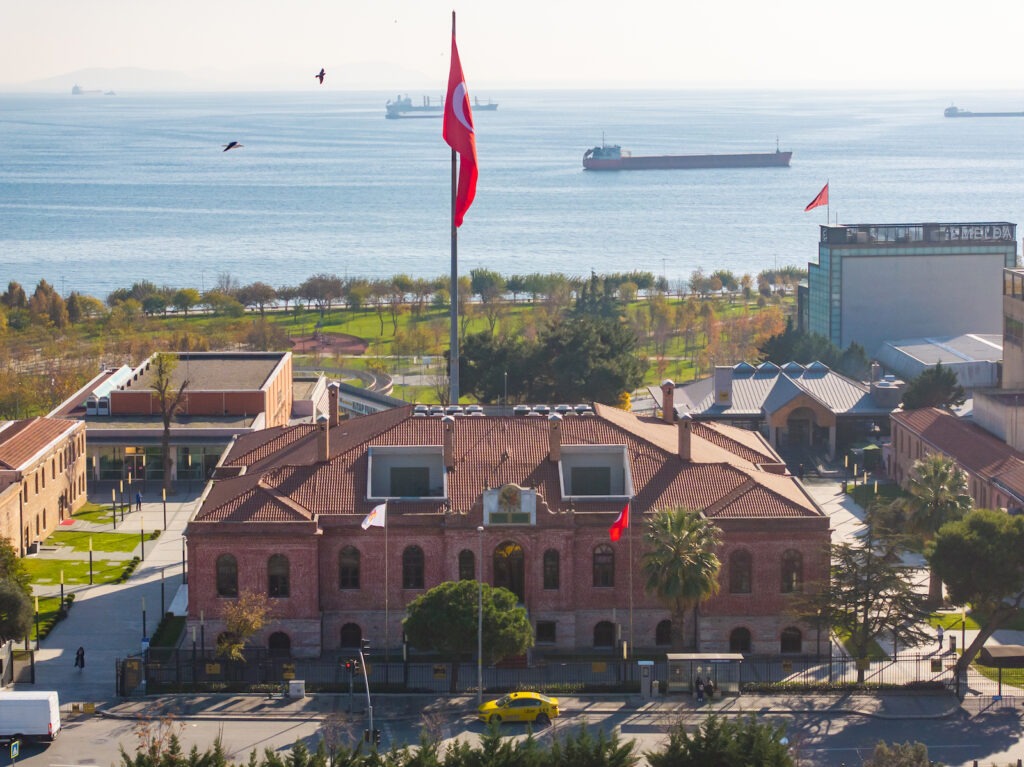
An important archaeological discovery in Istanbul. In the district of Zeytinburnu, a former Ottoman hospital houses one of the most extensive mosaic complexes outside the historic walls, discovered during restoration work and now visitable in situ.
The museum of Mosaics of Zeytinburnu
In the quartiere di Zeytinburnu, far from the most beaten tourist routes, an Ottoman building houses a vast complex of mosaics that remained hidden for centuries below ground level. Today that place is the Zeytinburnu Mosaic Museum, a still little-known stop that gives travelers the rare feeling of making a personal discovery.
How the mosaics were discovered
The story begins in 2015, during the restoration of a historic former military hospital — today transformed into the Kazlıçeşme Arts Centre. At about one and a half meters deep, perfectly preserved decorated surfaces emerge. The mosaics are immediately secured. The real breakthrough comes in 2019, when new excavations conducted under the supervision of the İstanbul Archaeological Museums confirm that the geometric patterns extend beyond the building’s limits. Not only that: the archaeologists also uncover a marble sarcophagus with the remains of two individuals, indicating that the site holds a much broader story than just a simple decorated floor.

The visit to discover the opus tessellatum of Istanbul
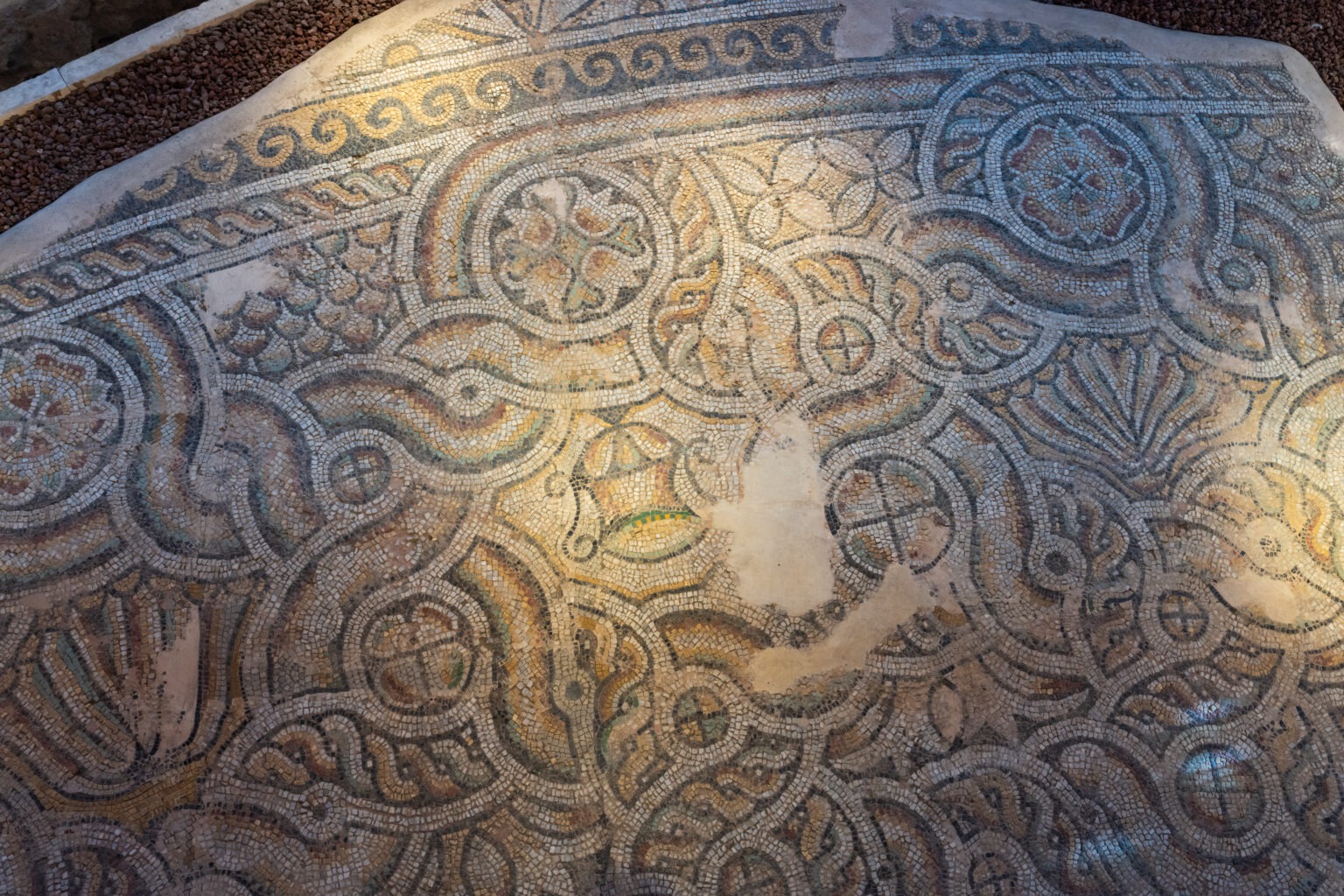
Today the visit is designed to experience this encounter with the past in a direct way. The mosaics are displayed exactly where they were found and are observed from above thanks to an elevated glass walkway. Walking above them, you discover about 190 square meters of polychrome decorations made with the opus tessellatum technique: stars, geometries, polygonal compositions, and floral motifs that date back to the 4th–5th century AD and probably were part of a local Roman villa. It is a close look at the domestic aesthetics of late antiquity, more intimate than any traditional museum hall. Next to the mosaic surfaces, the path includes other clues of the site’s past life: a brick tomb, human remains, terracotta vases, and coins from different eras. These are details that tell of continuity, presence, transformations — and that remind us how much İstanbul is a city built on layers of time.
The complex, moreover, is not just an exhibition space. Library, rooms for exhibitions, and cultural environments transform it into a lively center, integrated into the daily life of the neighborhood. Not an isolated place, but a meeting point between archaeology and contemporary life.
The Museum of Mosaics of Zeytinburnu is open every day except Monday, from 10 to 18.
Kazlıçeşme, Abay Cd., 34020 Zeytinburnu/Istanbul, Turkey
https://istanbul.goturkiye.com
Read also: 2025, a year to remember in art and design collecting · Greece: a 2000-year-old statue found in the trash