

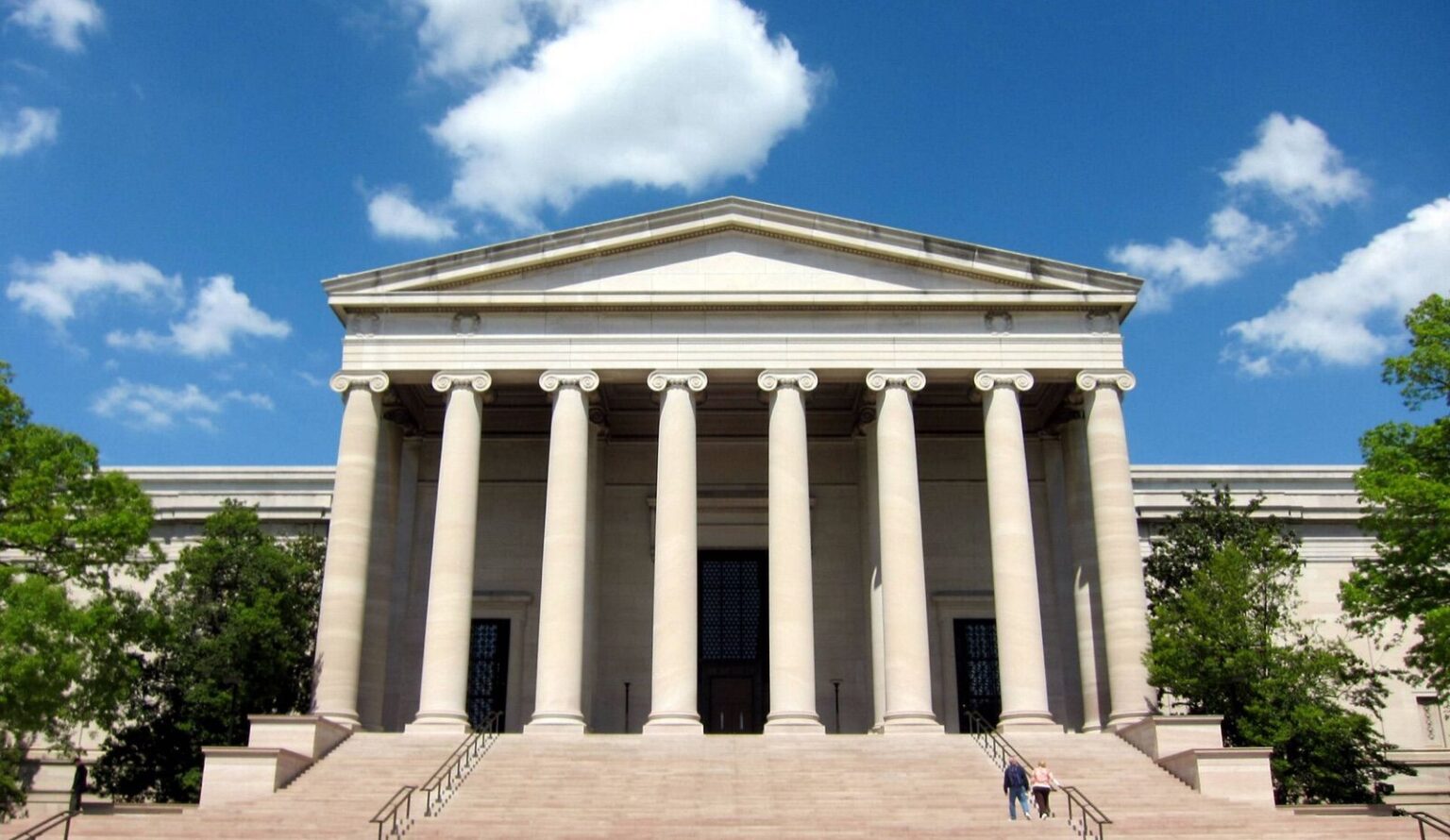
Almost 190 works in less than six months: this is the balance of art purchases by the National Gallery of Art in Washington, which since March 2026 has expanded its collection with paintings, sculptures, and photographs spanning five centuries of art history and multiple continents. Between colonial crucifixes, a masterpiece by Wifredo Lam, and works by artists who had never before entered the museum’s galleries, the NGA is substantially reshaping its holdings.
Key points
- The National Gallery of Art has acquired about 190 works since March 2026, including painting, sculpture, and photography.
- The acquisitions cover five centuries of art history, from the 17th century to contemporary production.
- Among the artists represented in the collection for the first time are Marie Bracquemond, LaToya Hobbs, Stacy Kranitz, and Christina Quarles.
- A 2024 work by Christina Quarles survived the fires that devastated Los Angeles in 2025.
- Director Kaywin Feldman and curator E. Carmen Ramos have commented on the historical and artistic significance of the new additions.
The National Gallery has acquired about 190 different works since March 2026
The U.S. museum has carried out one of the broadest acquisition campaigns of recent years, with works ranging from colonial Latin American painting to late 20th-century photography. Among the pieces added to the collection are woodcut prints by T.C. Cannon and a group of photographs by Lillian Bassman and Paul Himmel.
Types of media and historical periods
Variety is the defining feature of this wave of acquisitions: painting, sculpture, and photography are combined in works ranging from the 17th century to the most recent production.
Many of the new additions mark the very first presence of an artist in the National Gallery’s permanent collection. This is the case for the French Impressionist Marie Bracquemond, as well as for a substantial group of contemporary U.S. artists: LaToya Hobbs, Stacy Kranitz, Lorraine O’Grady, Lehuauakea, Jordan Ann Craig, and Christina Quarles.
Notable works and historic pieces acquired
Among the acquisitions stand out several pieces that, due to their rarity or symbolic value, mark a turning point in the museum’s collections, from a 17th-century painting to a work that literally passed through fire.
The crucifix by María Josefa Sánchez and the Mexican batea
One of the oldest objects added to the collection is a rare 17th-century Mexican batea, probably used to decorate an elite Spanish colonial home. In the same historical period, on the other side of the ocean, the artist María Josefa Sánchez was painting a crucifix that has now become part of the NGA’s holdings.
Wifredo Lam’s 1944 work
L’esprit veillant (The Watchful Spirit), created by Wifredo Lam in 1944 after his return to Cuba, is described by the museum as a turning point in its collection. The work carries with it a celebration of the culture of Afro-descendant spirituality across Europe, the Caribbean, and the Americas. From the same historical period comes a work by Guatemalan painter Tomás de Merlo, dating from the 18th century.
No less significant is the story behind Christina Quarles’s Turn Around, Don’t (2024), now part of the permanent collection. The painting, completed shortly before the fires that in January 2025 devastated Altadena and destroyed the artist’s home and studio, is one of the very few finished works of hers to have survived the flames. This detail adds emotional as well as historical weight to a work already highly relevant to the artist’s career.
Expansion of the Latin American and contemporary art collection
The new acquisitions significantly expand the holdings dedicated to Latin American art, creating a dialogue between historical figures and contemporary voices. For a museum like the National Gallery, filling this kind of gap means not only enriching its historical narrative, but also strengthening the cultural and reference value of the works already in the collection, with indirect effects on the visibility and market value of the artists involved.
Historical and contemporary Latin American artists
Among the artists with Latin American roots who have entered the collection are María Elena González, Ángel Rodríguez-Díaz, and David Antonio Cruz, along with a group of Salvadoran artists: Verónica Vides, Walterio Iraheta, Beatriz Cortez, and Simón Vega. This combination of different generations and geographies, from colonial Mexico to contemporary El Salvador, offers a broader picture of Latin American artistic trajectories, historically underrepresented in major U.S. national museums.
Institutional perspectives on the growth of the collection
The museum’s leadership has framed this wave of acquisitions as a long-term strategic choice, not as an isolated operation. It is a signal of interest not only to art historians, but also to collectors and institutions watching which artists major museums choose to legitimize through their permanent collections.
Words from Kaywin Feldman and E. Carmen Ramos
“Spanning more than five centuries, our latest acquisitions offer new opportunities to engage with important artistic innovations, opening new points of access to the practices of both established and lesser-known artists,” said National Gallery director Kaywin Feldman. “The historical breadth of these works reflects our commitment to expanding the scope of the collection, showcasing artistic excellence across eras.”
E. Carmen Ramos, chief curator and conservation officer of the museum, expressed a similar view: “These newly acquired works reflect the kaleidoscopic breadth of art of the Americas and beyond. We are excited to introduce into our collection this group of significant works, which collectively demonstrates groundbreaking historical developments and ongoing contemporary practices.” Ramos added that the group of acquisitions “expands many facets of our growing collection, particularly in the fields of modern art, contemporary painting, and Latin American colonial art.”
The picture that emerges from this acquisition campaign does not concern only the National Gallery as an institution: it also signals which artists and which stories the art market and major public collections are choosing to consolidate for the future, with repercussions that will be felt far beyond the galleries of the Washington museum.
FAQ
How many works has the National Gallery of Art recently acquired?
The NGA has acquired about 190 works since March 2026, encompassing different media and covering five centuries of art history.
Which new artists are represented for the first time in the NGA collection?
Among the artists represented in the collection for the first time are Marie Bracquemond, LaToya Hobbs, Stacy Kranitz, Lorraine O’Grady, Lehuauakea, Jordan Ann Craig, and Christina Quarles.
What makes the Wifredo Lam painting acquired by the NGA significant?
Wifredo Lam’s L’esprit veillant (1944) is described as a landmark addition, capable of celebrating Afro-descendant spiritual culture across multiple regions and continents.
How do NGA leaders describe the importance of these acquisitions?
Director Kaywin Feldman emphasizes the expansion of the collection’s scope and historical depth, while E. Carmen Ramos highlights how the works demonstrate groundbreaking historical developments and ongoing contemporary practices.
Content produced with the assistance of artificial intelligence and with human editorial review.


