

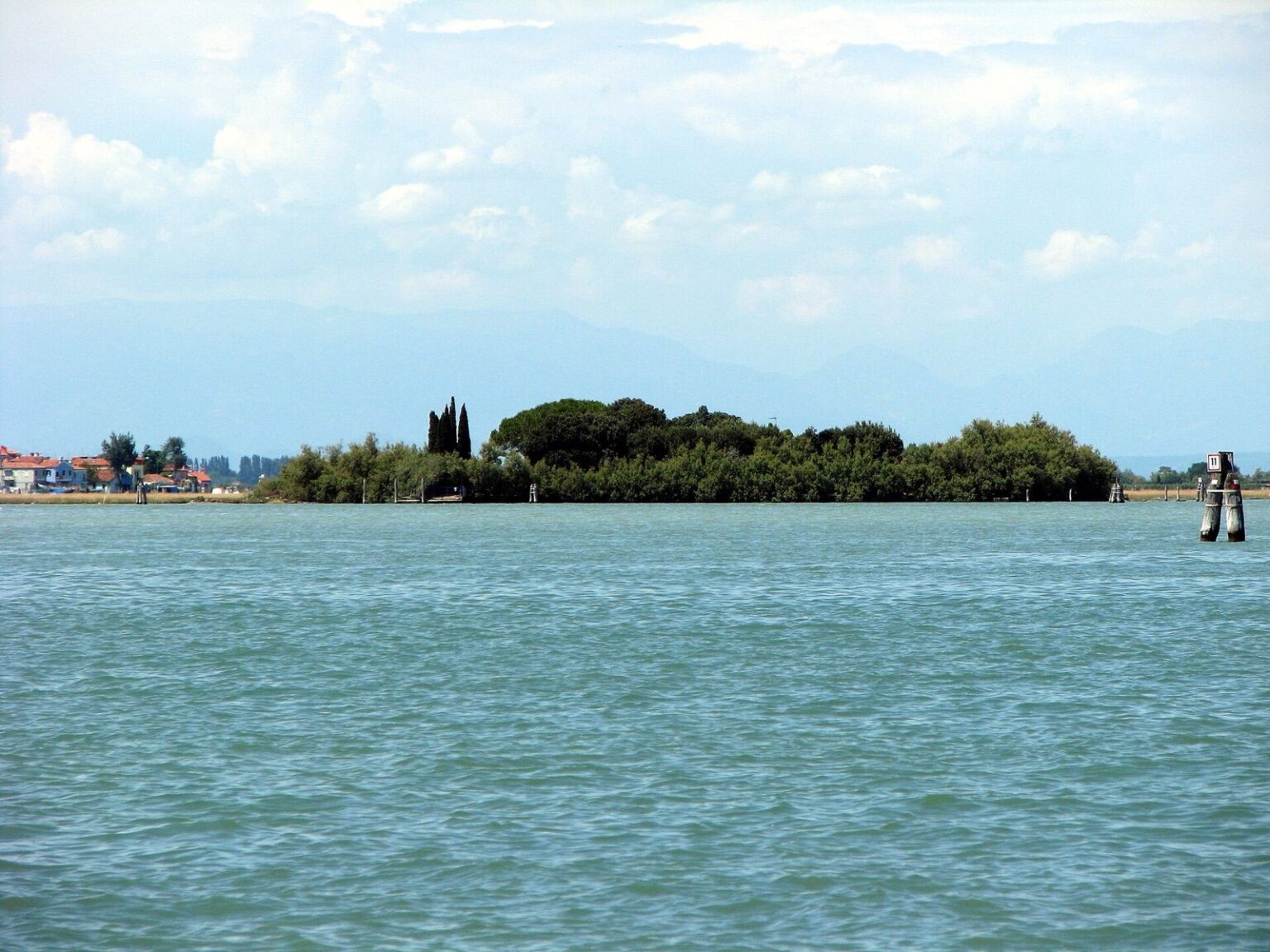
A Napoleonic fort transformed into a private residence, surrounded by the waters of the Lagoon and visible only to those arriving by boat: this is the setting of the private island of Crevan for sale, a real estate transaction that combines military history, architectural restoration and a luxury market increasingly attracted to unique, non-replicable assets. The property, of about 5,700 square meters, has been entrusted to Lionard Luxury Real Estate and is located about 7 kilometers from Venice, in a corner of the lagoon facing Burano and Torcello.
Key points
- Crevan Island is a private property of about 5,700 square meters in the Venetian Lagoon, about 7 km from the city.
- It is accessible only by boat and hosts a Napoleonic-era fort transformed into a residence.
- The fort was built in 1806 as part of the Venetian defensive system, then expanded during the Austrian period.
- After the First World War the building passed into private use and has been under restoration since 1996.
- The residential structure measures 215 square meters, with four rooms and two bathrooms, set in a garden overlooking Burano, Torcello and Venice.
Unique location and details of the Crevan Island property
Crevan Island stands out for a location that few properties in the world can boast: isolated, yet within lagoon reach of the most iconic city in Italy. It is precisely this combination of isolation and proximity to Venice that makes the transaction attractive for the ultra-prime segment of the real estate market.
Geographical location and accessibility
The island is located about 7 kilometers from Venice and is accessible exclusively by boat. A small strip of land surrounded by water, where the lagoon landscape is not just a backdrop but an integral part of the property’s value, in a portion of the Venetian Lagoon that faces Burano and Torcello.
Size and features of the property
The real estate complex covers a total of about 5,700 square meters, while the actual residential structure extends over 215 square meters, laid out in four rooms and two bathrooms. Around the building stretches a waterside garden, with lawns, trees and ornamental plants that create a private landscape difficult to replicate elsewhere.
Historical importance and restoration of the Napoleonic fort
The value of the island is not measured only in square meters: its military history is an integral part of what is now being sold as a unique piece of Venetian heritage. For those operating in the luxury real estate market, the historical stratification of a property like this represents a value multiplier, because it tells centuries of events that no new construction could replicate.
Construction and military role from 1806
During the Napoleonic rule the island was included in the defensive system designed to protect Venice. In 1806 a military redoubt was built, later expanded during the Austrian occupation. After the transfer of Veneto to the Kingdom of Italy in 1866, the structure maintained its function until the end of the First World War.
Post–First World War conversion and restoration since 1996
Once the conflict ended, the fort was converted to private use. Since 1996, restoration work has been carried out that has brought the complex back to life, adapting the ancient architecture to the residential scale seen today. It is a concrete example of how a well-executed historical restoration can transform a military structure into a prestigious real estate asset, significantly increasing its appeal on the luxury market.
Cultural roots and landscape value
Beyond the architecture, Crevan Island carries a direct link with local history, an element that in the high-end property segment often helps build the identity narrative of the asset, a factor increasingly considered by those investing in luxury properties in Italy.
Origin of the name linked to Angelo Crevato
The name Crevan derives from the canal of the same name nearby and, according to oral tradition, is linked to the Franciscan friar Angelo Crevato, who in the 15th century contributed to the reconstruction of the nearby convent of San Francesco del Deserto by raising funds for its restoration.
Privacy and landscape conservation highlighted by Lionard Luxury Real Estate
Explaining the meaning of this sale is Dimitri Corti, founder and CEO of Lionard Luxury Real Estate: “In ultra-prime real estate, a private island represents one of the most absolute forms of ownership: its boundary is not a wall, but the horizon,” he explains. “Crevan offers the privilege of withdrawing from the world without abandoning the universal imagery of Venice. You are not buying just a residence and land, but space, privacy and an entire landscape to safeguard.”
Corti’s words explain why, in this market segment, the price of a property does not reflect only the surface area or the condition of the building, but the intangible value of privacy and landscape conservation, elements that in the case of the Venetian Lagoon intertwine with a historic heritage recognized at an international level.
FAQ
Where is Crevan Island located?
Crevan Island is a private property in the Venetian Lagoon, about 7 kilometers from the city, accessible exclusively by boat.
What are the main historical features of Crevan Island?
The island hosts a military fort built in 1806 during the Napoleonic rule, later expanded in the Austrian period and converted into a private residence after the First World War.
What are the size and layout of the residence on Crevan Island?
The residence extends over 215 square meters and includes four rooms and two bathrooms, surrounded by gardens with views of Burano, Torcello and Venice.
Who is Dimitri Corti and what is his opinion on Crevan Island?
Dimitri Corti is founder and CEO of Lionard Luxury Real Estate; he emphasizes the island’s absolute privacy and the importance of safeguarding its landscape as a central value of the property.
Read also: The sale of Bouchardon’s bust for £3 million risks ending up abroad · The renewal of ICA Miami, a contemporary art museum, is supported by a 40-million-dollar campaign
Content created with the assistance of artificial intelligence and with human editorial review.


