Photo Week debuts in Italy with a project that combines auctions, curation, and critical reading. From May 18 to 20, Finarte brings to Milan a new formula for historical and contemporary photography.
Why does Photo Week mark a turning point for the Italian market?
The new format arrives at a time of significant change for the sector. In recent years, the photographic collection has become more international and more open to new collectors.
However, Finarte chooses a different setup from traditional auctions. The sales are four, autonomous but linked by a single curatorial design: “Italian Icons,” “Discovering Space,” “Ethnographic Photography: the world tour in 80+80 shots,” and “Under 1K.”
The project aims to narrate the evolution of the medium from the 19th century to today. At the center is not just the market, but also the value of photography as an artistic language, historical document, and collectible object.
How does Finarte’s curatorial project work?
Moreover, a decisive role is played by Professor Roberto Mutti, scientific consultant of Finarte and a reference figure in Italian photographic criticism. The online catalogs are not mere sales tools.
Instead, they present themselves as reading tools, useful for contextualizing authors, works, and collections in the history of photography. In this sense, the format of the Photo Week resembles more a cultural platform than an auction calendar.
Which works lead the “Italian Icons” sale?
The week opens on Monday, May 18 with “Photography: Italian Icons,” a sale that confirms Finarte’s weight in the national and international sector. The catalog brings together 100 lots dedicated to 50 figures of Italian photography, from the 19th century to today.
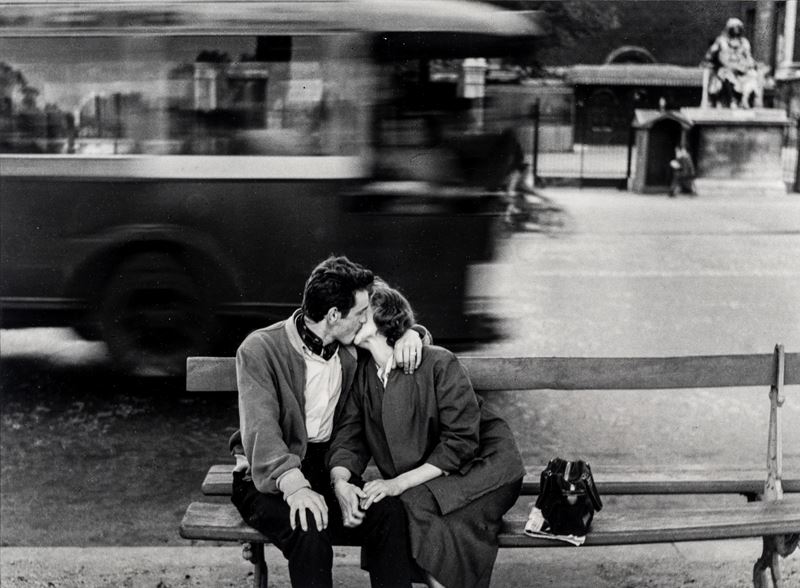
Among the most anticipated works is “Alps of Siusi” by Luigi Ghirri, which transforms the landscape into a mental dimension suspended between reality and vision. Alongside him are views of Paris and Great Britain by Gianni Berengo Gardin.
There are also the famous “priests” by Mario Giacomelli from the series Io non ho mani che mi accarezzino il volto, the “Diver” by Nino Migliori, and the chromatic abstractions of Franco Fontana from “Italian Landscape.” Overall, the selection builds a map of 20th-century Italian photography.
What does the sale dedicated to space tell?
On Tuesday, May 19, the program changes register with “Photography: Discovering Space,” an auction dedicated to images from NASA archives. The selection includes rare photographs produced by missions started in 1966.
Additionally, the catalog documents some key moments of American space exploration, including materials related to the Apollo program. In many cases, the shots were taken directly by the astronauts.
These images combine documentary value, aesthetic strength, and historical significance. Views of Earth from space, lunar surfaces, technical details of the missions, and portraits of the astronauts have become icons of contemporary visual culture.
Why is the ethnographic auction central?
On the same May 19, Finarte proposes “Ethnographic Photography: a world tour in 80+80 shots,” one of the most interesting sections of the entire event. The auction brings together 19th-century and early 20th-century photographs dedicated to the peoples of the five continents.
Among the materials are hand-painted albumen prints from Japan, portraits of the populations of the Asian steppe, testimonies from Africa, images of the Maori, and prints dedicated to the Dayak tribe of Borneo. This creates a visual atlas that intertwines photography, anthropology, and colonialism.
That said, these works today have a dual value. They are historical documents but also open a critical reflection on the Western gaze. Between the 19th and 20th centuries, photography was often used to catalog the world.
The sale also signals the growing attention to vernacular and ethnographic photography in the international market. It is an area increasingly followed by institutions, scholars, and collectors.
How does “Under 1K” work and who is it aimed at?
The closure comes on Wednesday, May 20 with “Photography: Under 1K,” a format now consolidated by Finarte. The goal is to make the photographic collection more accessible.
The works start from bids below 1,000 euros, offering the opportunity to purchase quality pieces without prohibitive costs. In recent years, this model has expanded the audience, involving younger buyers and new enthusiasts.
The catalog includes emerging artists and international names like Candida Höfer, Nan Goldin, Bill Brandt, Cecil Beaton, and Alexander Rodchenko. Closing the week with an accessible auction makes strategic sense because it opens the discussion on the future of collecting.
Does Milan strengthen its role in photographic collecting?
With this first edition, Milan consolidates its centrality in the contemporary art system and the photography market. For three days, the events hosted at the Via dei Bossi headquarters transform the city into a privileged observatory.
Furthermore, the initiative fits into a broader trend. Today, photographic collecting no longer concerns only specialists and institutions but a vast audience that recognizes photography as an autonomous language.
The first Photo Week in Italy is therefore more than a sequence of sales. It is a cultural project that presents photography as historical memory, scientific documentation, artistic research, and a collectible object.
Image: Lot 1007 Gianni Berengo Gardin – Paris, France 1954 (Courtesy of Finarte)