


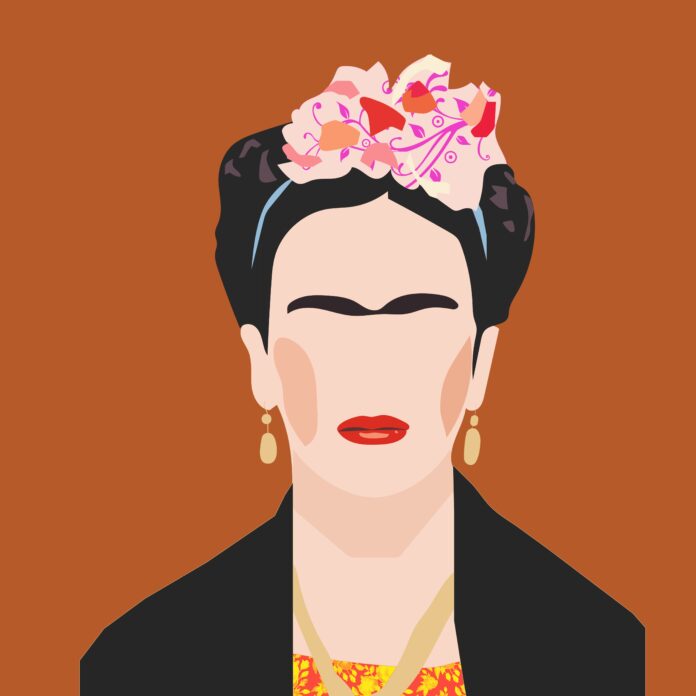
Around Frida Kahlo a global myth has been built, but the circulation of her works tells a more complex story of rare sales, selected collections, and strong state protections.
Frida Kahlo, the works: a limited and contested corpus
Compared to the vast production of Diego Rivera, the works of Frida Kahlo are few. The cited sources mention about 152 paintings, in addition to drawings, letters, and photographs. This relatively small number, combined with the growing international demand, makes each painting an object of extreme contention, both in the market and in cultural policies between Mexico and foreign institutions.
Where Frida Kahlo’s works are today
A significant portion of Frida Kahlo‘s paintings is located outside of Mexico. A review of sources reported in the analysis indicates that only 55–60 paintings belong to private collections, mainly in Mexico and the United States. Furthermore, almost 70% of the most important works are said to be preserved abroad, and out of 50 masterpieces considered, 35 would not be found in their homeland.
This geographical imbalance fuels the question of where Frida Kahlo’s paintings are and highlights how foreign museums and large international collections have played a crucial role in the canonization of the artist.
Missing works and Frida Kahlo artworks of unknown location
Not all of Frida Kahlo‘s works are easily traceable. The analysis mentions 14 paintings whose current location is unknown. Among these are emblematic titles like «La mesa herida» and «Retrato de Tina Modotti».
The disappearance of these works, or the difficulty in tracing their ownership changes, makes the overall mapping of Kahlo’s pictorial corpus fragmented.
Early sales and market history
The Frida Kahlo ownership history begins with rare and limited sales. In 1929, the sale of «Dos Mujeres (Salvadora y Herminia)» for 300 pesos is documented, on a July night. Among the buyers was the American businessman Jackson Cole Phillips. The work is indicated as preserved at the Museum of Fine Arts in Boston, revealing how early on some paintings found their way to foreign museums.
These modest beginnings contrast with the subsequent sales of Frida Kahlo‘s works, characterized by record figures. The analysis notes, with attention to the temporal context, an auction result of 54.7 million dollars for the work «El sueño», indicated as having occurred “last year.” This suggests a trajectory of sharply rising value, even if the complete details of the market path are not all reconstructable from the cited sources.
The acquisitions of the Mexican State: Las Dos Fridas and beyond
A decisive chapter concerns the acquisitions by the Mexican State. In 1947, the government purchased «Las Dos Fridas» for 4,000 pesos. The operation is part of a broader strategy promoted by Carlos Chávez, then director of the INBA (Instituto Nacional de Bellas Artes), aimed at retaining some key works in Mexico.
In the same years and the following decade, other public acquisitions took place, including «Los cocos» (1951) and «Naturaleza muerta con sandías» (1953). These purchases contribute to forming an institutional core of Kahlo’s works within the country, in dialogue with the growing private collecting interest.
Private collectors and large collections
Alongside the role of the State, private collections have had a significant impact on the history of Frida Kahlo. The analysis cites figures like Eduardo Morillo Safa, Dolores Olmedo, and the Gelman collection, who have built important nuclei of works by Kahlo and Rivera. Through market purchases and exchanges, these collections have influenced both the availability of the works and their international visibility.
In several cases, loans from these collections have allowed retrospective and traveling exhibitions, helping to define the global perception of Kahlo. However, the concentration of paintings in few hands also accentuates the sense of scarcity and makes continuous access for the general public more complex.
The 1984 decree: Frida Kahlo Artistic Monument
A crucial step in the Frida Kahlo ‘export restrictions’ is the presidential decree of 1984, which declares Kahlo’s entire work as an «Artistic Monument». According to the reported information, this classification limits permanent export, allowing the works to leave the country only for periods up to one year, exceptionally extendable to two years through special permits.
This legislative constraint aims to protect works considered of exceptional cultural value for future generations. Consequently, the works of Frida Kahlo remaining in Mexico are difficult to alienate and subject to a controlled circulation regime, influencing both the market and international exhibition programming.
Access to the works: between price records and reduced availability
Despite the explosion of auction values and Kahlo’s media aura, material access to her works has progressively narrowed. The limited number of paintings, the presence of Frida Kahlo‘s works in hardly accessible private collections, works of unknown location, and the regulatory framework on export contribute to a situation where seeing the artist’s masterpieces live is increasingly complex.
According to the reading proposed by the sources, the protections introduced by the 1984 decree aim to preserve cultural memory in Mexico, but at the same time restrict the possibility of international circulation. In this paradox between protection and visibility, the real and symbolic geography of Frida Kahlo‘s works is played out today.

With a degree in communications, she also holds a master’s degree in publishing and writing. Writer of articles from an SEO perspective, with care for indexing in search engines.

