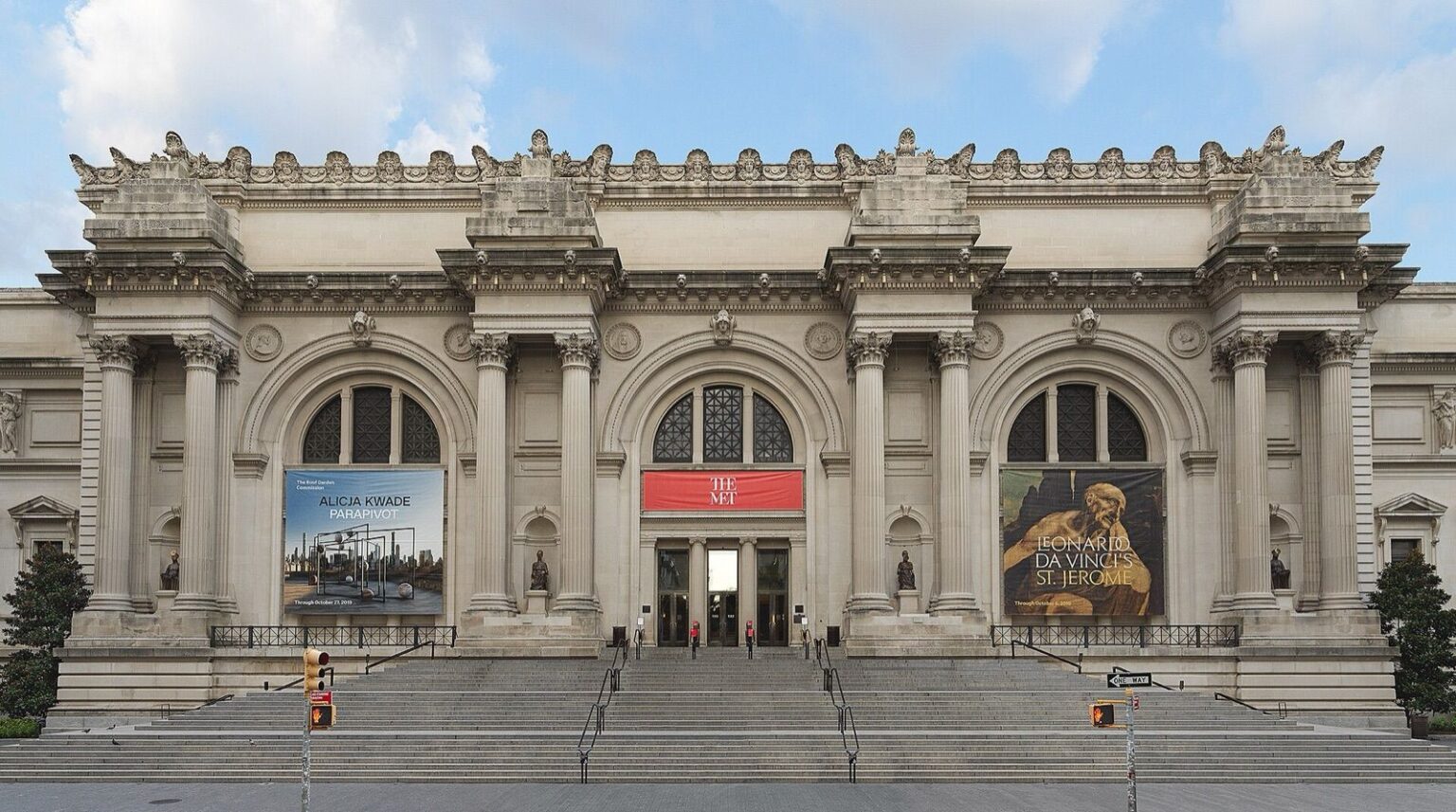
The Metropolitan Museum of Art in New York has canceled, together with British designer John Galliano, the exhibition dedicated to him that the Costume Institute had scheduled for spring 2027. The decision comes after weeks of controversy linked to the designer’s antisemitic past, and marks one of the most striking reversals in the recent history of major American museum institutions. The cancellation of the John Galliano exhibition is not just a cultural news item: it directly affects the reputation of one of the most influential museums in the world and the symbolic value that art and fashion can still attribute to a controversial figure.
Key points
- The Met and John Galliano announced on Monday, 31 August 2026, the joint cancellation of the exhibition John Galliano: Horizons.
- The exhibition, announced on 31 July, was scheduled to open in the first days of May 2027, coinciding with the Met Gala, and to close in January 2028.
- Galliano was convicted in 2011 by a French court for an antisemitic hate crime and fired from Dior, where he had been creative director since 1997.
- New York City Council Speaker Julie Menin and gallerist Arne Glimcher had publicly expressed strong opposition to the project.
- The decision came just a few hours before key meetings of the museum’s board and leadership scheduled for the same day.
What the canceled Met exhibition had planned
The project, officially announced on 31 July, envisaged an opening in the new Condé Nast Galleries, just off the museum’s Great Hall, with an inauguration in early May 2027 to coincide with the Met Gala, the charity event that each year raises tens of millions of dollars for the Costume Institute and attracts hundreds of celebrities. The exhibition was to remain open to visitors until January 2028. According to the original announcement, the Costume Institute holds the world’s largest collection of works by Galliano, with pieces spanning the period from 1984 to 2024.
Galliano would have been only the third living designer to receive a solo exhibition at the Costume Institute, a recognition that carries enormous weight in the hierarchy of fashion within museums. Precisely for this reason, the symbolic scope of the project made the controversy even more delicate: it was not a minor retrospective, but one of the most prestigious showcases that the museum system can offer a creative figure.
The controversial history of John Galliano
At the center of the protests is the 2011 conviction, when a French court found Galliano guilty of an antisemitic hate crime for comments directed at a couple in a restaurant near his home in Paris. In a separate video that surfaced around the same time, the designer can be seen saying to patrons of the venue “I love Hitler,” that their parents should have been “gassed,” and that “people like you would be dead today.”
After that footage was released, Galliano was fired from his role as creative director of Dior, a position he had held since 1997. This was followed by a period in rehab and meetings on Judaism with rabbis and a former executive of the Anti-Defamation League. In 2014 came what many described as a sensational comeback in the fashion world: his appointment as creative director of Maison Margiela, a role he held until 2024. Among the most loyal supporters of his work are Anna Wintour, former editor-in-chief of Vogue, member of the Met board and chair of the Met Gala since 1999, and Andrew Bolton, curator of the Costume Institute and head of the planned exhibition, titled John Galliano: Horizons.
Public reactions and institutional pressure
The news of the exhibition sparked a wave of criticism that grew in the weeks leading up to the cancellation announcement. On 28 August, the New York Times reported that Julie Menin, speaker of the New York City Council, had written a letter to Bolton, to Max Hollein and to Wintour calling the decision to celebrate Galliano “a grave mistake.”
It was not just politics: the collecting world also moved. Arne Glimcher, founder of the Pace Gallery, wrote to Hollein and to David Breslin, curator of modern and contemporary art at the Met, to express his concerns. “I do not believe you have considered the cost of this action and its future consequences,” he wrote, according to the Times, implying that he and his wife might reconsider their plans to bequeath works from their personal collection to the museum.
This is the point of greatest interest to those who look at the art market: when a major donor like Glimcher questions a bequest, the risk concerns not only the museum’s image, but the future holdings of its collections. Museum institutions live on donations and bequests, and a reputational controversy can translate into concrete losses of works destined for the permanent collections, with effects that are measured in years, not in single exhibition seasons.
According to the New York Times, the final decision to cancel the exhibition came just a few hours before meetings scheduled on Monday between selected members of the museum’s board and the entire leadership and board of trustees of the Met, convened specifically to discuss the future of the exhibition and other issues related to the Costume Institute.
Statements from Hollein, Galliano and Wintour
Max Hollein, director and chief executive of the Met, stated on Monday: “After extensive discussions with John Galliano, we have jointly decided not to move forward with the exhibition.”
On the same day Galliano released a statement in which he took full responsibility: “I do not want the debate surrounding me to put the Met in a difficult position or distract from the extraordinary work of the Costume Institute. I recognize and respect the fact that an exhibition dedicated to my work may be painful for some,” he wrote. “I remain fully responsible for the pain caused by my words in the past, particularly for the pain caused to the Jewish and Asian communities, and I am deeply sorry. I understand that genuine repair is not achieved through an exhibition, institutional recognition or a single public gesture. It is an ongoing responsibility, demonstrated by listening, learning and one’s conduct over time.”
Anna Wintour added her support for the decision: “John’s decision that the exhibition dedicated to his work should not take place at this time is very brave and a demonstration of the man he is. I believe this is the right decision, and both he and the museum have my full support.”
It should be remembered that the Costume Institute remains one of the Met’s most important economic engines: its exhibitions are among the most visited in the entire museum and anchor the Met Gala, an event that alone generates tens of millions of dollars in fundraising. The current Costume Institute exhibition, Costume Art, open to visitors until 10 January 2027, was inaugurated in May with a gala themed “fashion is art.” The decision to forgo the Galliano project, in this context, also weighs on the institution’s calendar and future exhibition strategies, as it will have to identify a new chapter capable of generating the same media and financial impact without exposing itself to the same kind of controversy.
FAQ
Why was the John Galliano exhibition at the Met canceled?
The exhibition was canceled after a strong public backlash linked to John Galliano’s past, marked by antisemitic statements and a 2011 conviction for an antisemitic hate crime.
When was the exhibition originally scheduled?
It was scheduled to open in the first days of May 2027, coinciding with the Met Gala, and remain open to visitors until January 2028.
What did John Galliano say about the cancellation?
Galliano apologized publicly, taking full responsibility for his past words and acknowledging the pain caused, stating that genuine repair is an ongoing responsibility and not a single gesture.
Who publicly opposed the exhibition?
Julie Menin, speaker of the New York City Council, and other critics publicly expressed their opposition, calling the decision to celebrate Galliano “a grave mistake.”
Content produced with the assistance of artificial intelligence and with human editorial review.