The KMSKA Museum in Antwerp, the Royal Museum of Fine Arts, opened to the public on 28 November 2026 with a new display of its permanent collection. The KMSKA collection renewal involves more than 195 works, divided into seven thematic sections.
Key points
- The new KMSKA display, active from 28 November 2026, showcases more than 195 works distributed across seven thematic sections.
- At least 56 works had never been exhibited since the museum’s reopening.
- Among the long-term loans are works by Frank Stella, Andy Warhol and George Segal.
- The James Ensor galleries are reinterpreted to go beyond masks and skeletons.
- Belgian abstraction and women artists gain greater visibility in the renewed itinerary.
Since reopening, the KMSKA has complemented its temporary exhibitions with a continual reinterpretation of its own collections. The collection is treated as a dynamic heritage, subject to loans and new interpretations. After the project Antony Gormley. Geestgrond, which last spring occupied the Ensor galleries and the modern art wing, the museum is now returning to its own masters.
The KMSKA collection renewal in numbers
The previous display was organized around light, color and form. The KMSKA collection renewal abandons this criterion and replaces it with seven themes capable of spanning different periods and movements.
Among the issues addressed is the tension between urban life and the rural landscape, visible in the works of Paul Joostens, Frans Masereel, Jean Brusselmans and Constant Permeke. Other sections put into dialogue the images of the CoBrA group, the surrealism of René Magritte and Pop Art, with works by Liliane Vertessen and Tom Wesselmann.
Previously unseen works and international loans
The new itinerary includes at least 56 works that had never been exhibited since the museum’s reopening, coming from storage, acquisitions, donations and special loans.
Among these loans are works by Frank Stella, Andy Warhol and George Segal, intended to engage in dialogue with the masterpieces of the permanent collection thanks to long-term agreements. The aim is a narrative less tied to classic chronological and stylistic divisions.
General director Carmen Willems explained that the works in the collection travel around the world, enriching exhibitions in national and international museums, and that this enables the museum to enrich the display with long-term loans and international works from private collections.
More space for Belgian abstraction and women artists
Particular attention is paid to Belgian abstraction, with works by Jozef Peeters, Georges Vantongerloo and Marthe Donas, active in Antwerp, and by Victor Servranckx and Pierre-Louis Flouquet, linked to the Brussels scene. Their research is presented in relation to post-war abstraction and international experiences.
The museum also intends to give greater visibility to women’s contribution to the construction of modernity. Among the names featured are Jane Graverol, Juliette Roche, Liliane Vertessen and Evelyne Axell, whose works are highlighted through new acquisitions, loans and curatorial choices.
The Ensor galleries told in a different way
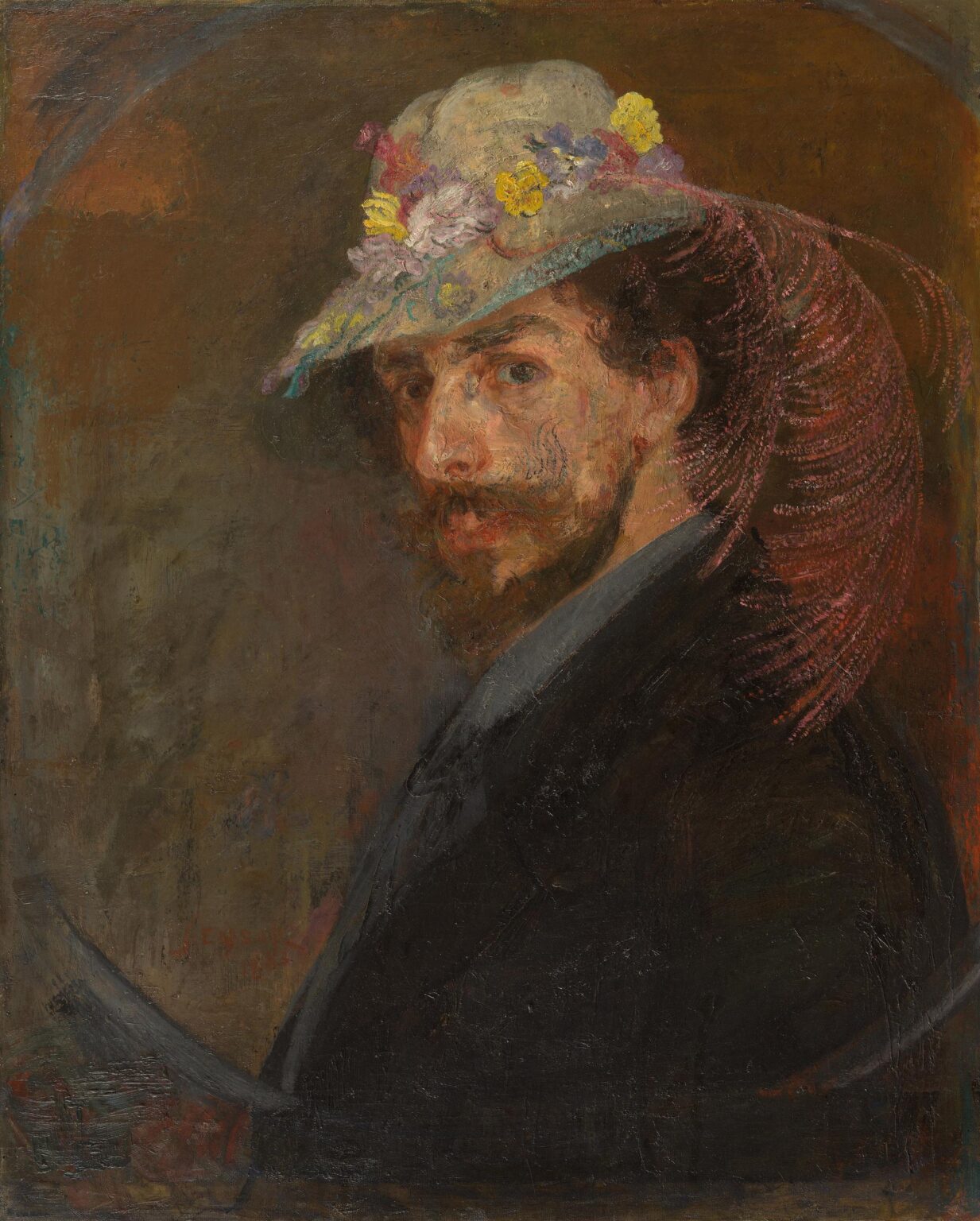
The renewal particularly affects the galleries dedicated to James Ensor, which hold the largest collection of his works in the world. The new presentation aims to convey their complexity, going beyond the imagery of masks and skeletons that made him famous.
The itinerary follows his interest in landscape, light, nature and the people around him, with a focus on still lifes and the city of Ostend, central to his biography. Alongside the paintings, room is given to correspondence and archival materials, while works by Henri Evenepoel, Théo van Rysselberghe and Henri De Braekeleer help to contextualize his research.
After the success of the exhibition A Red that Sings, the museum continues to highlight the three great Belgian colorists: alongside Ensor, Rik Wouters and Jules Schmalzigaug will play leading roles.
New spaces for benefactors and the 2027 projects
In the historic rooms, gallery 2.18 is assigned a new function: a permanent space dedicated to the museum’s benefactors and a program of temporary exhibitions of works donated to the KMSKA. The first will be devoted to a donation by contemporary artist Narcisse Tordoir, presented for one month.
In 2027 the project Collected with Vision will return with new encounters between contemporary art and Old Masters, including a reinterpretation of Rubens’ Adoration of the Magi by Romanian artist Adrian Ghenie and a video intervention by David Claerbout. In this way the museum confirms its intention to treat its collection as a heritage in constant motion, rather than as an itinerary fixed once and for all.
See also: Upcoming art auctions from 26 November to 2 December 2026 between Italy and international hubs · Lost Rubens painting resurfaces and is sold at auction
Content produced with the assistance of artificial intelligence and with human editorial review.