

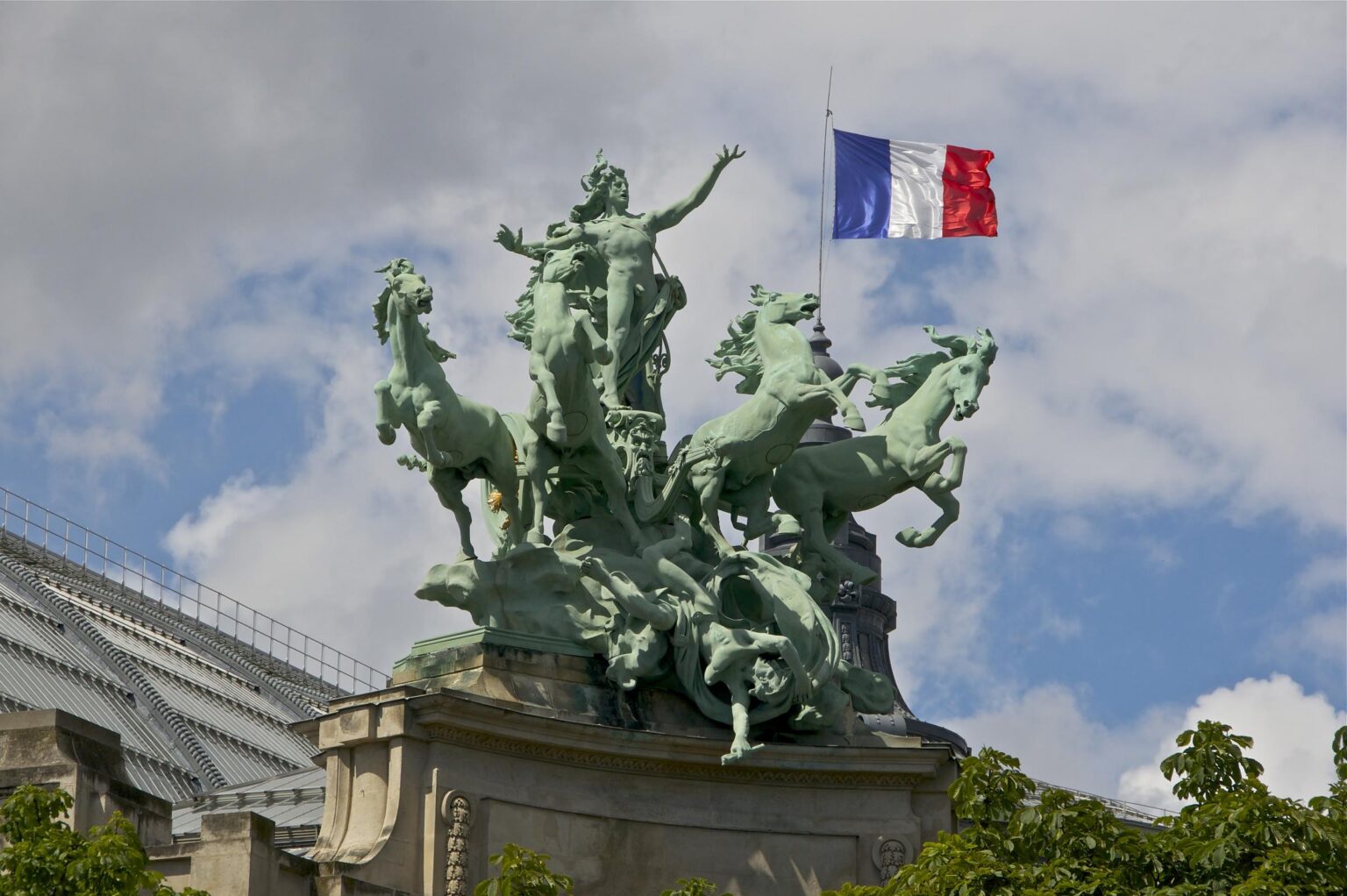
Art Basel Paris closes two days early: the art fair that opened at the Grand Palais on Tuesday 20 October 2026 was supposed to close at 7:00 p.m. on Friday 23 October, instead of staying open until Sunday.
Key points
- The early closure of Art Basel Paris at 7:00 p.m. on Friday 23 October 2026 has been announced, two days ahead of schedule.
- The announcement provided for the closure of the fair on Saturday 24 and Sunday 25 October due to the risk of new violent protests in Paris.
- All outdoor sculptures on Avenue Winston Churchill, by artists such as Simone Fattal, Manfred Pernice and Niki de Saint Phalle, are being dismantled early.
- In France at least 2,700 protesters have already been arrested, while President Emmanuel Macron has indicated that on Saturday only authorized union demonstrations will be allowed.
- Satellite fairs such as Asia NOW and Paris Internationale had reported that they would remain open.
Art Basel Paris closes early due to nationwide protests
The decision comes shortly after the opening. The event kicked off on Tuesday 20 October with the Avant Première, the super-VIP opening reserved for guests from 3:00 p.m. to 7:00 p.m., introduced for the first time last year.
The early stop was communicated by an email from the management of Art Basel Paris, sent on 22 October to the fair’s VIPs and co-signed by Karim Crippa, the event’s director: “We deeply regret not being able to welcome visitors over the weekend and acknowledge the inconvenience this may cause to your plans,” reads the message, which cites safety as the absolute priority.
The cause is the same that has been putting France under pressure for weeks: mass demonstrations against the cost of living and school conditions, which degenerated over the weekend of 17–18 October into clashes and looting. To exhibitors, the organizers spoke of “potential demonstrations across Paris this weekend” as the reason for choosing to bring forward the closure to the fair’s first and only public day.
What happens to the works and the public program
The early stop also has direct consequences for the works displayed outdoors. All the sculptures installed on Avenue Winston Churchill, outside the Grand Palais, as part of the fair’s public program, are being removed starting from the evening of 22 October.
The public program, originally scheduled from 21 to 25 October, included works by Simone Fattal, Carmen Herrera, Marcello Maloberti, Keita Miyazaki, Manfred Pernice, Niki de Saint Phalle and Yinka Shonibare. The artist Alicja Kwade, whose nearly 15-foot-tall sculpture “L’Élévation des Mondes” (2026) was supposed to remain on view until Sunday, wrote on Instagram: “Only today and tomorrow on view, because it has to be dismantled, along with other sculptures, due to the announced riots and those who simply want to resort to violence.”
In a later statement, Kwade specified that she had discussed with the organizers and shared the decision to remove the work early, while still supporting the underlying reasons for the protests: “It is therefore particularly sad to see these important causes overshadowed by violence and destruction, which end up harming precisely the issues people are fighting for.”
According to a spokesperson for Art Basel, the dismantling is being managed site by site, because the public program extends across multiple locations with different operating conditions, including Place Clemenceau, the Cité de l’Architecture et du Patrimoine, Jean Perrin Square and the Petit Palais.
On the market side, the fair had in any case already generated significant sales before the stop: Julie Mehretu’s work “Rise of the New Suprematists” (2001), sold by the White Cube gallery, was priced at 7.8 million dollars.
The context of the protests and the security response
Behind Art Basel’s decision lies a month of nationwide mobilization against the deterioration of the French school system and public services. The demonstrations, which in part degenerated into clashes and looting, have so far led to at least 2,700 arrests across France.
The police have resorted to contested tactics, including injuries inflicted on teenage protesters and tear gas used even against local officials. For Saturday, President Emmanuel Macron has indicated that in French cities only authorized union demonstrations will be allowed. French Prime Minister Sébastien Lecornu has also announced the deployment of military forces from Operation Sentinelle, speaking of a “massive” security operation to keep the situation under control.
In this climate, other Parisian cultural institutions have also chosen caution: museums such as the Louvre, the Musée d’Orsay, the Musée de l’Orangerie and the Musée National Picasso had announced closure for Saturday, a sign that the caution adopted by Art Basel is not an isolated case but reflects a line shared by the capital’s major institutions.
Satellite fairs continue, with some adjustments
Not all of Paris’s fair circuit is coming to a halt. Asia NOW and Paris Internationale had reported that they would remain open as planned until 24 October, while OFFSCREEN exhibitors received official confirmation that the fair will continue until Sunday 25. Outsider Paris has also stated its intention to remain open until Sunday, while adapting to how the situation evolves.
Post-Fair, hosted in two buildings in the Marais in its first Paris edition after its debut in Los Angeles in 2025, chose a middle way: it had announced that it would open an hour earlier, at 10:00 a.m. on Saturday, to close at 1:00 p.m. instead of in the evening. Robert Heald, of the eponymous gallery in Wellington, New Zealand, commented: “I think closing a few hours early is the right decision given the uncertainty. I am very satisfied with how the fair has gone, and safety has to come first.”
Chris Sharp, founder of Post-Fair, recounted that Monday’s preview day was “crazy,” with almost a thousand visitors, “despite the protests of the weekend of 17–18 October.” Rodney Nonaka-Hill, of the Los Angeles gallery Nonaka-Hill, also spoke of sufficient sales and a good overall atmosphere, “despite the distraction.”
The choice of many satellite fairs to continue, while monitoring the situation in real time, reveals a Parisian art ecosystem that is trying to share out the risk: while the major international event stops for security reasons, the smaller circuits remain open for now.
Content produced with the assistance of artificial intelligence and with human editorial review.


