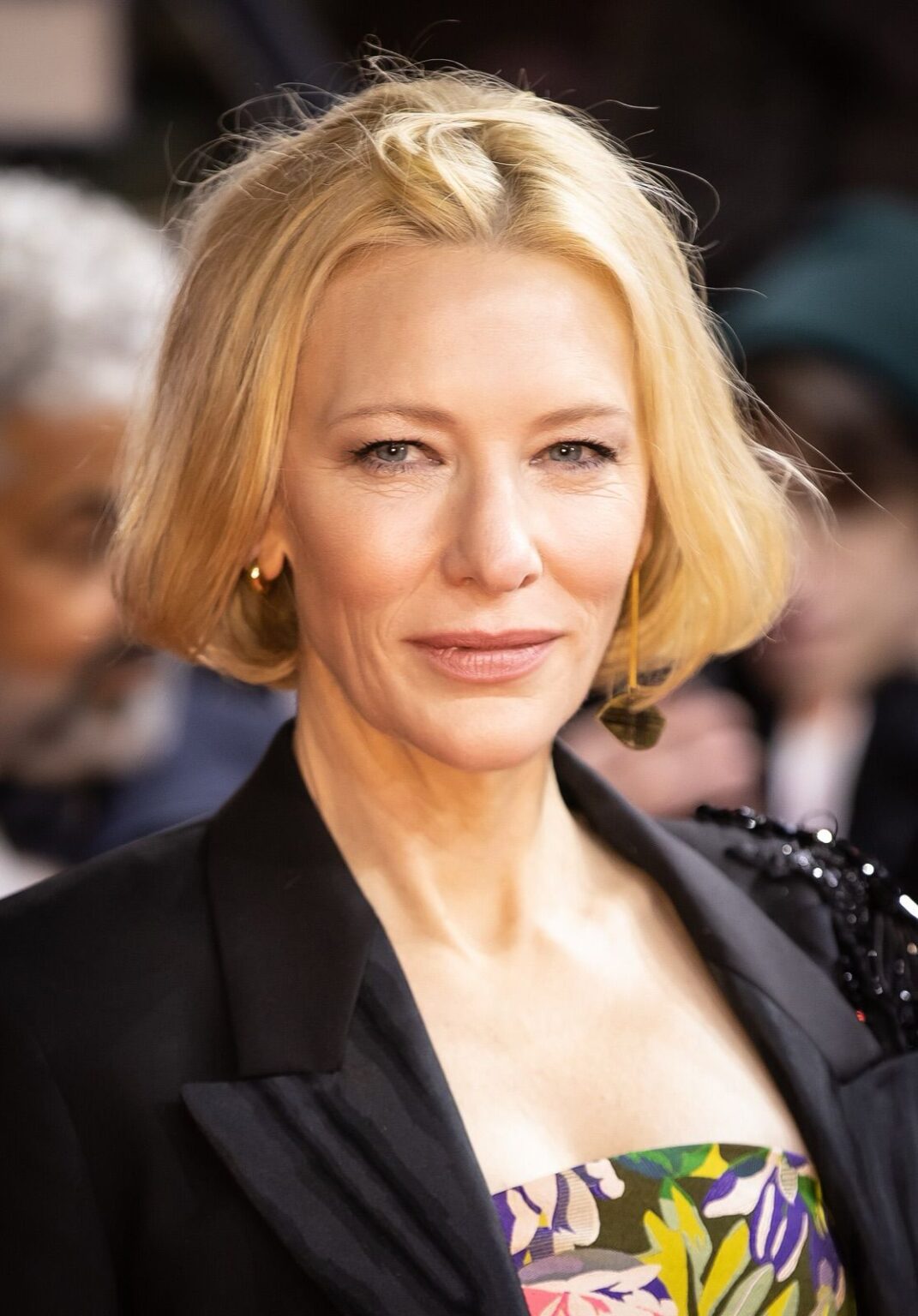
The Praemium Imperiale 2026, the international award often described as the “Nobel of the arts”, today, 8 September 2026, announced the five names that will share the thirty-seventh edition of the prize. The winners of the Praemium Imperiale 2026 are the American artist Jenny Holzer for painting, the British sculptor Andy Goldsworthy, the architect Daniel Libeskind, the conductor Herbert Blomstedt and the Australian actress Cate Blanchett for theatre and film. The announcement, released simultaneously from Tokyo, Paris, Rome, Berlin, New York and London, comes from the Japan Art Association, the cultural foundation that has awarded the prize since 1988 in memory of Prince Takamatsu.
Key points
- The 2026 winners are Jenny Holzer (painting), Andy Goldsworthy (sculpture), Daniel Libeskind (architecture), Herbert Blomstedt (music) and Cate Blanchett (theatre/film).
- Each laureate receives 15 million yen, equal to about 81,000 euros, plus a certificate and a medal.
- The ceremony will be held in Tokyo on 28 October 2026, presided over by Prince Hitachi.
- The scholarship for young artists has been awarded to the French association La Source Garouste, with a grant of 5 million yen (about 27,000 euros).
- Paolo Gentiloni for Italy and Patricia Barbizet for France are joining the International Council of the Japan Art Association.
Who are the winners of the Praemium Imperiale 2026
The five names chosen this year represent as many artistic disciplines and careers already established at an international level. Jenny Holzer has been awarded for painting thanks to a practice that has placed language at the centre of public space: posters, electronic signs, stone engravings, light projections and monumental installations with which the New York artist addresses themes such as power, war, memory and human rights. Her works have appeared from Times Square to the Guggenheim, from the Venice Biennale — where in 1990 she won the Golden Lion — to the Louvre Abu Dhabi, and in these very months she is the focus of an exhibition at the Fundação de Serralves in Porto, while in the autumn she will be the subject of a solo show at the Musée d’Orsay in Paris.
The sculpture prize instead goes to Andy Goldsworthy, one of the most recognisable figures in contemporary sculpture for his work on the relationship between humans, nature, landscape and time. Alongside the ephemeral works created with natural materials are permanent installations held in institutions such as the National Gallery of Art in Washington and the Storm King Art Center, while a retrospective of his was recently hosted by the Royal Scottish Academy and a solo exhibition remains on view at the Parrish Art Museum in Water Mill until 8 November.
For architecture the award goes to Daniel Libeskind, born in Poland and naturalised American, known for a design approach that intertwines historical memory and innovative angular geometries — one need only think of the Jewish Museum in Berlin. In the field of music the prize goes to the Swedish conductor Herbert Blomstedt, who made his debut in 1954 with the Royal Stockholm Philharmonic Orchestra and over the years has led ensembles such as the Staatskapelle Dresden, the San Francisco Symphony and the Leipzig Gewandhaus Orchestra. Completing the quintet is Cate Blanchett, honoured for theatre and film: two Oscars, a career built on extremely diverse roles and her commitment as a global UNHCR ambassador complete the profile of the Australian actress.
Why the award also carries weight on the art market
An award like the Praemium Imperiale does not merely certify an artistic career: it also shifts the attention of collectors, museums and auction houses to the work of the laureates. The presence of works by Holzer and Goldsworthy in institutions such as the Guggenheim, MoMA, the National Gallery of Art and the Storm King Art Center, combined with ongoing or scheduled exhibitions in Porto, Paris and Water Mill, strengthens the international visibility of the two artists precisely at the moment when they receive the award. For those who own or are evaluating works by these artists, the conferral of the prize represents an additional element of authority that can influence the perceived value of their works, even if the real effect on the secondary market will depend on upcoming auctions and private negotiations.
The Tokyo ceremony and the economic value of the prize
Each winner will receive a cheque for 15 million yen, about 81,000 euros, together with a certificate and a medal. The award ceremony will be held in Tokyo on 28 October 2026 under the presidency of Prince Hitachi, Honorary Patron of the Japan Art Association and younger brother of Emperor Emeritus Akihito. The event, which takes place under the patronage of Prince and Princess Hitachi, is traditionally one of the most important dates in the Japanese cultural calendar, and with the 2026 edition the total number of artists honoured by the prize since 1988 rises to 190, including Italian names such as Renzo Piano, Riccardo Muti, Michelangelo Pistoletto and Maurizio Pollini.
The scholarship for young artists goes to La Source Garouste
Alongside the five main prizes, the Japan Art Association also awards each year the Praemium Imperiale Scholarship for Young Artists, established in 1997 to support new generations of artists in line with the foundation’s objectives. For 2026 the award has gone to La Source Garouste, a French association committed to training new talents, which has received a certificate and a grant of 5 million yen, about 27,000 euros. The announcement was made in Paris during a press conference chaired by the outgoing member of the International Council Jean-Pierre Raffarin and the newly appointed Patricia Barbizet.
The Japan Art Association and the new members of the International Council
The Praemium Imperiale was established in 1988, on the occasion of the centenary of the Japan Art Association, to honour the memory of Prince Takamatsu, who for 58 years had served as Honorary Patron of the Association, founded in 1887 and today also managing the Ueno Royal Museum in Tokyo. The selection of the winners is carried out through nomination committees chaired by the international advisors of the prize, who submit the candidacies to the selection committees of the Japan Art Association; the final decision is then approved by the Board of Directors.
During the press conference on 8 September a renewal of the International Council was also announced: Lamberto Dini, former Prime Minister of Italy, and Jean-Pierre Raffarin, former Prime Minister of France, have completed their term. Representing Italy now is Paolo Gentiloni, while for France Patricia Barbizet, president of AFEP, is joining. Klaus-Dieter Lehmann for Germany, Lord Patten of Barnes for the United Kingdom and Hillary Rodham Clinton for the United States remain in office.
FAQ
Who are the winners of the Praemium Imperiale 2026?
The 2026 winners are Jenny Holzer for painting, Andy Goldsworthy for sculpture, Daniel Libeskind for architecture, Herbert Blomstedt for music and Cate Blanchett for theatre and film.
When and where will the Praemium Imperiale 2026 award ceremony take place?
The ceremony will be held in Tokyo on 28 October 2026, under the presidency of Prince Hitachi.
What does the scholarship for young artists include and who won it in 2026?
The scholarship provides a grant of 5 million yen and a certificate; in 2026 it was awarded to the French association La Source Garouste.
What is the Praemium Imperiale and which organisation awards it?
The Praemium Imperiale is an international art prize established in 1988 by the Japan Art Association to honour the most significant contributions in various fields of art.
Read also: At Art Basel Paris 2026, Modigliani’s nude is worth over 100 million dollars · Bronner Family Art Prize: three generations awarded at Art Cologne 2026
Content produced with the assistance of artificial intelligence and with human editorial review.