An enigmatic Franco-Flemish portrait from the 16th century has ignited the market at Sotheby’s, multiplying the initial estimate tenfold and leaving several specialists in ancient painting puzzled.
How did the sale at Sotheby’s New York unfold?
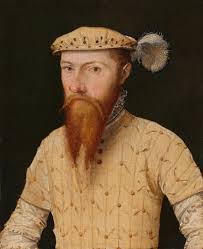
On February 5, at Sotheby’s New York, a male portrait described as “French or Flemish School” was sold for 2.3 million dollars after a fierce bidding war among four bidders. The canvas was offered in the first session of the “Master Paintings and Works of Art” auction with an estimate more than ten times lower than the final result.
The work, titled Portrait of a Bearded Man Wearing a Cream Doublet (circa 1545), came from the collection of the Dutch electronics entrepreneur Anton Philips. In just ten minutes of bidding, the painting went from an interesting lot to an emblematic case of speculative dynamics on Old Masters.
Why is the attribution of the Franco-Flemish portrait so uncertain?
In the catalog, the portrait was simply listed as “French or Flemish School,” without a definitive attribution. In the past, however, the painting had been linked to the Dutch-born painter active in France Corneille de Lyon, a name that inevitably influences collectors’ expectations.
Subsequently, some scholars proposed the name of the Flemish Lucas de Heere, active in the 16th century. However, the catalog note emphasized how the “manner” and the pictorial execution rather refer to a broader Franco-Flemish environment, keeping the attribution question open.
What is the market context for Corneille de Lyon and Lucas de Heere?
According to the Artnet Price Database, the auction record for a work by Corneille de Lyon is 1.2 million dollars (863,000 pounds), set in July 2025 by Sotheby’s London. On that occasion, the Portrait of a Merchant, Traditionally Identified as Theodore Beza, an important male portrait, was sold.
For Lucas de Heere, the situation is different: the record for one of his portraits stops at 27,000 dollars (18,000 euros), a significantly lower figure. That said, works indicated as “circle of” or “attributed to” these masters have sometimes fetched higher prices, thanks to the interest in Northern Renaissance portraiture.
What were the reactions of Old Masters experts?
The outcome of the sale surprised more than one specialist in ancient painting. An independent Old Masters consultant, who preferred to remain anonymous, stated that the painting seems more like an imitation in the style of Corneille de Lyon than an autograph by the master.
Moreover, the same consultant highlighted a significant comparison with the previous lot, also a portrait attributed to Corneille de Lyon. The latter, despite the clearer attribution, received much less competition in the room, suggesting that some bidders saw hidden potential in the portrait with uncertain authorship.
What does this case reveal about the Old Masters market?
Overall, the sale highlights how the combination of rarity, perceived quality, and the possibility of a stronger future attribution can drive collectors to far exceed estimates. In cases like this, the margin of attribution uncertainty paradoxically becomes an attraction factor.
However, the strong gap compared to documented values for historicized works on Artnet and for portraits of similar masters raises questions about the sustainability of such results. The portrait sold in New York indeed stands well beyond previous references for Lucas de Heere and above the official record for Corneille de Lyon.
That said, the episode confirms how the Old Masters market remains a territory where connoisseurial expertise, attribution expectations, and auction dynamics can produce surprising outcomes, difficult to categorize within the sole historical price parameters.