

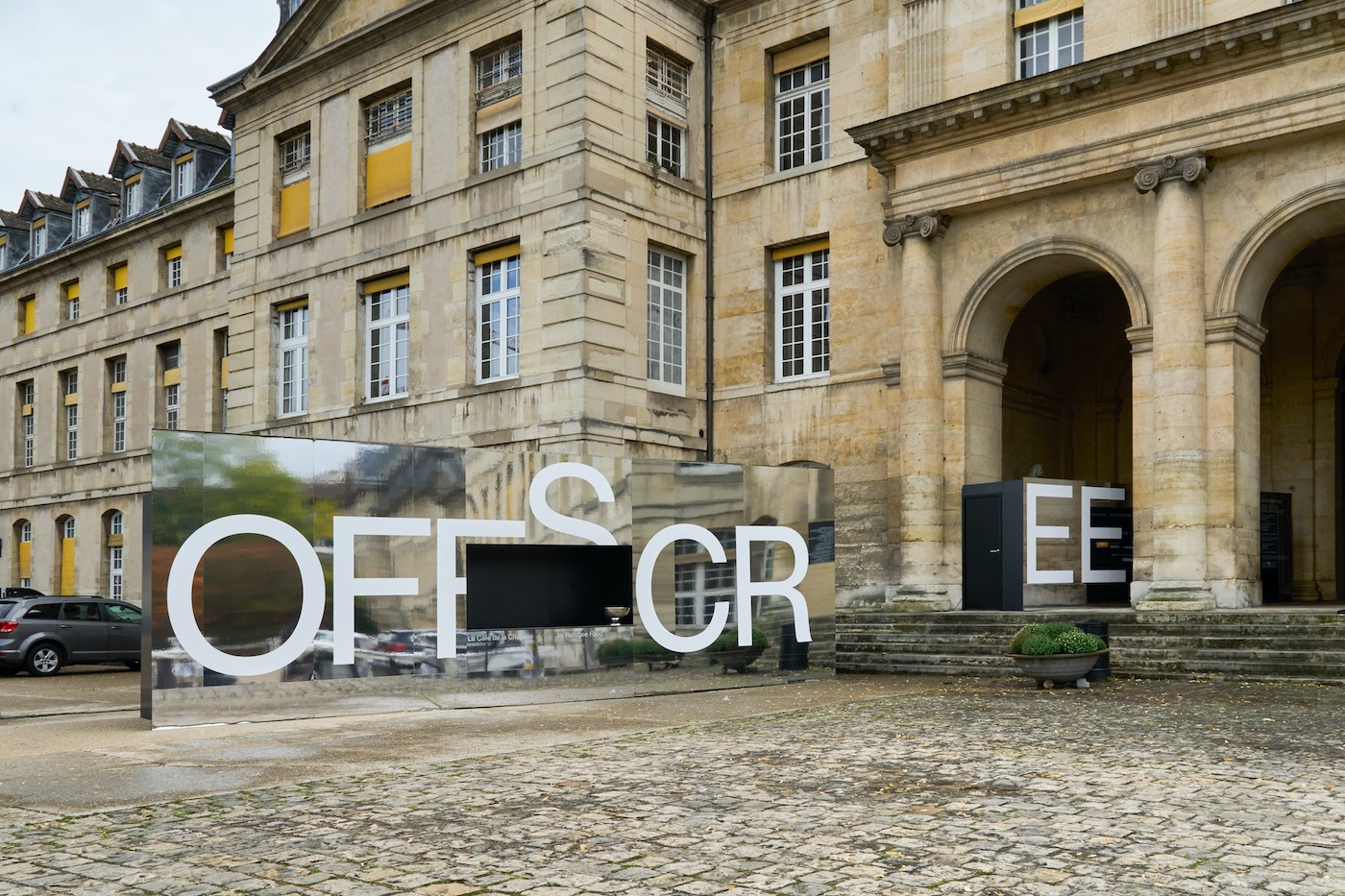
What is the uniqueness of OFFSCREEN? It is a fair where collectors can buy high-quality works, which, however, does not seem like a fair. It takes place from October 21 to 26, 2025, during the Paris contemporary art week. The preview, by invitation only, was on October 20. The City of Light was indeed illuminated by Art Basel Paris and a constellation of large and small fairs. Among these, Asia Now dedicated to oriental art; Akaa – Also Known As Africa – at the Carreau du Temple; Paris Internationale. After having traversed, in past editions, the spaces of the brutalist Grand Garage Haussmann and the elegance of the Hôtel Salomon de Rothschild, the fourth edition of OFFSCREEN lands in a new location, rich in memory and historical layers: La Chapelle Saint-Louis de la Salpêtrière.
OFFSCREEN new perspectives for the fourth edition at the Chapelle Saint-Louis de la Salpêtrière
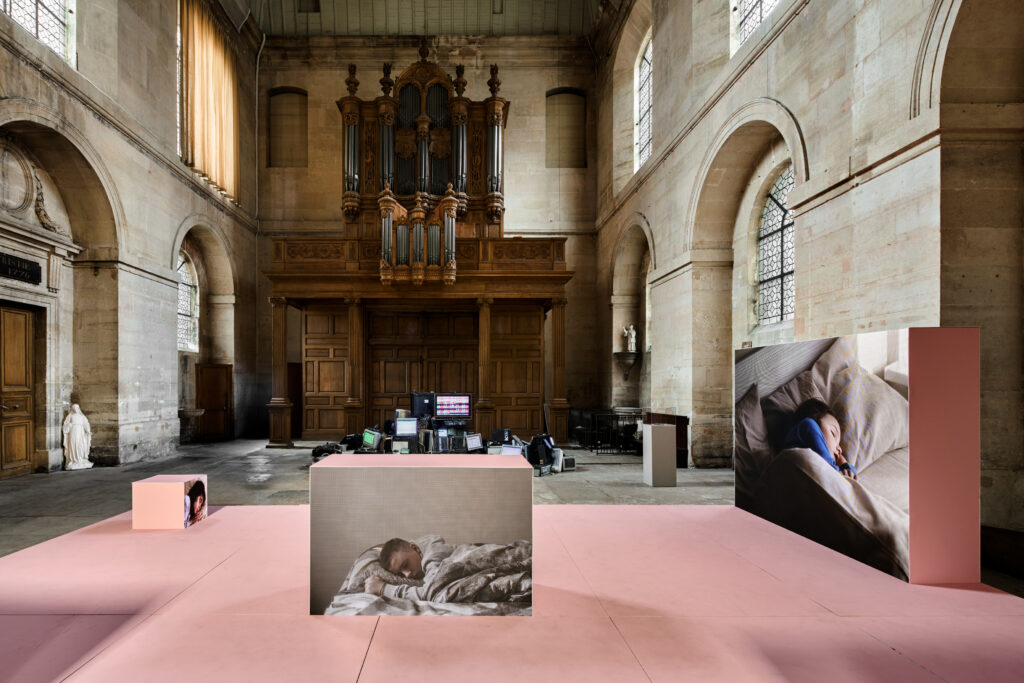
The atmosphere is different, almost suspended, yet the fair retains its spirit: a focus on a few contemporary artists – twenty-eight in this edition – who explore the languages of the image through installations, video, and photography. The space, built in the 17th century on a design by Libéral Bruant, opens like a Greek cross under a large octagonal dome that diffuses natural light, making the exhibition path an almost mystical experience.
A place that welcomes and transforms
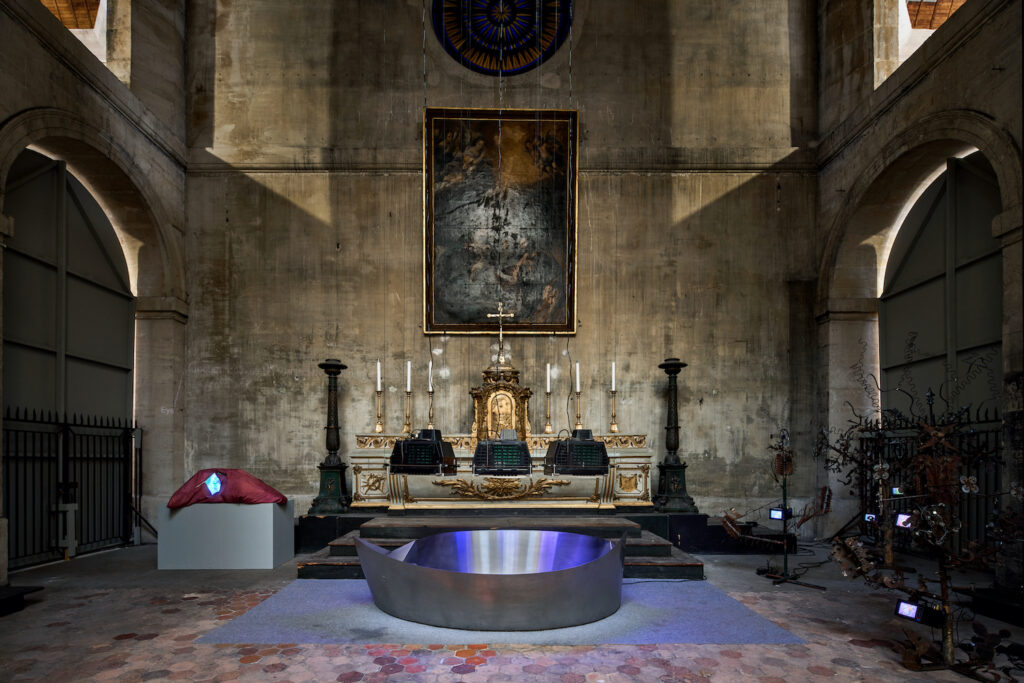
La Chapelle, which in the past has hosted works by Anselm Kiefer, Bob Wilson, Bill Viola, Nan Goldin, and Christian Boltanski, proves perfect for the immersive dimension of OFFSCREEN. The architecture interacts with the works, unfolding in an antechamber (the first nave), the two perpendicular naves, and four chapels that surround the central space.
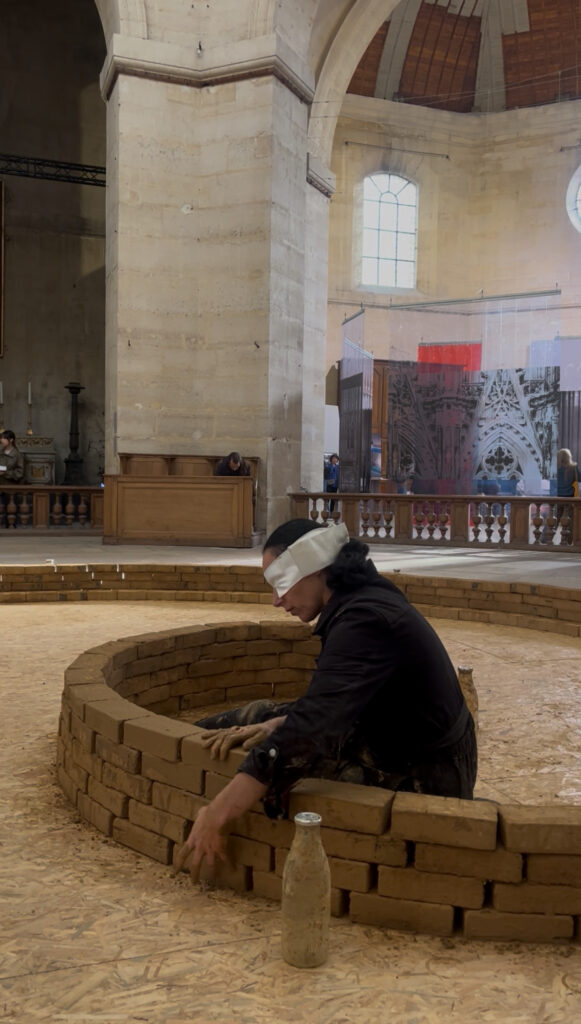
In the heart of the structure, under the oculus of the dome, the performance This Mortal House Building 3 by Maria Stamenković Herranz comes to life: for seven hours, the blindfolded artist constructs a spiral of 1,440 raw bricks, a reference to the Fibonacci sequence and the tension towards natural perfection.
Open deposits and the memory of the place
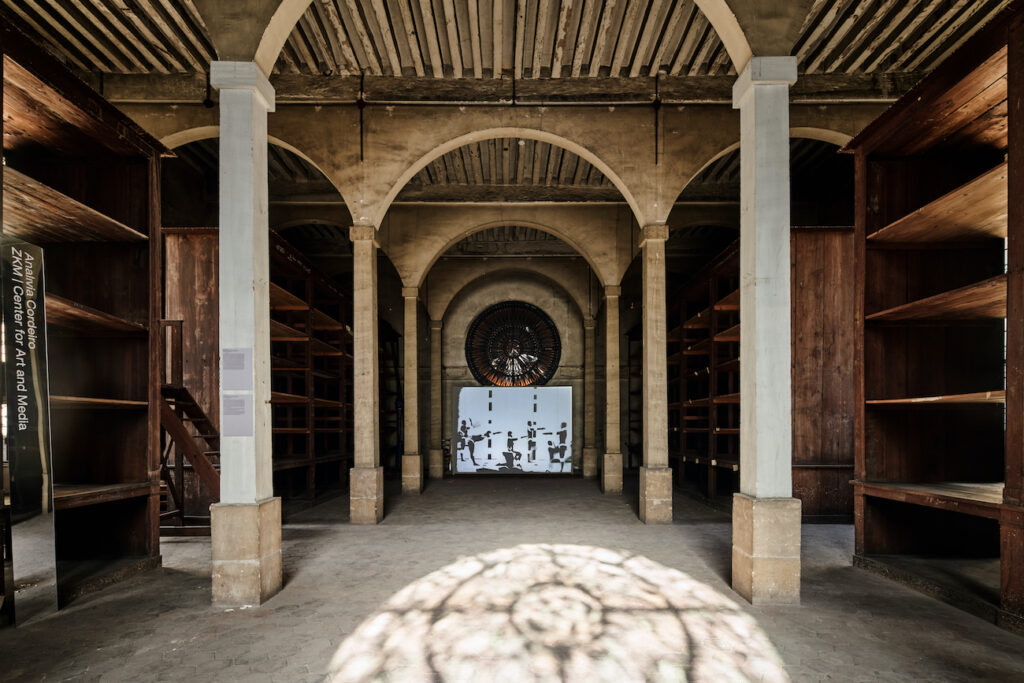
OFFSCREEN opens to the public the Chapelle deposits, three floors that become an integral part of the exhibition path. Here, past and contemporary intertwine: from the photographs of Albert Londe (1858–1917), which document the women considered “hysterical” in the 19th-century asylum of Salpêtrière, to the video How do you feel by Joel Quayson, winner of the Dior Prize, in which the artist stages the duality of identity through body and performance. Following this, works from the ZKM – such as Untitled (1973) by Urs Lüthi and M3x3 (1973) by Analivia Cordeiro – and the projection from the Centre Pompidou, The Magic Sun (1966–68) by Phill Niblock, expand the reflection on visual and sound perception.
Prices, galleries, and new presences
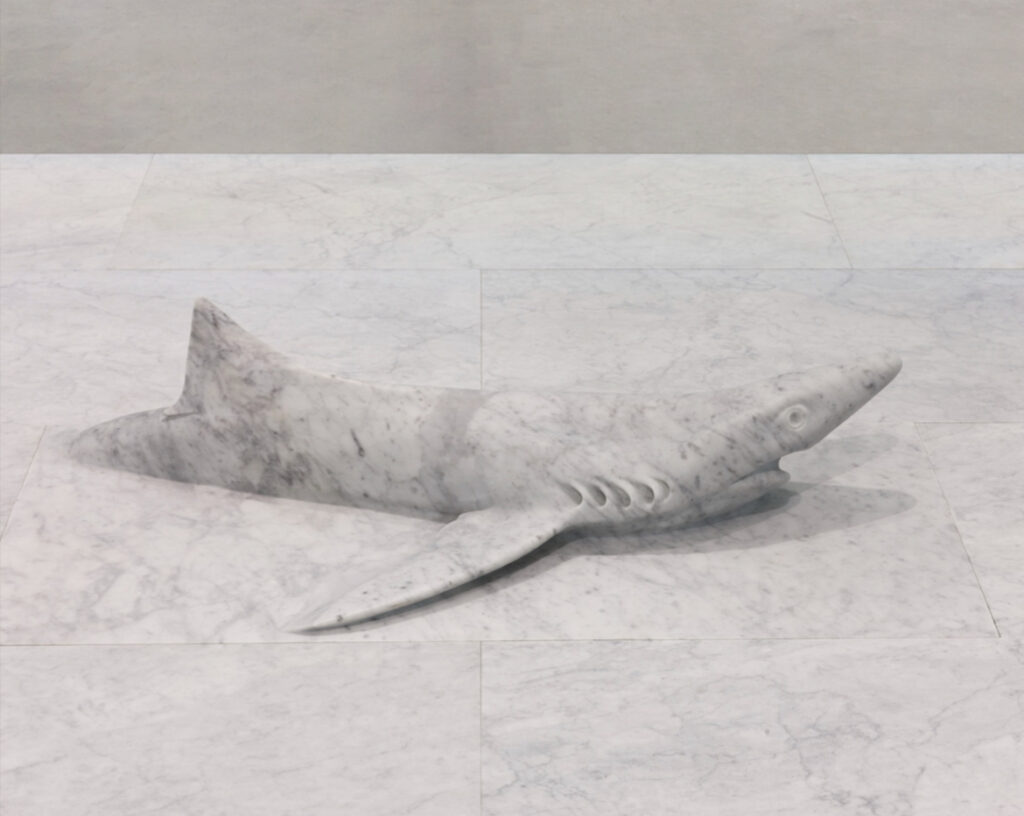
Among the works that attract the most attention in this edition stands out Room (2019) by Dorothy Cross, presented by Kerlin Gallery. From the ripples of a slab of Carrara marble emerges the silhouette of a shark worth 150,000 euros. The marine creature is suspended between the elegance of the stone and the geological and sea memory. Cross, an Irish sculptor and multimedia artist, addresses the relationship between time and matter. The stone becomes a witness to an era older than the animal she sculpts. In this ambiguity lies the strength of the work, a short circuit between the fragility of life and the solidity of its representation.
Marcin Dudek – Harlan Levey Projects

With the Harlan Levey Projects in Brussels, Marcin Dudek confronts memory and survival. His installation Hair Salon has sentimental value but is also for sale at 140,000 euros. It recreates the clandestine space that his sister opened in the basement of their home in post-communist Poland. Like in a time capsule, the beauty salon appears before our eyes. The tools of the trade are not missing: the scissors, the washbasins, the hairdryer hood.

Locks and strands of hair, collected over two years, are displayed in a transparent wall. They are a symbol of resilience and care in a context of precariousness. The artist shares their biography – from childhood among public housing, to leaving the world of hooligans, to professional vindication. Every fragment of life settles as expressive material in an intimate narrative, marked by wounds and redemptions. A dedication to emotional relationships and the struggle for social and professional affirmation.
Estampa – Chiquita Room
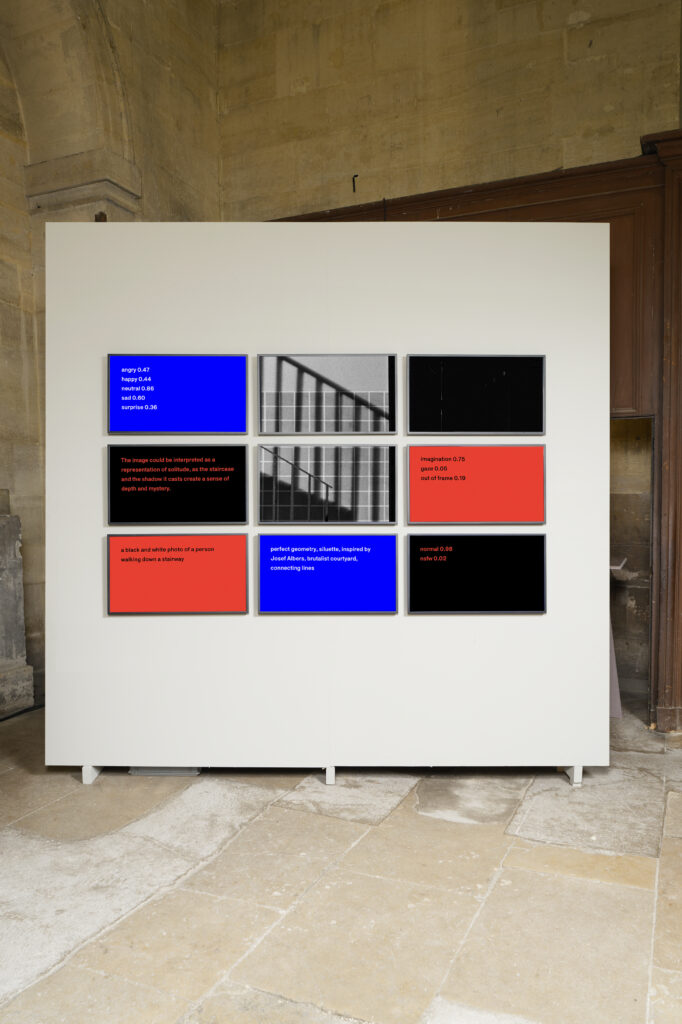
From the Chiquita Room in Barcelona comes Estampa. The collective is made up of programmers, researchers, and artists who investigate the limits of artificial vision. The prices of the smaller works range between 4,500 and 6,000 euros. The work originates from the analysis of historical photographic archives through YOLO9000, an algorithm capable of recognizing thousands of images. The error of artificial intelligence becomes an aesthetic language. Estampa questions the blind trust in technology and the way digital media rewrite contemporary visual memory, reversing the perspective between observer and observed.
Vytautas Kumža – Copperfield & Martin Van Zomeren
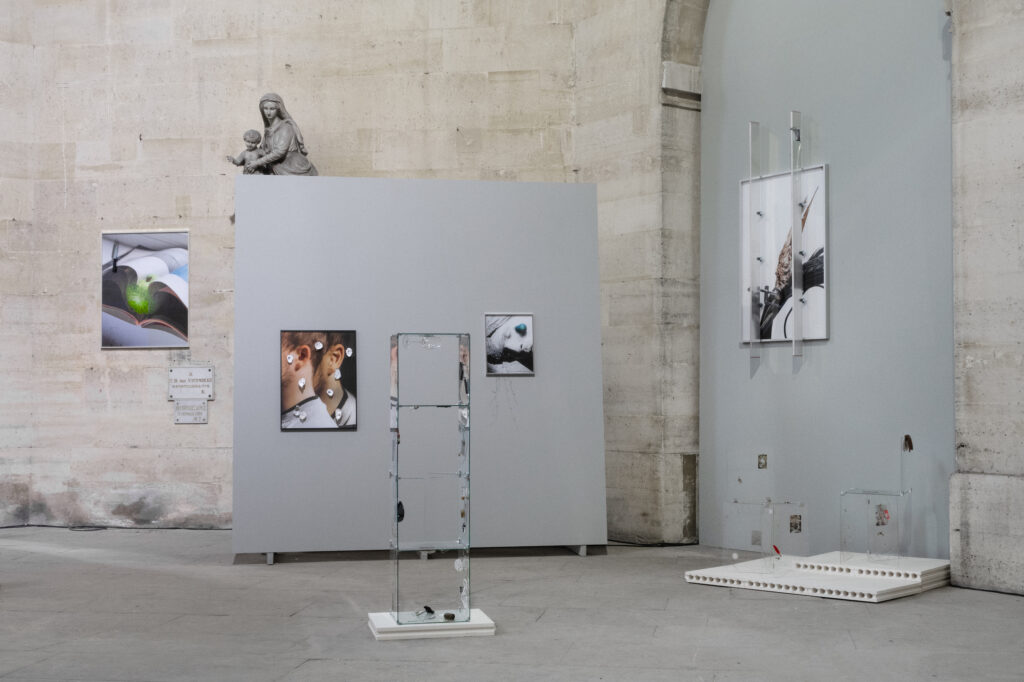
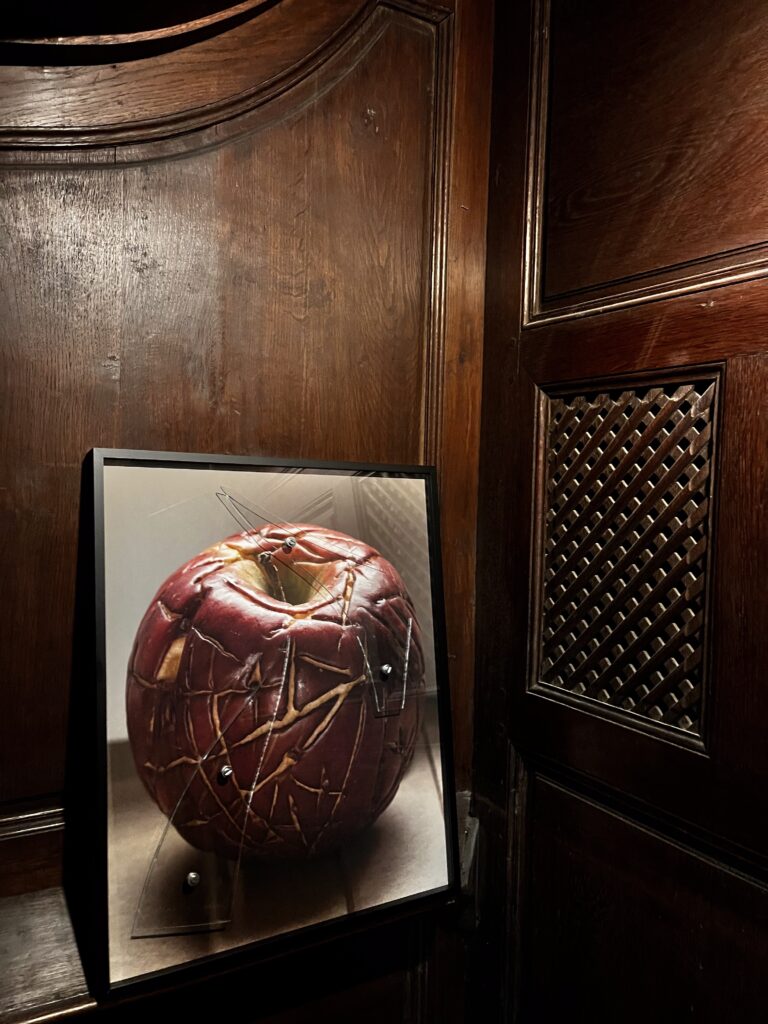
The Lithuanian artist Vytautas Kumža (presented by Copperfield of London & Martin Van Zomeren of Amsterdam) offers a body of works on photographic paper and sculptures. Common objects – oyster shells, blades of grass, keys, gloves, razors, goblets, heads of electric toothbrushes – interact with each other, creating Exquisite Corpse compositions. The associations between the objects are seemingly random. Yet, the viewer’s gaze fills the gaps in meaning by stitching secret connections into a surreal plot. As the gallerist Andrea Maffioli of Copperfield explains, this aligns with: «the concept of pareidolia, a term of Greek origin that indicates the brain’s tendency to find patterns and shapes in chaos. We are not accustomed to disorder, so we try to identify patterns. It is the same mechanism by which, looking at clouds, we think “that looks like a horse”».

It happens with the spots, with the rocky walls, with the machines, with the sounds: an evolutionary legacy that arises from the attempt to safeguard, protection against threats to one’s safety. Vytautas’s work is a form of listening. It’s as if he observes the world until he feels everything breathing… from the dismay, from the surprise, from the impalpable rhythm his images are born.

The sculptures, enclosed in transparent epoxy resin, incorporate objet trouvé collected from friends’ houses, drawers, and wardrobes, on the street. A fractured bookshelf stands as the centerpiece of the exhibition: it is the place where matter breaks and recomposes, like an emotional archive. Prices range from 3,000 to 15,000 euros, depending on the format. In the words of the gallerist: «Despite being young, he is already collected by several museums: the Stedelijk Museum, the Koda Museum, the Museum LAM, and others, especially in the Netherlands. Now we want to make him known outside».
OFFSCREEN 2025
In this fourth edition, OFFSCREEN confirms its vocation for intensity rather than quantity. Within the walls of the Chapelle Saint-Louis de la Salpêtrière, light traverses history and reinterprets it in a contemporary way. The works of the artists inhabit the space, making it vibrate through slow gestures, suspended images, materials that tell the fragility of the real.


