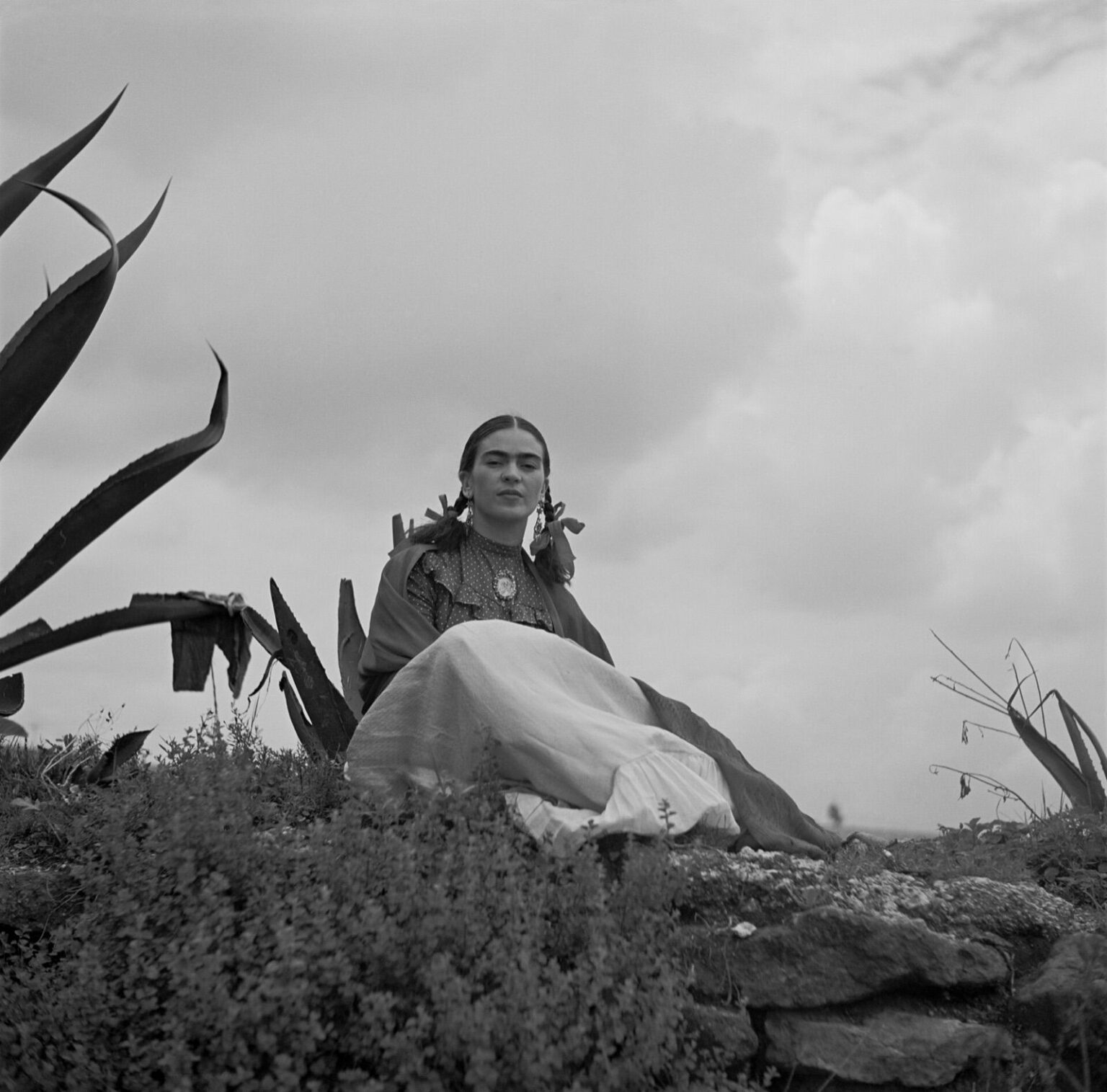
An exhibition that is already rewriting records even before opening its doors, and an art market that in the last two years has redefined the value of surrealist women artists: Frida Kahlo at Tate Modern is not just a cultural event in London, but the most visible symbol of a financial turning point that concerns dozens of other twentieth-century women painters. The exhibition “Frida: The Making of an Icon”, scheduled from 25 June 2026 to 3 January 2027, is already the show with the highest number of advance ticket sales in the history of the London museum, a figure that says a lot about how much the image of the Mexican artist continues to generate commercial, as well as cultural, interest.
Key points
- The exhibition “Frida: The Making of an Icon” at Tate Modern (25 June 2026 – 3 January 2027) is the most pre-booked in the museum’s history
- Kahlo’s painting “El sueño (La cama)” (1940) was sold in 2025 for 54.7 million dollars by Sotheby’s, a record for a woman artist
- Auction sales of surrealist women have risen from 7.9 million dollars in 2018 to 94.3 million in 2024, according to Sotheby’s
- Women account for 11% of the top 200 artists at auction but only 8% of total value in 2025, according to the Art Basel and UBS Art Market Report
- Mexico classifies Kahlo’s works as national monuments, drastically limiting their export and supply on the market
Frida Kahlo’s record market and the Tate Modern exhibition
The London retrospective comes twenty years after the last major anthology dedicated to Kahlo by Tate Modern, in 2005: a time when other artists linked to the Surrealist movement were known only to a small circle of curators and collectors. Today that segment is among the most dynamic in the art market.
Historic auction sale of “El sueño (La cama)”
2025 marked a turning point for Kahlo’s prices: the painting “El sueño (La cama)”, created in 1940, was sold at Sotheby’s for 54.7 million dollars, the highest amount ever paid at auction for a work signed by a woman. An impressive leap if we consider that the same canvas had been purchased in 1980 for just 51,000 dollars. Supply, however, remains extremely scarce: Kahlo produced fewer than 150 paintings in her career, many of which are already held in museums, and her works are classified as national monuments in Mexico, which prevents the export of those already in the country. The result is a market focused on a very small number of trophy lots, capable on their own of moving the global statistics of the sector.
Why it matters: when a single work can be worth as much as the entire annual output of a market segment, every new appearance at auction becomes an event capable of redefining price expectations for all the artists associated with the movement.
The growth of the market for surrealist women beyond Kahlo
The long wave generated by Kahlo’s name has carried with it an entire group of artists who in the 1940s left war-torn Europe to join her circle in Mexico. The numbers, in this case, speak for themselves: according to figures released by Sotheby’s, annual auction sales of works by female surrealists rose from 7.9 million dollars in 2018 to 94.3 million dollars in 2024, growth that has outpaced that recorded by their male colleagues of the same generation.
Leonora Carrington, Remedios Varo, Alice Rahon and Dorothea Tanning: auction records
Among the protagonists of this surge are Leonora Carrington, Remedios Varo and Alice Rahon. In 2024 Carrington’s work “Les Distractions de Dagobert” (1945) was sold by Sotheby’s in New York for 28.5 million dollars, far surpassing the artist’s previous record of 3.3 million dollars. In March, a small canvas by the American Dorothea Tanning, “Children’s Games” (1942), reached 4.7 million pounds at Christie’s in London, almost double the previous record for the same artist.
The role of major museum exhibitions
Behind these numbers lie years of exhibition work. The exhibition “In Wonderland” organized by the Los Angeles County Museum of Art in 2012 is considered the first major turning point for the international visibility of these artists, followed by the retrospective at the Museo Reina Sofía in Madrid in 2018. Museum leaderships headed by figures such as Manuel Borja-Villel at the Reina Sofía and Frances Morris at Tate Modern are cited as decisive in bringing these painters to the center of institutional attention, a step that then found direct confirmation in the auction rooms.
Persistent gender and geographic disparities
Despite the records, the overall picture remains unbalanced: the rise in prices has not yet closed the structural gap between male and female artists in the global market.
Gender imbalance in auctions
The Art Basel and UBS Art Market Report found that in 2025 women accounted for 11% of the top 200 artists by auction revenue, but only 8% of total value generated. This share is actually down compared to the previous year, despite Kahlo’s record set in November. The figure points to a precise reality: a few female names reach very high figures, but the base of women artists valued on a comparable level to their male colleagues remains thin.
The Latin American market more equal than Europe
Complicating the picture is also a geographic divide. According to art dealer Richard Saltoun, with galleries in London, Rome and New York, the misalignment is not only about gender but also territory: in Latin America women artists are celebrated without hesitation, while in Europe the conviction persists, never openly stated, that women’s works should be worth less than men’s. This reading shifts part of the reasoning from the simple trend in prices to a broader cultural issue, capable of influencing the purchasing choices of collectors and institutions.
Cultural changes and institutional support behind market growth
The commercial growth of surrealist women did not happen by chance: it is the result of combined work by galleries, curators and cultural movements that pushed museums to rethink their collections and programming.
The impact of the #MeToo movement and retrospectives
Surrealism, as an avant-garde movement, already had a significant female presence within it, but the pressure exerted by the #MeToo movement on cultural institutions is cited as a factor that accelerated the revision of representation and valuation balances. Museum retrospectives over the last fifteen years have thus found fertile ground, transforming artists long considered niche into names capable of moving seven- and eight-figure sums in international auction rooms.
For those looking at the sector from an investment perspective, the lesson is clear: demand for the protagonists of female Surrealism has consolidated, but remains focused on a small number of already established names, while the rest of the market is still waiting for the leap in recognition that has brought Kahlo, Carrington and Tanning to the top of global price rankings.
FAQ
What makes the exhibition “Frida: The Making of an Icon” at Tate Modern significant?
It is the exhibition with the highest number of advance ticket sales in the history of Tate Modern, scheduled from 25 June 2026 to 3 January 2027.
What record did Frida Kahlo’s painting “El sueño (La cama)” achieve?
It was sold for 54.7 million dollars in 2025, the highest auction price ever achieved for a work signed by a woman artist.
How has the market for surrealist women artists changed in recent years?
Auction sales have grown markedly, rising from 7.9 million dollars in 2018 to 94.3 million in 2024, with several artists breaking their own personal price records.
What difficulties remain for the market for surrealist women despite recent growth?
Women represent only 11% of the leading artists by auction revenue and 8% of total value; moreover, export restrictions imposed by Mexico limit the supply of Kahlo’s works available on the market.
Content created with the assistance of artificial intelligence and with human editorial review.