

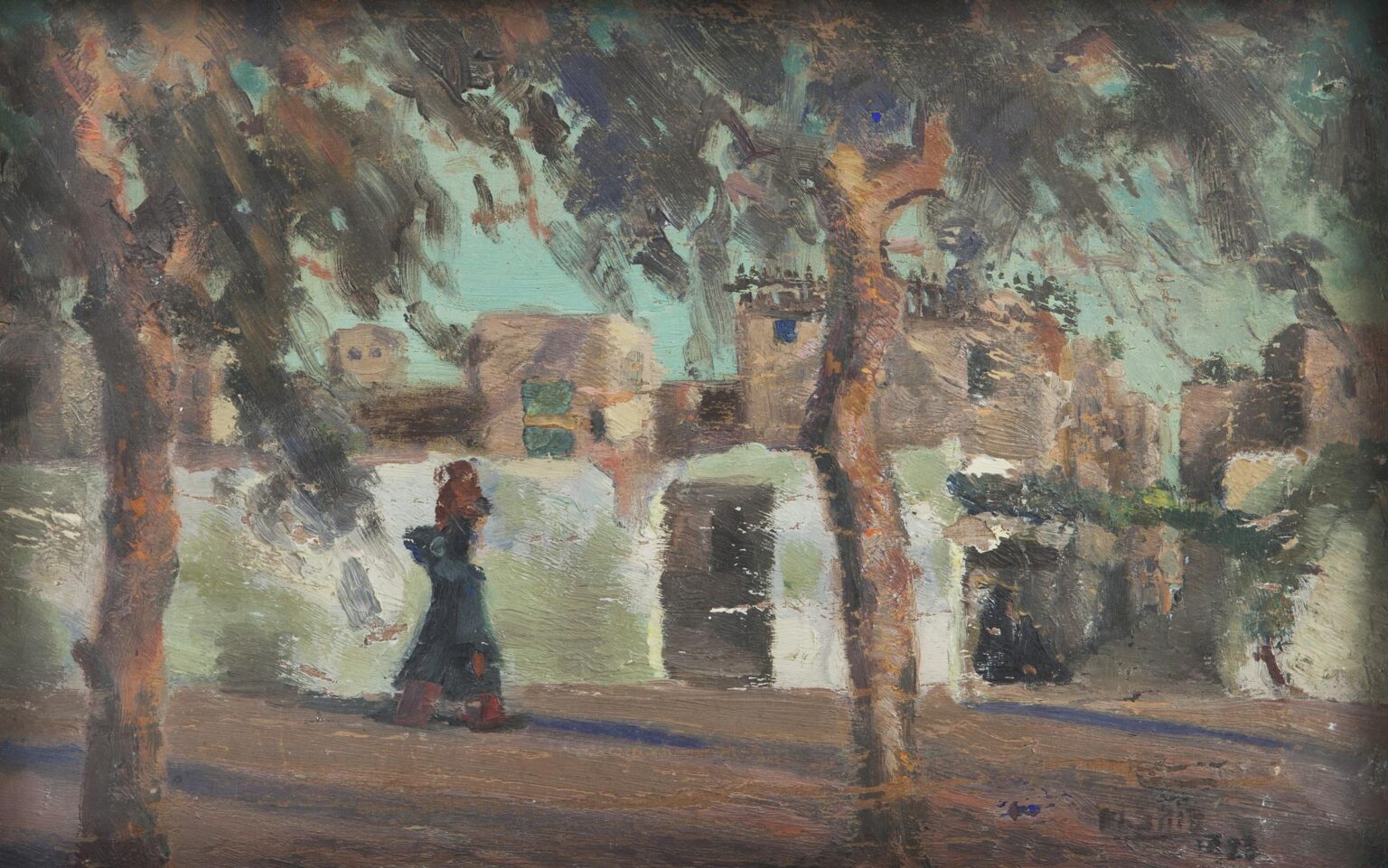
Christie’s took in $8.94 million at its first modern and contemporary art auction in Abu Dhabi. It is the auction house’s best evening result for Middle Eastern art in more than a decade.
Key points
- Christie’s auction in Abu Dhabi totaled $8.94 million with 70 lots by 58 artists from 13 countries.
- The sale, titled “MAWASIM: 20 Years of Modern and Contemporary Middle Eastern Art”, marks 20 years since Christie’s first auction in the United Arab Emirates, held in Dubai in 2006.
- Millennials and Gen Z accounted for more than 30% of those registered for the evening.
- The work “Variations on the Hexagon” (2006) by Monir Shahroudy Farmanfarmaian fetched $844,800, the highest price of the evening.
- The event ushers in a packed art season in the Emirates, with Frieze Abu Dhabi from November 19 to 22 and rival Sotheby’s expected on December 10.
Christie’s inaugural auction in Abu Dhabi
The auction by Christie’s in Abu Dhabi confirms the growing weight of the Middle Eastern art market: $8.94 million is the auction house’s best evening result for modern and contemporary Middle Eastern art in more than ten years.
The sale, called “MAWASIM: 20 Years of Modern and Contemporary Middle Eastern Art”, offered 70 lots by 58 artists from 13 different countries. Estimates for the works ranged from $8,000–12,000 up to $500,000–700,000.
Twenty years of Christie’s history in the United Arab Emirates
The name “Mawasim” means “seasons” in Arabic and recalls the twenty years since Christie’s first auction in the United Arab Emirates, organized in Dubai in 2006. Ridha Moumni, the auction house’s chairman for the Middle East and Africa, described the sale as “probably the most important event for modern and contemporary Eastern art in recent years”.
Moumni added that the United Arab Emirates is the country with the highest number of bidders in the house’s auctions, calling the region “the land of modern and contemporary art collectors”.
Artists and works from across the Middle East
The 70 lots covered a broad generational and geographical span, from Turkey to Egypt, from Iraq to Palestine. Among the artists featured were Fahrelnissa Zeid, one of the first women to attend an art school in Turkey, Iraqi painter Faisel Laibi Sahi, Egyptian artist Mahmoud Said and Palestinian-American artist Samia Halaby.
Fifty-eight artists, thirteen countries represented
Representation from 13 countries made the evening a broad snapshot of Middle Eastern artistic production in the second half of the twentieth century and more recent work. Other names in the catalogue included Armenian-Lebanese painter Paul Guiragossian, Iranian artist Ali Banisadr, Lebanese artist Ayman Baalbaki and Iranian artist Farhad Moshiri.
The evening’s most important sales
The highest price of the evening was achieved by the work of Iranian artist Monir Shahroudy Farmanfarmaian.
The record set by Monir Shahroudy Farmanfarmaian
“Variations on the Hexagon”, created in 2006, was sold for $844,800, more than three times the top estimate of $250,000. The lot sparked nearly seven minutes of competitive bidding in the room.
Other notable results
“Composition” (1948–1949) by Fahrelnissa Zeid reached $524,800. “Baghdad Cafe (The Coffee Shop)” (2016) by Faisel Laibi Sahi and “Homo Deus” (2018) by Ali Banisadr both reached $512,000.
Three works each achieved $486,400: “Noces (Wedding)” (1958–1959) by Paul Guiragossian, “Portrait de Princesse Fadia” (1952) by Mahmoud Said and “Endless Thoughts” by Zeid, dating from the 1970s. Rounding out the top ten were “Yesterday” (1978) by Samia Halaby at $358,400, “Babel Tower” (2012) by Ayman Baalbaki at $281,600 and “Untitled” (2003) by Farhad Moshiri at $230,400.
Millennials and Gen Z drive collector interest
More than 30% of those registered for the auction belonged to the millennial and Gen Z generations.
Christie’s auction in Abu Dhabi comes as competition between auction houses in the Gulf intensifies. A few weeks after the sale, from November 19 to 22, the Frieze fair will open its first edition in Abu Dhabi at Manarat Al Saadiyat. On December 10 it will be Sotheby’s turn to debut in the emirate with the “Breaking Ground” sale at the new Saadiyat Grove Experience Center, while the next day the Guggenheim Abu Dhabi will finally open its doors.
Christie’s has announced that it will exhibit, without putting them up for auction, three works destined for upcoming marquee sales in New York: “Betonte Ecken” (1923) by Wassily Kandinsky, estimated between $60 million and $80 million, “Untitled” (1968) by Mark Rothko, estimated between $10 million and $15 million, and “Tête de femme” (1939) by Pablo Picasso, estimated between $12 million and $18 million. The three works will be displayed at the Abu Dhabi Edition hotel.
Content produced with the assistance of artificial intelligence and with human editorial review.


