The Seoul art market is closing the era of euphoria and entering a more sober phase, marked by more selective sales and collectors who think in terms of liquidity before status. While Frieze Seoul returns for its fifth edition and KIAF celebrates its twenty-fifth anniversary in September, the art market trends in Seoul tell the story of a city that is scaling back after years of accelerated growth, without losing ground compared to the rest of the world.
Key points
- The global art market grew by 4% in 2025 after two years of decline, while South Korea recorded +6%, according to the Art Basel and UBS Art Market Report.
- Secondary market sales in Seoul have become more difficult, with a sharp drop in speculative activity that had fueled the boom.
- Some international galleries such as Peres Projects, König and Various Small Fires have closed their Korean locations, while others such as Meyer Riegger and Gladstone Gallery have invested and expanded.
- Next year Frieze Seoul will move to the Dongdaemun Design Plaza while KIAF will remain at COEX, separating the two fairs for the first time.
- Shinsegae Group has become the main partner of Frieze Seoul until 2030, a deal that could bring new collectors into the Korean market.
The Seoul art market enters a maturation phase
The enthusiasm that had made Seoul one of the hottest hubs on the international scene has faded, but not disappeared: in its place has come a more solid market structure. As described by Jason Haam, a gallerist who has participated in Frieze Seoul since its inception, “the climate has certainly changed… the optimism of a few years ago was tied to the strength of the market; today that momentum has weakened, but that’s true for the entire global art market.”
Market growth and global context
The numbers point to moderate recovery rather than crisis. According to the latest Art Basel and UBS Art Market Report, the global art market grew by 4% in 2025 after two consecutive years of decline, while South Korea recorded a 6% increase, outperforming the international average. On the ground, however, gallerists describe a more fragmented picture: secondary market sales have become more complicated compared to the 2021 peak and, as Haam points out, “the easy flow of money has certainly stopped,” even though the market today appears “healthier and more mature,” with genuinely motivated collectors driven by a passion for art rather than speculation.
Changes in collector behavior
Consultant Hong Chang-Hee notes that the speculative activity that accompanied the boom has diminished, due to higher interest rates, economic uncertainty and currency volatility. This has made art collectors in South Korea more focused on liquidity and more selective when purchasing works worth hundreds of thousands of dollars, looking with greater confidence to markets they can observe directly and to contemporary Asian artists instead of Western blue-chip names.
Timmy Kim, a Seoul-based advisor and curator, describes a clear bifurcation: the old guard continues to buy works by established artists above one million dollars from blue-chip galleries, while young collectors in Seoul typically buy works under $10,000, often by emerging artists discovered in newer local galleries. In this scenario, mid-career artists remain the most penalized, with a limited secondary market, while demand for the Dansaekhwa masters who emerged in the 1970s remains strong. Sunghoon Lee, president of the Galleries Association of Korea, which organizes KIAF, confirms that the collector base has become “more informed, curious and confident in its own tastes,” with growing interest in emerging artists and broader contemporary practices. Daegu-based collectors Jaeyong Cho and Hyunji Kim, for example, have moved from buying names such as Damien Hirst and Takashi Murakami to works by ultra-contemporary Korean artists like Haneyl Choi and Heemin Chung.
Changes among galleries and art fairs
The market reshuffle is also visible in the geography of galleries and the structure of fairs. On one side, closures; on the other, new investments that show a scene that is anything but retreating.
Gallery closures and new openings
The closure of galleries in Seoul has shaken the local scene, in line with what has happened in other art capitals around the world. Peres Projects, König and Various Small Fires have closed their Korean locations, along with local space One and J. Gallery. Haam compares this phase to the period following the 2008 financial crisis: “We experienced an extraordinarily long period of growth, and today’s slowdown should be understood as a long-awaited market correction,” adding that galleries need to rethink how they operate in the city. Not everyone is pulling back, however: Meyer Riegger opened a space in Seoul in collaboration with Galerie Jocelyn Wolff last year, while Gladstone Gallery will double its size by moving to the Hannam-dong district ahead of the fairs.
Regional focus of Frieze Seoul and venue changes
The Frieze Seoul art fair is taking on an increasingly regional character, a sharp contrast with its debut edition, when many observers imagined it poised to overtake Art Basel Hong Kong as the area’s main reference point. Today more than 70% of the 133 exhibitors come from the Asia-Pacific region, while around 50 have a permanent space in the city. Timmy Kim notes that the American collectors who flocked to the first edition have gradually decreased, also because the fair takes place one month before Art Basel Paris, making the trip less attractive for the busiest international collectors. Not everyone shares this view: Mariko Kawashima, Asian representative of São Paulo gallerist Mendes Wood DM, expects more foreign collectors this year thanks to the Gwangju and Busan biennials, and her gallery is returning to Frieze Seoul after skipping the previous edition, when more than 40 galleries did not renew their participation.
The most concrete change, however, concerns the venues: next year, with Gangnam’s COEX under renovation, Frieze Seoul will move to the Zaha Hadid–designed Dongdaemun Design Plaza, while KIAF will remain at COEX. The two fairs, nicknamed “KIAFrieze” by locals, will no longer share the same roof. At the same time, the Shinsegae Group has become the fair’s main partner until 2030: a deal that, according to Hong, could “bring new energy to the Korean art market, which has been somewhat subdued in recent years,” thanks to the conglomerate’s ability to attract new collectors.
Institutional growth and a new culture of patronage
Outside the commercial circuit, Seoul’s museum scene is strengthening with new openings and international collaborations, a sign that art market trends in Seoul are not limited to galleries and fairs.
New museums and collaborations
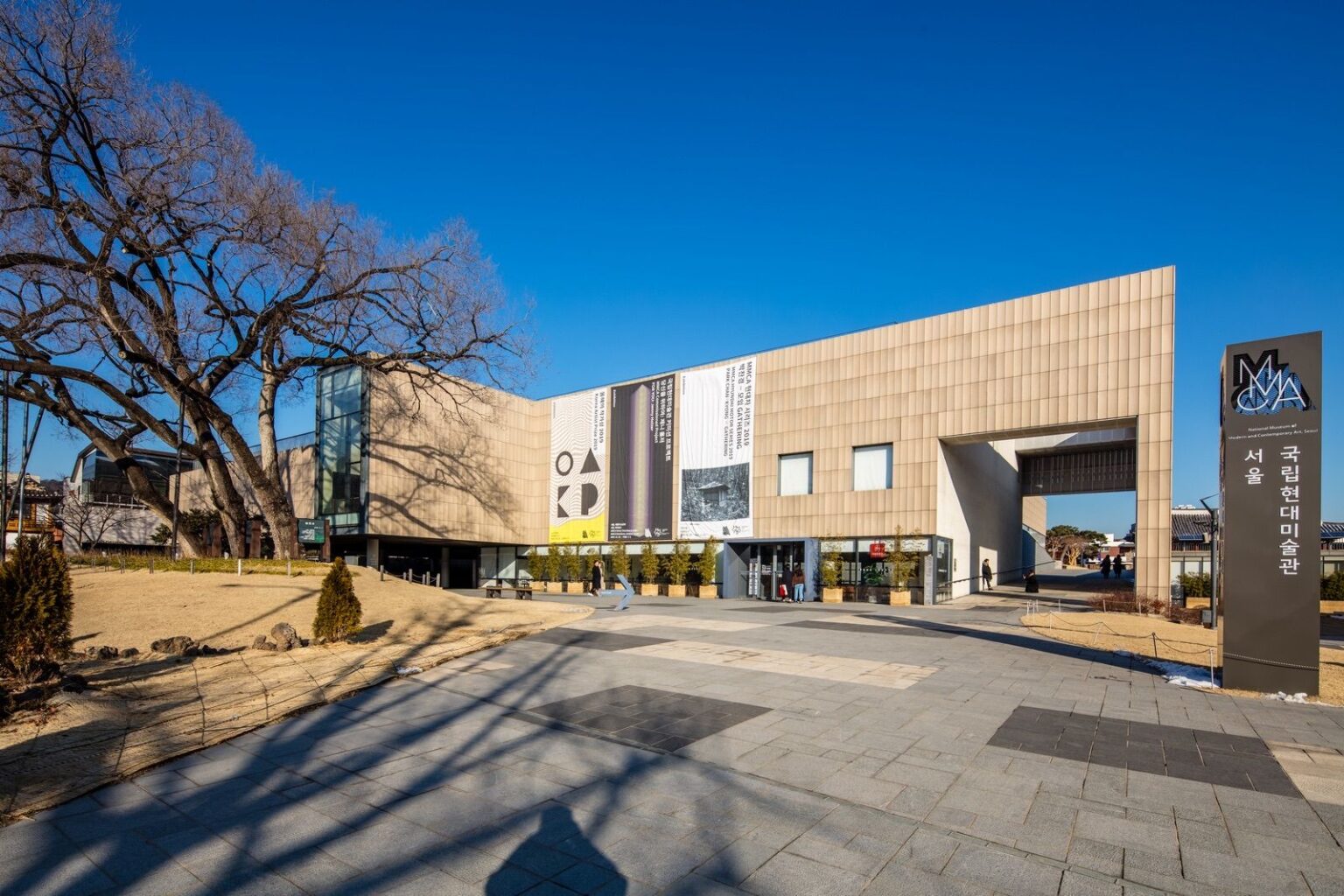
In June the Centre Pompidou opened a museum on Yeouido Island in partnership with the Hanwha Foundation of Culture, while PhotoSeMA, the city’s first museum dedicated to photography, opened last year. In 2027 the Songhyeon Cultural Center will open, a space designed to house the 23,000 works donated by Samsung founder Lee Kun-hee. Korean institutions such as the National Museum of Modern and Contemporary Art (MMCA) are also stepping up collaborations with foreign counterparts.
Mature collector support and cultural donations
MMCA director Kim Sung-hee notes that local collectors are showing greater willingness to support museums and cultural institutions, a sign she describes as part of the “maturation of the culture of giving in Korea.” Patrick Lee, director of Frieze Seoul, sees the same trend: “The level of engagement beyond simple collecting is particularly encouraging. Many collectors contribute through patronage, education and support for artists and institutions.”
Not everyone shares this optimism. Timmy Kim remains cautious and argues that Korea has not yet developed a true culture of museum patronage, noting that Western models such as gala dinners do not easily translate into the local context, where “there are many hidden collectors who do not want to be exposed.” He does believe, however, that things may change with the next generation, which is more inclined to participate publicly in events: “When I go to museums, I feel that young audiences really discuss art; they don’t just take photos.” Emma Son, partner at Lehmann Maupin in Seoul, sees the same positive sign among young Korean collectors, who “may start with more modest acquisitions, but many think long term and build thoughtful collections from the early stages.”
FAQ
What phase is the Seoul art market currently in?
The Seoul market is entering a maturation phase after the euphoria of the boom years, characterized by more selective collectors and healthier market conditions.
How has collector behavior in Seoul changed?
Collectors have become more focused on liquidity and are concentrating on contemporary Asian artists rather than Western blue-chip names; there is also a clear divide between major buyers and younger collectors with smaller budgets.
What changes are affecting art fairs in Seoul?
Frieze Seoul is becoming more regional, with 70% of exhibitors coming from the Asia-Pacific area, and from next year it will be held at a venue separate from KIAF.
How is Seoul’s institutional art scene evolving?
New museums and collaborations, including the Centre Pompidou museum and the future Songhyeon Cultural Center, mark significant growth, while patronage and a culture of giving are maturing but still in development.
Content created with the assistance of artificial intelligence and with human editorial review.