

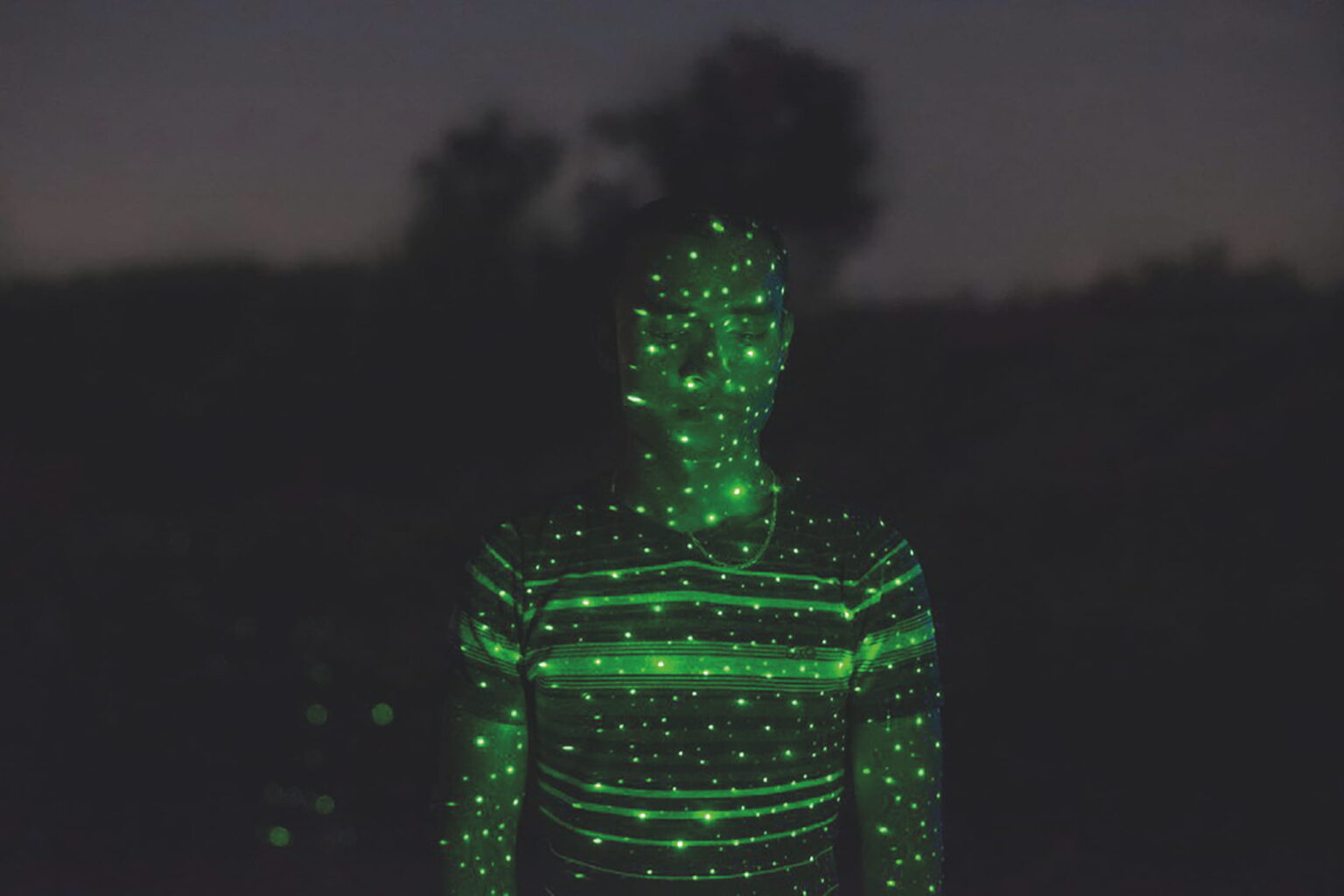
From Individual Care to the Transformation of Business: Rebecca Russo explains how Contemporary Art can become a strategic resource for Organizations, Communities and Territories
In recent years, the dialogue between art, health and organizations has taken on increasing relevance. On the one hand, companies are being called upon to rethink their role in promoting well-being; on the other, experiences are emerging that demonstrate how contemporary art can make a concrete contribution to processes of care, prevention and human development. Among the most authoritative organizations in this field is the Videoinsight® Foundation – ETS, founded in 2013 and registered with the Third Sector in 2025 by Rebecca Russo, who holds a degree in psychology, specializes in psychotherapy, and is a philanthropist, author, curator and contemporary art collector. For more than a decade, the Foundation has been developing an interdisciplinary approach combining contemporary art, psychology and medicine, supported by scientific research and clinical experimentation.
The Interview with Rebecca Russo
Since 2010, by integrating art and science, you have developed a vision of art as a true “care device.” In recent years, there has been increasing discussion of art therapy and the role of the arts in promoting psychophysical well-being. What do you consider to be the most significant scientific evidence today supporting the impact of contemporary art on a person’s health and well-being?
Science has demonstrated the effectiveness of the visual and performing arts in the prevention, management and treatment of mental and neurological disorders, fully integrating them into pathways of complementary medicine and the humanization of care. Contemporary art acts as a neurophysiological tool capable of reshaping perception, stimulating neuroplasticity, enhancing an individual’s quality of life and promoting longevity. The impact of contemporary art on health and personal care is a documented and scientifically measurable reality.
Studies in neuroaesthetics and cognitive neuroscience, based on functional magnetic resonance imaging (fMRI) and the measurement of stress biomarkers, show that engaging with art activates a complex network of brain structures. Viewing an artwork stimulates the dopaminergic circuit (the nucleus accumbens and orbitofrontal cortex), generating states of gratification, motivation and pleasure comparable to those induced by primary affective stimuli. Aesthetic engagement promotes endocrine modulation of stress, a rapid reduction in blood and salivary cortisol levels, and an improvement in heart rate variability (HRV), a direct signal of reactivation of the parasympathetic nervous system and attenuation of anxiety states.
Contemporary art, freed from pure mimetic formalism, uniquely stimulates empathic mirroring. The perception of artistic forms, gestures, video sequences and materials activates the mirror neuron system and the observer’s somatosensory areas, enabling psychophysical participation in the experience expressed by the artist. This process facilitates emotional resonance, enhancing the capacity for mentalization and the reworking of complex or traumatic emotional experiences.
Art confronts the viewer with ambiguity, metaphor and visual unpredictability. The need to attribute meaning to an artwork stimulates the brain to move beyond rigid default mental patterns, fostering cognitive flexibility and neural reorganization. The artwork functions as a genuine clinical and diagnostic device: it activates the projection of unconscious contents, promotes psychological insight and facilitates emotional resilience.

The Videoinsight® Method
The Videoinsight® Foundation – ETS was born from the encounter between contemporary art, clinical psychology and medicine, with the aim of promoting prevention, care and well-being through a deeply interdisciplinary model. At its center is the Videoinsight® Method itself: what characteristics must an artwork possess in order to generate the therapeutic potential that your method certifies?
The Videoinsight® Foundation – ETS promotes the psychophysical well-being of individuals and the community through contemporary art. It applies the art-based care method known as Videoinsight®, conceived in 2010 and tested in the psychological setting, in the Videoinsight® Art for Care Program at the Videoinsight® Center, and ultimately in medicine through the scientific research projects Video Acl, Video Tka and Pf Project, conducted since 2010 in collaboration with the Rizzoli Orthopaedic Institute in Bologna and the Universities of Lyon, Minneapolis and Kobe. The Videoinsight® method has been recognized by the international scientific community. The Videoinsight® Foundation – ETS works to disseminate the method within health institutions, hospital settings, educational and social environments, and the world of work.
Not all contemporary artworks inherently possess the capacity to trigger the diagnostic, therapeutic and inner transformation process defined as “Videoinsight®”: an immediate and profound transformative visual intuition. In order to function as a genuine “clinical device” and stimulate psychophysical well-being, an artwork, particularly video art but also painting, sculpture or installation, must possess a high evocative and symbolic potential.
The artwork must be rich in visual metaphors, archetypes and universal symbols capable of speaking directly to the viewer’s unconscious. It must not describe or explain in a didactic manner, but rather evoke, activating free associations and profound emotional resonances connected to personal experiences, fears, desires or unresolved conflicts.
An artwork with a high Videoinsight® impact is never purely comforting or decorative. It must contain a dialectical tension between opposing elements: vulnerability and strength, stillness and movement, darkness and light, closure and openness, pleasure and displeasure. It is precisely within this ambivalence that lies the transformative energetic charge capable of activating a process of psychological release and evolution in the viewer.
The artwork must stage or reflect fundamental dynamics of human experience: the body, connection, care, loss, rebirth and identity. This characteristic enables the triggering of mechanisms of empathy and the activation of mirror neurons, allowing the viewer to identify with the visual narrative.
The artistic image must possess formal immediacy, essentiality, compositional strength and, in the case of video art, rhythm, in such a way as to capture attention instantly and overcome the viewer’s rational defenses or cognitive resistance. The artwork must not lead to a dead end, suspension or fixation, but must contain within itself an opening, a passage, a direction toward redemption.
The viewing of the artwork must guide the viewer, through the symptom, discomfort or suffering, toward insight: a new awareness, a possibility of healing and existential evolution. The ideal artwork is a psychic catalyst: a visual bridge between the viewer’s inner world and their capacity for self-understanding, capable of transforming simple aesthetic viewing into a genuine experience of awareness and psychophysical health.
The entry of Art into Business
If certain artworks can foster individual awareness, resilience and transformation, it is natural to ask what role they might also play in work and organizational contexts. What potential do you see in introducing contemporary art into companies, and how could it contribute to the development of people, corporate culture, innovation capacity and beyond?
Introducing contemporary art into a corporate context represents a fundamental paradigm shift: the artwork becomes a strategic tool for organizational development, psychophysical well-being and cultural transformation. In an era dominated by relentless pace and the risk of burnout, contemporary art acts in the workplace as a device for de-stressing and psychophysical regeneration. It transforms corporate environments into stimulating places, reducing anxiety and improving the organizational climate.
Visual engagement and contact with complex artistic narratives activate processes of self-reflection and emotional intelligence, helping people develop greater empathy, awareness of their own resources and the ability to manage conflicts. Contemporary art is a mirror and a catalyst of the present. Sharing an artistic experience within a company creates opportunities for horizontal dialogue, breaking down hierarchical barriers and strengthening the sense of belonging (corporate identity).
Integrating art into corporate processes demonstrates a vision of business attentive to social responsibility and to the quality of life of its employees; it improves talent attraction and retention (employer branding).
Innovation arises from a change of perspective, and the contemporary artist is, by definition, a researcher who challenges predefined models. Art trains the corporate mind to coexist with uncertainty, complexity and ambiguity, traits that are indispensable for navigating contemporary markets. Exposing work teams to unconventional visual languages unlocks rigid cognitive patterns, fostering creativity in problem-solving, innovation and the emergence of disruptive ideas.
The impact of art extends beyond the boundaries of the corporate building. Associating a corporate brand with contemporary art makes it possible to communicate value, vision and cultural sensitivity, positioning the company as an agent of social progress and not merely of economic progress. Promoting artistic projects within a company also generates value for the external community, transforming the organization into an active cultural hub within its territory.
Contemporary art in business is not an aesthetically pleasing luxury, but a catalyst for human capital: a high-return investment that nourishes the mind, transforms relationships and provides the cognitive and emotional keys needed to guide the future of innovation.
From 2013 to 2017, the Videoinsight® Foundation – ETS introduced video art into 42 university hospitals worldwide, creating “Videoinsight® Rooms,” spaces in which patients waiting in Emergency Departments, inpatients or day-hospital patients could interact with video artworks to alleviate anxiety, improve mood, increase confidence, relax the mind and strengthen healthy resources.
In 2024–2025, it created an exhibition at Spazio Leonardo in Milan, the cultural venue of Leonardo Assicurazioni / Generali, entitled “Art Routine for Wellbeing.” The exhibition focused on video art presented full time in 8 steps. Twenty-five works by international contemporary artists, including Marinella Senatore, Hans Op de Beeck, Niklas Goldbach, Ali Kazma, Burcu Gökçek, Michael Fliri, Marzia Migliora, Sophie Whettnall, Shana Moulton and Mary Sue, were exhibited within the corporate environment and in the space open to the public. The works, drawn from the Videoinsight® Collection, were integrated into the architecture of Spazio Leonardo with the aim of creating a genuine “daily routine” of aesthetic engagement, understood as a device for stimulating intuition (the videoinsight), promoting decompression from stress and fostering the psychophysical well-being of both employees and visitors.
In 2025, the Videoinsight® Foundation – ETS, in collaboration with the ASP of Siena, introduced permanent video art into three RSA / RA facilities. The project, called “VideoAsp,” was made possible thanks to Giuseppe Giordano, Councillor for Health and the Right to Health of the Municipality of Siena and creator of the General States of Health. Selected video artworks were donated to the ASP on free loan and are viewed daily by 450 resident guests.
From initiative to structural practice
An increasing number of companies are investing in corporate welfare, but interventions often remain focused on healthcare, financial or recreational aspects. Do you believe that art can become a continuous, structural component of corporate well-being strategies? And what benefits could it offer both employees and companies in the medium to long term?
The integration of contemporary art into corporate strategies should not be considered an occasional event, an isolated promotional initiative or a decorative interlude, but rather a genuine long-term strategic and structural choice. When art becomes a continuous part of organizational processes and the company’s everyday life, it transforms into a cultural and emotional infrastructure capable of generating tangible and lasting value for employees and the organization.
The constant presence of visual art in workplaces acts as a device for stress prevention, decompression and psychophysical regeneration. Daily engagement with images rich in symbolic and evocative content stimulates emotional intelligence, introspection, self-awareness and the ability to rework complex experiences or relational conflicts.
The habit of engaging with the complex and unconventional languages of art trains the mind to tolerate ambiguity and develop cognitive flexibility, increasing mental agility in the face of change. Art within the company becomes a social connector, fostering an inclusive, open and stimulating working environment that strengthens team cohesion.
Corporate innovation requires critical and out-of-the-box thinking. An environment permeated by contemporary art keeps curiosity alive, unlocks rigid cognitive patterns and encourages autoplastic and alloplastic adaptation.
Making art a structural component of corporate strategies means making a high-return investment in the company’s most valuable asset: the minds, sensitivity and health of the people who experience it every day.
From the Company to the Territory
The impact of art rarely ends with the relationship between an individual and an artwork. When cultural institutions, foundations, local organizations and companies collaborate, they can generate even more positive effects that extend to territories and communities. How important do you believe it is today to think in terms of “widespread well-being,” and what role can companies play in promoting this change through contemporary art?
Thinking today in terms of “widespread well-being” is no longer an accessory choice or a superficial corporate trend, but an unavoidable existential, social and economic necessity. We live in an era marked by hyperconnectivity, fragmented attention, accelerating production rhythms and a widespread sense of isolation. In this context, the traditional concept of well-being, often confined to the individual or healthcare sphere alone, must necessarily evolve toward a systemic and collective vision: an ecosystem in which the psychophysical health of the individual is closely interconnected with the well-being of the community, the workplace and the social fabric.
Companies bear an extraordinary ethical and cultural responsibility. They can no longer limit themselves to producing goods or providing services; they are called upon to act as instruments of social transformation and hubs for the regeneration of human capital. In this transition, contemporary art emerges as one of the most powerful and effective tools for driving change, enabling companies to play a key role.
Bringing contemporary art into everyday corporate life means breaking down the elitist barriers that often confine it to museums or galleries. When a company integrates visual art and video art into its spaces, it creates an environment of continuous and inclusive engagement, where every employee, regardless of their role, can benefit from a stimulus capable of promoting psychophysical well-being, decompressing stress, encouraging concentration and restoring the centrality of the individual.
The contemporary artwork functions as a catalyst for dialogue and emotional resonance. Bringing art into the workplace means stimulating the sharing of perspectives, mutual listening and empathy among people. The company ceases to be an aggregate of individuals oriented toward efficiency and becomes a genuine community of belonging, cohesive and founded on shared values.
Promoting widespread well-being also means looking beyond the boundaries of the company. A company that invests in contemporary art as a tool for well-being extends its positive influence to the territory and the wider community, promoting cultural projects with significant social, human and educational impact. Ultimately, promoting widespread well-being through contemporary art means restoring value and meaning to the time people spend within organizations. For companies, this is not merely about improving the workplace climate or productivity, but about assuming a conscious leadership role in building a more empathetic, resilient and human society.

Future perspectives at the intersection of Art, ESG and Shared Value
In recent years, there has been extensive discussion of sustainability, social responsibility and ESG criteria, yet the cultural dimension often continues to occupy a space that is too episodic within corporate strategies. Do you believe that in the coming years the relationship between business and art is destined to become an increasingly strategic lever, also from the perspective of CSR, ESG and the creation of shared value? What signals are you observing in this direction?
Yes, I am deeply convinced that the combination of contemporary art and the business world is not a passing trend, but a strategic choice destined to become indispensable in the coming years, especially from the perspective of ESG metrics, Corporate Social Responsibility (CSR) and the creation of Shared Value (Creating Shared Value).
Art, when integrated as a clinical, evolutionary and relational tool, offers concrete responses to the fundamental directions of sustainable business practice. It is not a cost or a superficial luxury, but a high-return investment in human and social capital, indispensable for companies that intend to lead the future with awareness, sustainability and strategic vision.
Social sustainability begins with concrete attention to the individual. Integrating art into corporate processes directly addresses the social dimension. The adoption of visual art and video art collections within corporate spaces acts as a device for preventing burnout and improving employees’ quality of life. Shared artistic experiences break down hierarchical barriers and foster an inclusive working environment based on respect for diversity and mutual listening.
A sustainable company requires a visionary governance model centered on human capital. Art trains leadership and teams to manage complexity, uncertainty and ambiguity, stimulating organizational resilience. Integrating art into corporate strategies demonstrates a genuine ethical and cultural commitment, strengthening the authority and credibility of the brand among internal and external stakeholders.
The Shared Value approach requires business success to simultaneously generate a tangible benefit for the community. Contemporary art becomes a strategic bridge. Promoting exhibitions, art programs and artist residencies that are open to the public or designed for care settings such as healthcare facilities or residential care homes enables companies to provide territorial cultural welfare, returning social and emotional value to the community.
The most forward-thinking companies are no longer looking merely for their logo on the brochure of an exhibition, but are asking for tailor-made curatorial projects capable of intervening in the corporate climate and employee well-being. Young talent chooses companies that offer stimulating, human and ethically oriented environments. Commitment to art and personal well-being has become a key factor in employer branding.
The increasingly close dialogue between the healthcare sector, international global organizations such as the WHO and the corporate world regarding the neuroaesthetic impact of art is legitimizing artistic practices as a genuine strategic resource for health and social sustainability.
A necessary change of perspective
Looking to the future, what message would you give to managers and professionals who still consider art primarily as a virtuous initiative to sponsor, rather than as a true ally and investment capable of affecting people’s well-being, organizational innovation and the social impact of companies?
The message I would give to managers and professionals is an invitation to make a courageous change of perspective that can no longer be postponed: “move beyond the vision of art as a purely aesthetic exercise, image-driven patronage or a sunk cost, and try to recognize it for what it truly is: a strategic resource with an exceptionally high return on human capital.”
Continuing to consider art merely as a façade operation or an occasional sponsorship initiative means giving up one of the most effective and sophisticated tools for the cultural transformation and well-being of organizations. Art is a device for health and prevention; it does not simply beautify an environment or provide a recreational break, but acts as a genuine neurophysiological reagent.
Innovation does not arise in cognitively rigid contexts, but through openness to unpredictability, ambiguity and metaphor. Contemporary art trains the corporate mind to move beyond established patterns, developing in employees the critical thinking and emotional agility needed to navigate increasingly complex and unpredictable contexts. The artist is not a decorative figure, but a master of vision and creative problem-solving.
Today, a company’s credibility in the eyes of investors and younger generations is measured by its capacity for genuine social impact. Integrating art into organizational processes and extending it to the territory and the wider community is not merely an act of CSR or an element contributing to ESG metrics, but an act of cultural and human reciprocity: it transforms the company from a mere place of production into a hub for social regeneration and cohesion.
To those who still view art with skepticism or approach it exclusively from a collecting or promotional perspective, I say: “have the vision to experience it from within.” Consider contemporary art a strategic ally capable of stimulating people, unlocking organizational energy and elevating the quality of life within the company. Investing in art means investing in the health, creativity and future of your organization.
Bibliography
• Rebecca Russo, Videoinsight®. Healing with Contemporary Art, Milan, Silvana, Ed. 2011
• Rebecca Russo, Videoinsight®. Curare con l’arte contemporanea, Milan, Silvana, Ed. 2011
• Rebecca Russo, The Videoinsight® Method, Milan, Postmedia Books, 2012
• Rebecca Russo, The Videoinsight® Concept, CIC Ed. Internazionali, Rome, e-book on Apple Store, 2013
• Rebecca Russo, Pressing, Videoinsight® Foundation Publisher, Milan, 2013
• Rebecca Russo, Sirene, Videoinsight® Foundation Publisher, Turin, 2020
• Rebecca Russo, Love Bombing. Gaslighting, Videoinsight® Foundation Publisher, Turin, 2022
• Il sospetto, Videoinsight® Foundation Publisher, Turin, 2024
Read also: The accessibility of contemporary art starts from 500 euros, says the painter Galliano · Anton Van Dalen’s house for sale in New York for $6.95 million


