

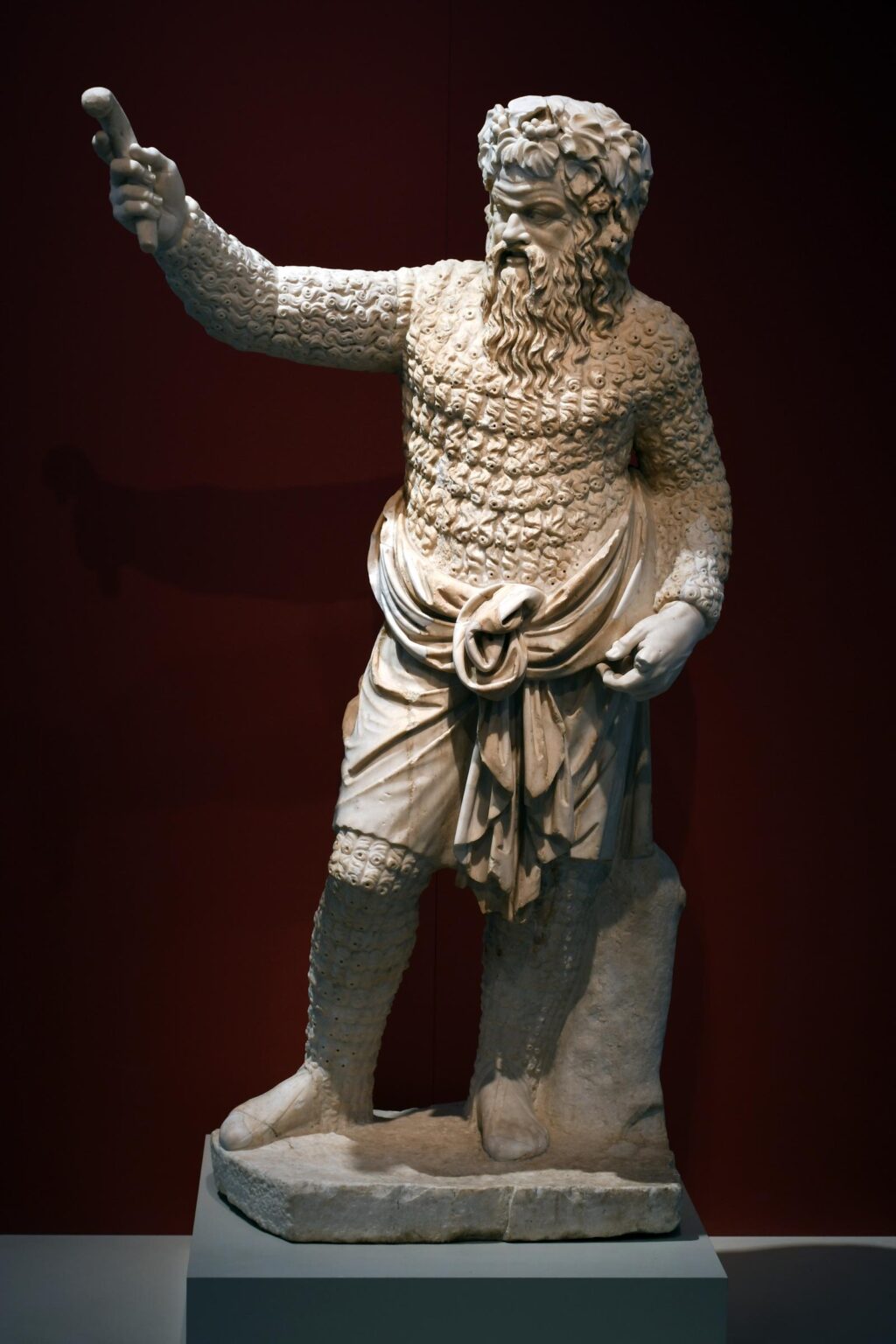
According to one source, about 200 archaeological artifacts looted from Anatolia have returned home, while another reports 100 objects. This is the result of the repatriation of archaeological artifacts from the United States to Turkey, presented on Monday at the Istanbul Archaeological Museums, where the Turkish Ministry of Culture displayed the pieces recovered from the United States.
Key points
- According to one source, Turkey has brought back about 200 artifacts from the United States, while another lists 100, displayed at the Istanbul Archaeological Museums.
- Among the pieces are bronze statues from the ancient city of Boubon, looted in the 1960s.
- The recovery is based on three technologies: lead isotope geochemistry, geometric comparison of molds, and the AI platform TraceART, launched in 2025.
- Manhattan’s Antiquities Trafficking Unit has so far recovered 6,452 looted artifacts, 276 of which are of Turkish origin.
- Since 1980, Turkey has obtained the return of over 26,700 cultural assets, 180 of them in 2025 alone.
The exhibition “No Escape: Boubon” recounts the looting of the 1960s
Monday’s event coincided with the opening of the exhibition “No Escape: Boubon”, dedicated specifically to the story of the archaeological site in the province of Burdur, in southwestern Turkey. The site was illegally excavated in the 1960s: the statues were dismantled piece by piece and dispersed across several countries. Official excavations at Boubon resumed in 2023 and are still ongoing.
Among the items on display are 44 architectural terracotta panels from Duver, also in Burdur, dating from 700 to 480 BC: they form the largest group among the repatriated pieces. Completing the collection are 40 artifacts from the archaeological site of Horoztepe, in the province of Tokat, a portrait from the ancient city of Aphrodisias, as well as theatrical masks and votive figurines.
How science and artificial intelligence identify looted artifacts
To reconstruct the origin of the bronzes, Turkey combined three different tools. The Ministry of Culture used lead isotope geochemistry, which makes it possible to determine where a particular ancient bronze was cast, and geometric comparison of molds, useful for verifying whether a sculpture belonged to a specific pedestal.
The third tool is the TraceART artificial intelligence platform, developed by the Ministry of Culture and Tourism and operational since 2025. The system scans international auction houses and social media in search of Turkish objects suspected of illicit origin; each AI alert is then verified by experts. A first concrete result came this year, with the recovery of two 16th-century Iznik tiles put up for sale by a British auction house.
Thanks precisely to this intertwining of isotopic analyses, comparison of molds, and research by scholars and journalists, the artifacts were traced back to the ancient site of Boubon. The bronze sculptures, looted and broken in the 1960s, had ended up in U.S. museums such as the Metropolitan Museum of Art, the Cleveland Museum of Art, and the J. Paul Getty Museum. The contribution of researchers and journalists was also decisive, including the Turk Özgen Acar and his New York Times colleagues Graham Bowley and Tom Mashberg.
Why it matters for the art and antiquities market
This story is not just about culture: it directly affects those who own, insure, or intend to purchase archaeological artifacts. A year ago, the Cleveland Museum of Art had already agreed to return a statue of Marcus Aurelius to Turkey. On that occasion, the Antiquities Trafficking Unit, founded in 2017 by Manhattan District Attorney Matthew Bogdanos, seized 15 looted artifacts from Boubon, 14 of which were later repatriated, with a total estimated value of almost 80 million dollars.
The case also shows how a repatriation is concretely set in motion: it all started with an American auction house that had put Anatolian artifacts up for sale. The Turkish Ministry of Culture reported them and built a case presented to the Manhattan District Attorney’s Office and the U.S. Department of Homeland Security Investigations, ultimately obtaining their return.
The next battles: the Louvre and Berlin’s Altes Museum
The overall figures speak for themselves: Turkey has obtained the return of 180 cultural assets in 2025 alone, bringing the total since 1980 to over 26,700 repatriated artifacts. But the list of open claims is not exhausted.
The ministry continues to demand a marble torso known as the “Old Fisherman”, kept at Berlin’s Altes Museum, as well as dozens of Iznik tiles held at the Louvre in Paris.
Culture Minister Mehmet Nuri Ersoy summed up Turkey’s strategy as follows: they will continue to track down cultural assets illegally removed from Anatolia, working to bring them home through combined scientific, legal, and diplomatic efforts.
Content produced with the assistance of artificial intelligence and with human editorial review.


