

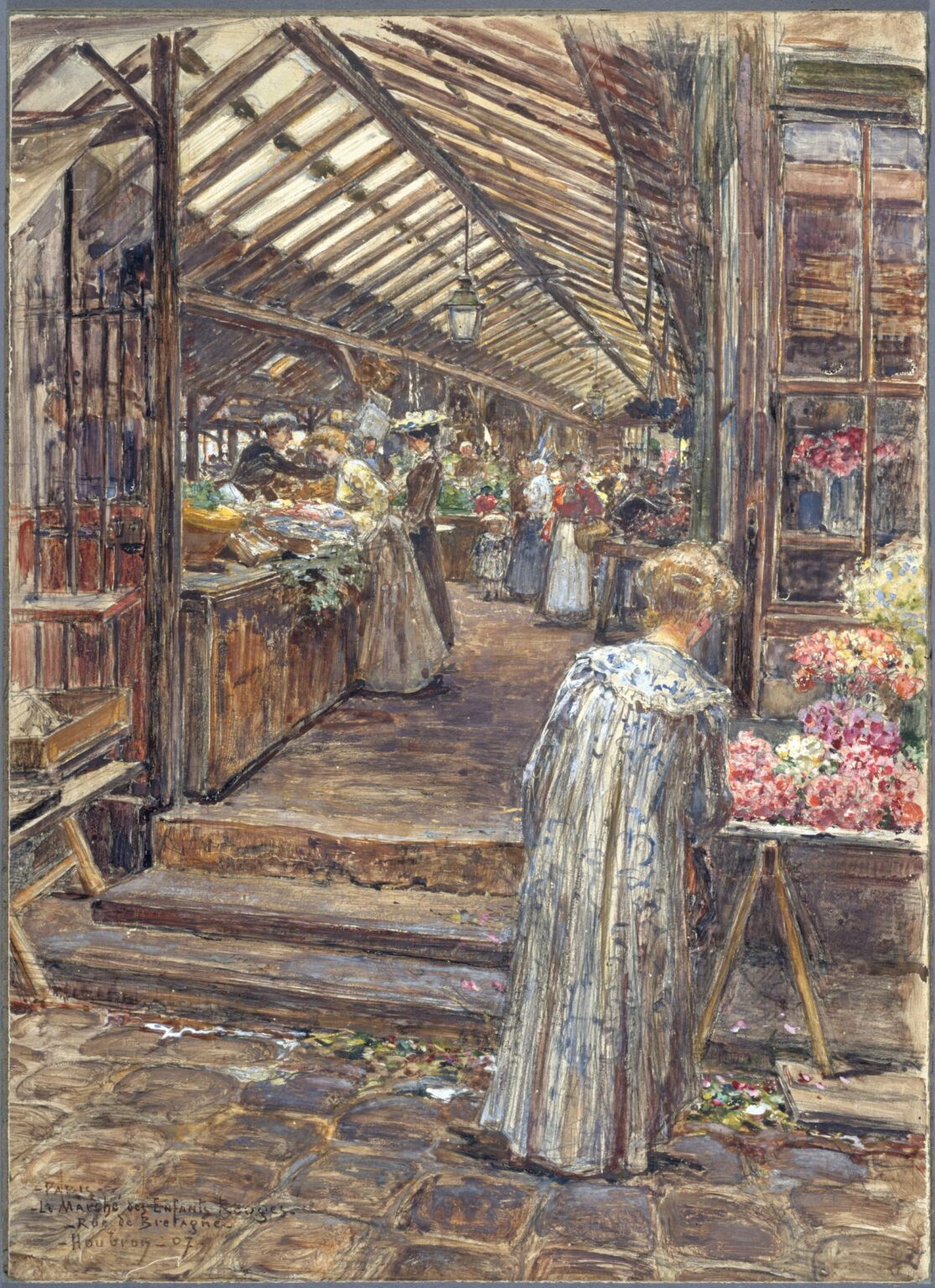
The oldest covered market in Paris, the Marché des Enfants Rouges, was devastated by a fire in the early hours of 12 October 2026. No injuries have been reported.
Key points
- The market was founded in 1615 at the behest of Louis XIII and declared a historic monument in 1982.
- The fire broke out in the early hours of 12 October 2026, shortly after 3 a.m. according to one source or shortly after 4 a.m. according to another, with over 150 firefighters working to bring the flames under control.
- The metal roof covering the market partially collapsed, but no nearby buildings were damaged.
- The causes of the blaze are currently under investigation.
- The market was considered one of the most beloved in Paris, ranked fifth in the world for street food by the website Food&Wine.
What burned in the heart of the Marais was not just a building. It was a piece of Parisian urban history, commissioned by a king and surviving centuries of transformations, averted demolitions, and restorations.
Historical Importance of the Marché des Enfants Rouges
The market’s name preserves the memory of an old orphanage in the Marais and it is considered the oldest historic covered market in the French capital. Its story begins in the early seventeenth century, when Paris was still a much smaller city than it is today.
Foundation and Origin of the Name
The market was built in 1615 by order of Louis XIII, to meet the food needs of the well-to-do families of the Marais. At the time, the city did not extend beyond the current Place de la République, but population growth required new supply centers.
The new structure arose on land between rue de Bretagne and rue du Berry, a location that remained unchanged until the 2026 fire. The nickname “Enfants Rouges” only appeared in the second half of the eighteenth century, linked to the Hospice des Enfants Rouges, an orphanage founded in 1536 by Francis I and his sister Marguerite de Navarre.
The children taken in by that institution wore red clothes, a color associated with Charity. When the institution closed permanently in 1772, the residents of the neighborhood transferred the name to the nearby market, which since then has never ceased operating except during periods of restoration.
Heritage Status and Conservation
In 1912 the city of Paris purchased the market, which at the time also housed a small stable, the vacherie, used for the production and sale of fresh milk. Seventy years later, in 1982, the Marché des Enfants Rouges was declared a historic monument of Paris.
The Fire at the Marché des Enfants Rouges and the Damage Suffered
The fire that struck the Marché des Enfants Rouges broke out in the early hours of 12 October 2026, while darkness still covered the Marais: according to one source shortly after 3 a.m., while another reports shortly after 4 a.m. The flames, visible from the city center with a high column of smoke, completely devastated the structure.
Outbreak of the Fire and Response
The fire brigade was alerted at 4:15 a.m. According to Lieutenant Colonel Pierre de Bouvier of the Paris fire department, much of the metal structure collapsed and most of the stalls were destroyed by the flames, while over 150 firefighters and 50 fire engines worked to put out the blaze.
The mayor of central Paris, Ariel Weil, described the market as “totally destroyed.” “The worst was avoided: the fire did not spread to the surrounding buildings,” he said, adding: “But there is a lot of emotion, a lot of sadness.”
Extent of the Damage and Evacuation
Inside, nothing remains of the stalls and food outlets that brought the market to life, further damaged by the partial collapse of the metal roof that covered them. No injuries have been reported.
Nearby buildings were evacuated as a precaution, but the flames did not reach them.
Ongoing Investigations
Investigations into the causes of the fire are still ongoing.
Marché des Enfants Rouges as a Cultural and Gastronomic Hub
Before the fire, the market was one of the most frequented gastronomic spots in Paris, a daily destination for thousands of residents and tourists. Its recent history also tells of a community that fought to save it from demolition.
The Market’s Role in Parisian Life
In the second half of the twentieth century, the condition of the building progressively worsened. In 1994 the market risked demolition to make way for an underground car park, a municipal childcare facility and a neighborhood center, a project approved by the Paris administration then led by Jacques Chirac.
A determined mobilization of residents and neighborhood associations, supported by intellectuals and artists such as filmmakers and photographers Bertrand Tavernier and Willy Ronis, gathered tens of thousands of signatures in protest. The project was eventually abandoned in the mid-1990s.
Restoration and Tourist Attraction
Instead of demolition, the city launched a restoration that lasted six years and cost 13 million French francs, about 3 million euros today. The work restored the wooden and wrought-iron structure and the glass roof that characterized the market: Les Enfants Rouges reopened as a food market in 2000.
Since then, while retaining some traditional stalls such as a greengrocer, a butcher, a cheesemonger and a fishmonger, the market’s 1,000 square meters were occupied mainly by more than a dozen street food stalls offering French, Lebanese, Moroccan, Japanese and other cuisines, served at the counter or at informal tables.
The travel guide Time Out described it as “the coolest market in Paris,” while the U.S. website Food&Wine ranked it this year as the fifth-best street food market in the world, behind other markets in London, Bangkok, Lyon and Mexico City.
Notre-Dame is also remembered: the cathedral symbolizing the city was devastated by a fire in 2019 and only reopened to the public at the end of 2024, after a long and costly restoration.
Content produced with the assistance of artificial intelligence and with human editorial review.


