


The case study of SuperOtium shows how Art, Design, and Curation can transform an accommodation facility into a cultural platform and a driver of territorial enhancement.
In the debate on art and business, the hospitality sector today represents one of the most fertile grounds for understanding how an economic activity can evolve from a simple service to a cultural platform.
It is precisely from this perspective that SuperOtium, an independent cultural project born in 2017 in the heart of Naples from an idea by Nicola Ciancio and Vincenzo Falcione, emerges as one of the most significant case studies.
To define it as a boutique hotel would be reductive. SuperOtium is rather a hybrid space where hospitality and artistic practice coexist organically, giving shape to a structure designed to welcome artists, curators, designers, travelers, and international creatives within an ecosystem founded on the long time of research, exchange, and relationship.
Here, hospitality does not simply coincide with comfort, but transforms into a curatorial device. Inhabiting a space means entering into dialogue with it, with those who pass through it, and with the city that surrounds it. In this sense, hospitality becomes a productive tool: it generates content, activates networks, and constructs imaginaries.
SuperOtium: the radical return of Otium as a contemporary paradigm
The naming itself encapsulates the nature of the project. “Super” suggests a surpassing, a going beyond conventional models; “Otium” instead recalls one of the deepest concepts of Latin culture. In ancient Rome, otium was not inertia nor passivity, but the time taken away from mere productivity to be dedicated to contemplation, study, philosophical reflection, and creation.
From Cicero to Seneca, otium represented a necessary space for the formation of the individual and the construction of thought. It was the qualitative time, opposed to negotium as the exclusive sphere of economic utility. SuperOtium recovers and updates this matrix, transforming it into a model of cultural hospitality where the stay is not a rapid consumption of a space, but an experience of creative immersion.
In an era dominated by speed, standardization, and the continuous monetization of time, the Neapolitan project reintroduces an almost countercurrent idea: hospitality as infrastructure for thought, research, and symbolic production.
From accommodation facility to permanent artistic residence
Through residencies, exhibitions, talks, performances, presentations, and research events, SuperOtium connects the local scene with artists and curators from international contexts, building a constant bridge between Naples and the world.
Each residency culminates in a public presentation (exhibitions, studio visits, conversations, or site-specific works) that leaves a concrete trace of the artist’s passage and progressively nourishes a collection in progress. This aspect is central: the value generated does not end with the event, but settles over time, transforming the space itself into a living archive.
Over the years, SuperOtium has hosted figures such as Kensuke Koike, Emilija Škarnulytė, Paz Ortúzar, Sevana Holst, Selma Gültoprak, Giovanna Silva, Massimo Uberti, Martina Merlini, Serena Fineschi, Pierre Antoine Vettorello, Blase, Alissa Marchenko, Matilde Cassani, and dopeL/R, embracing practices ranging from sculpture to video art, from photography to design, from sound art to performance.
Cultural ecosystem and relational capital: the true competitive asset
One of the most strategic elements of the project is its ability to build a network. SuperOtium does not operate as an isolated entity, but as a cultural node inserted in a constellation of collaborations with institutions and entities such as Museo Madre, Goethe-Institut, Istituto Cervantes, Collezione Agovino, Dispaccio Art Bookshop, Ex-Voto Radical Public Culture, Visual Container, Silent Art Explorer, Attiva Cultural Projects, Artdays Napoli, Edit Napoli, Altofest, l’Arsenale di Napoli and Galleria Tiziana Di Caro.
This approach reveals a crucial lesson for the business world: the contemporary competitive advantage does not derive solely from the offer, but from the ability to generate ecosystems, alliances, and cultural relevance. In other words, SuperOtium demonstrates how relational capital can become an integral part of the business model.
Naples as living matter: the territory not as a postcard, but as a co-author
Naples, in this project, is not a simple location. It is research material, a complex organism, an archive of cultural stratifications and contemporary contradictions.
Through the gaze of the artists in residence, the city is continuously reinterpreted, producing new narratives that traverse its rituals, tensions, traditions, and transformations. SuperOtium thus acts as a mediator between guest and territory, offering not a superficial visit, but access to the creative and contemporary Naples.
This is where the project definitively surpasses traditional tourist logic: it does not sell a destination, but enables a cultural relationship with it. It is therefore evident how this format can be the perfect example to go beyond the logics of overtourism, raising awareness for a more cultural, sustainable, and widespread tourism.
Creating a meeting place: the design of interior design
The interior design project, curated by the Milanese collective Hypereden, is an integral part of this strategic vision. The large 19th-century apartment overlooking the National Archaeological Museum of Naples has been conceived as a fluid and transformable space, capable of holding together intimacy and public openness.
The design works on a subtle tension: making the traveler feel elsewhere, without depriving them of a sense of belonging. The minimal rooms become adaptable and appropriable spaces; the common areas encourage meeting, reading, workshops, dinners with artists, and exchange. Elements like the canopies, the large shared table, or the chromatic relationship between interior and exterior create an experience that dissolves the boundary between accommodation structure and cultural center.
Design, therefore, is not decoration, but relational architecture.
Future programming: a constant cycle of cultural events
The upcoming events confirm the procedural nature of the project. On June 3, 2026, Look Closer 3 returns, an exhibition format that involves seven curators, critics, and territorial researchers invited to invite as many artists, one for each room, thus multiplying perspectives on the city through those who live it.
In October 2026, Megasilent-supervolcano by the duo dopeL/R will be presented, a work born from the 2025 residency and defined as a telluric sound photograph of the city.
These developments clearly demonstrate a decisive principle: SuperOtium does not organize events as promotional tools, but produces cultural continuity as part of its own identity.
Beyond the trend: towards a new cultural enterprise of hospitality
SuperOtium perhaps represents one of the clearest examples of how the world of hospitality can evolve. The point is not to superficially chase the trend of art hotels or boutique hotels, nor to simply hang works on the walls to acquire a cultural aesthetic.
The true transformation is more radical: rethinking the very identity of the structure, bringing it closer to that of a cultural center, a creative residence, or a territorial hub. It is a model that looks beyond immediate profit to build relevance, reputation, and impact on the territory. A replicable model, with vision, skills, and consistency, from boutique hotels, agriturismi, B&Bs, bars, or venues located in significant historical, artistic, or landscape contexts.
But the decisive point is precisely this, projects of this kind cannot be improvised. The authentic artification of an enterprise does not arise from superficial aestheticization, but from a deep cultural design, conceived from the beginning as a structural part of the identity.
SuperOtium demonstrates that the future of hospitality does not simply involve welcoming people, but becoming platforms capable of welcoming ideas, producing culture, and generating new forms of shared value.
Perhaps this is the approach to hospitality most suitable for overcoming the overtourism that afflicts the Bel Paese, making the accommodation facility a cultural hub, a creative and holistic bridge with the territory, a concrete starting point for implementing forms of slow and widespread tourism, beyond passing trends and the risk of remaining stuck in mere theory.
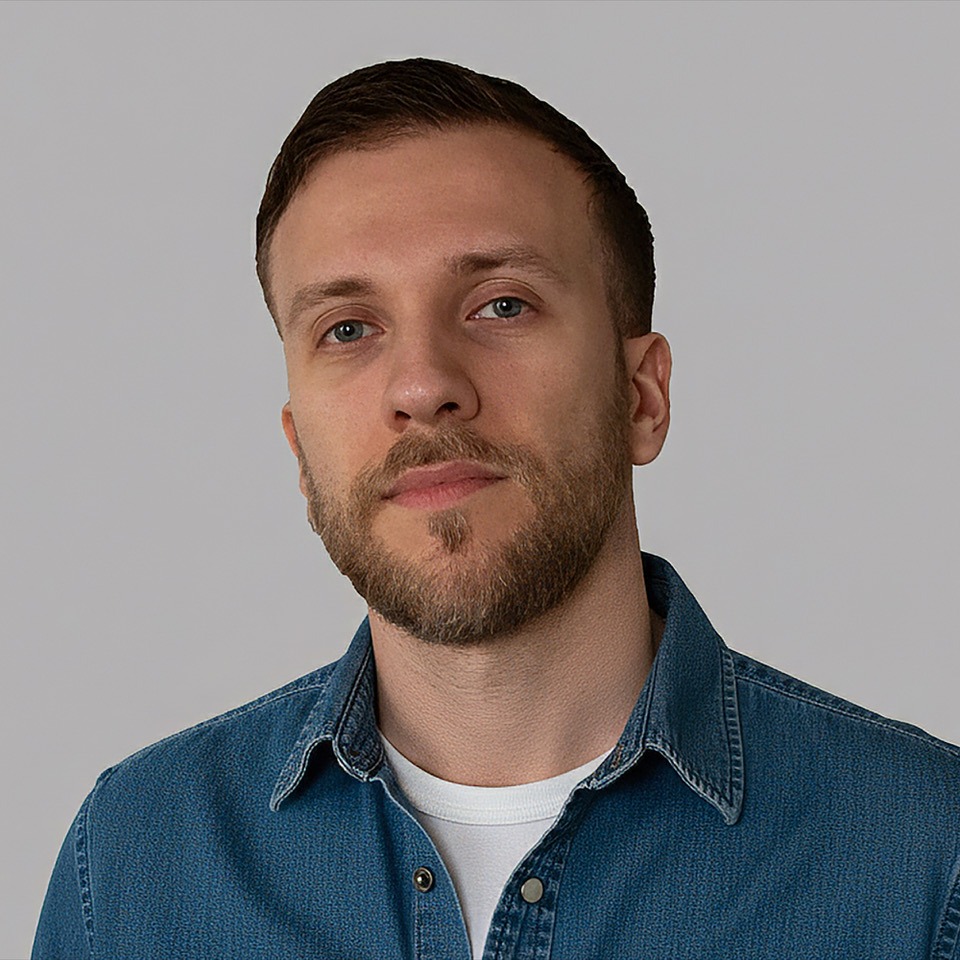
Media artist active since 2013, with over 80 exhibitions worldwide. His works are part of the catalogue of Heure Exquise!, distributor of the audiovisual collections of the Musée du Louvre and the Musée d’Orsay. He has been selected for major events and exhibitions, including the XVI Videoart Yearbook curated by art critic Renato Barilli, the Collettiva Giovani Artisti (Young Artists Collective) of the Fondazione Bevilacqua La Masa and The Wrong Biennale, winning numerous awards and recognitions over the years.
His artistic research has also been included in the book “L’arte del XXI secolo. Temi, linguaggi, artisti” (21st Century Art: Themes, Languages, Artists) by Viviana Vannucci, lecturer and international curator.
Alongside his artistic activity, he works as an art director in the field of multimedia communication. Moving between art and communication, he coined the term “Artivator” to define a new role for the artist: cultural activator for brands, territories and realities outside the art system. He is also the author of the literary manifesto of Metaluddismo, published in the aperiodical Il Foglio Clandestino.

