

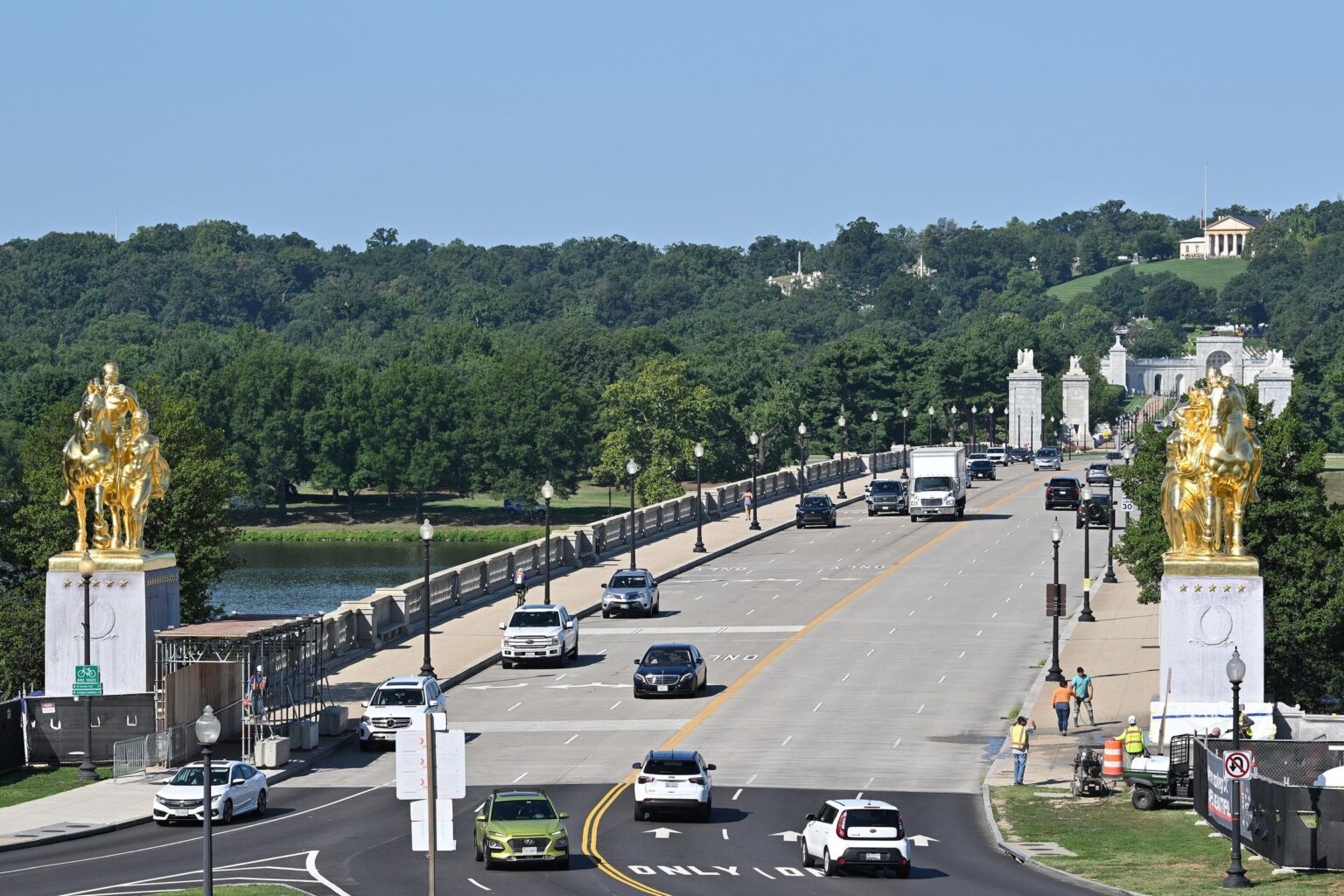
Virginia’s local government has entered into a collision course with the Trump administration. A true lawsuit against Trump’s triumphal arch was filed Thursday by the Arlington County Board, the county’s governing body, in an attempt to block construction of the 250‑foot‑tall monument desired by the president. At the center of the matter is a project that, according to its opponents, would radically alter one of the most delicate symbolic vistas in the American capital.
Key points
- The Arlington County Board filed the appeal Thursday in the Eastern District of Virginia.
- The project calls for a 250‑foot‑tall triumphal arch at Memorial Circle, at the end of the Arlington Memorial Bridge.
- The lawsuit demands a full environmental review before any demolition or construction work.
- Among the defendants are Interior Secretary Doug Burgum, the National Park Service, and acting director Jessica Bowron.
- The next meeting of the National Capital Planning Commission is set for November 5, a date that, according to Democracy Forward, could lead to automatic approval of the work.
Arlington County’s lawsuit against Trump’s triumphal arch
The five‑member Board chose the legal route after months of tension over the project’s permitting process. The lawsuit was filed in the Eastern District of Virginia and aims to freeze any physical intervention on the site until there is definitive clarity on the procedure followed by the administration.
The filing in the Eastern District of Virginia
Democracy Forward, the advocacy group supporting Arlington County’s legal office in the case, is representing the county. In the filed documents, the project is described as a “vanity project” that would be “massively intrusive and harmful” to the surrounding historic context. Democracy Forward also notes that on November 5 the next meeting of the National Capital Planning Commission will be held, the body that could effectively give the green light to the work without an in‑depth review.
A full environmental review before work begins
The core of the legal request is simple: no demolition and no construction until a full‑fledged environmental review has been completed. In early September, Interior Secretary Doug Burgum announced on X the imminent start of excavation for the “Great Triumphal Arch and Military Observation Deck,” speaking of a wait of more than 125 years. Since then, however, no groundbreaking has taken place, and the site remains idle.
Memorial Circle and the risk to the history of the monuments
The site chosen for the work is Memorial Circle, right at the end of the Arlington Memorial Bridge: a location that intertwines the project with dozens of surrounding historic monuments and with a symbolic heritage built over time around that space.
The view between the Lincoln Memorial and Arlington National Cemetery
According to the lawsuit, the arch “would directly obstruct the line of sight between the Lincoln Memorial and Arlington National Cemetery, deliberately created to symbolize the reunification of the nation after the Civil War.” It is one of the strongest arguments in the case, because it concerns not a simple planning detail but a visual axis specifically designed to tell the American story. For those who work in cultural heritage and the protection of symbolic places, this kind of intervention raises an issue that goes beyond aesthetics: permanently altering a commemorative vista of this magnitude affects the historical and identity value of Washington’s entire monumental complex, with consequences for how institutions and conservation bodies assess and protect these spaces over time.
The legal claims and risks to public safety
Beyond the aesthetic and historical issue, the lawsuit lists a series of regulatory violations and concrete risks for those who live in or travel through the area. The claims focus squarely on the failure to comply with environmental procedures required by federal law.
Ammunition, drones, and snipers near tourists and commuters
Among the defendants are Doug Burgum, the National Park Service, and Jessica Bowron, the agency’s acting director. The lawsuit accuses the administration of failing to comply with the National Environmental Policy Act and of downplaying the impact on emergency services, noise, and air pollution. But the most disturbing passage concerns the potential use of the structure itself: “Using the Arch to store large quantities of ammunition and as a staging point for drones and snipers, so close to commuters and tourists,” the document warns, “will drastically worsen these public safety risks and the likelihood of accidents.”
The reaction of the Arlington County Board
Matt de Ferranti, chair of the Arlington County Board, has taken a public stance, describing the local community as the one that “has the most to lose from this illegal and egregious project.” In his statement he added: “Enough is enough. We will do everything we can to hold this administration accountable and to protect and serve the best interests of our community.”
De Ferranti’s words indicate that the battle will not end quickly. With the November 5 deadline approaching, the National Capital Planning Commission will have to decide whether to move forward with approving the project while the lawsuit is still pending, or wait for the outcome of the judicial process before taking any further steps.
FAQ
Why did the Arlington County Board file a lawsuit against the construction of Trump’s triumphal arch?
The Board filed the lawsuit to block construction, citing the lack of a full environmental review, the potential obstruction of symbolic historic vistas, and public safety concerns, including ammunition storage and the use of drones and snipers.
Where was the lawsuit against Trump’s arch project filed?
The lawsuit was filed in the Eastern District of Virginia.
What are the main legal claims contained in Arlington County’s lawsuit?
The lawsuit accuses the defendants of failing to comply with the National Environmental Policy Act and of ignoring impacts on emergency services, noise, and air pollution.
Which historic vista would risk being obstructed by Trump’s arch if it were built?
The structure would obstruct the line of sight between the Lincoln Memorial and Arlington National Cemetery, a symbolic axis created to represent the reunification of the nation after the Civil War.
Read also: A blind man sues: the British Museum revises the display of the Bayeux Tapestry · The renewal of ICA Miami, a contemporary art museum, is supported by a 40-million-dollar campaign
Content produced with the assistance of artificial intelligence and with human editorial review.


